chrysin
herbal oxygenated compoundFound in 4 ingredients across the CompKitchen flavor graph.
Look up another compound — search by name, CAS number, PubChem CID, or FEMA #.
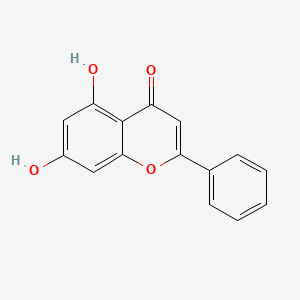
- Formula
- C15H10O4
- Molecular weight
- 254.24 g/mol
- PubChem CID
- 5281607 — full record on PubChem
Properties
- Odor description
- bitter
- Odor threshold — in a food matrix
- 141 ppb 1 published value · see all 1 with sources
- Volatility
- low
- CAS number
- 480-40-0
Published thresholds
1 measured value from the literature. Grouped by what was actually measured — a threshold smelled in clean water, tasted in the mouth, or measured in a real food are three different quantities and are not pooled.
In a food matrix
141 ppbMeasured in a real food, where the matrix shifts detection — not a clean-water value.
| Threshold | Matrix | Source | Paper |
|---|---|---|---|
| 141 ppb | water (food: unknown) | Literature corpus | 36037121, 41613924 |
Only values we can attribute are listed. Where a compendium's licence does not permit public attribution its figures are omitted here, so every number on this page traces to a citable source.
Where you'd actually smell it
Odor Activity Value = measured concentration ÷ odor threshold (141.213 ppb, the engine's canonical value — see the 1 published values). OAV ≥ 1 = perceptible.
| Food | Concentration (ppb) | OAV | Source |
|---|---|---|---|
| kidney beans | 112700.0 | 798 ⚡ | — |
| propolis | 8020.0 | 56.8 ⚡ | — |
| beer | 0.0 | 0.00 | — |
Concentrations from PubMed Central Open Access papers (free literature corpus, MIT-style licensed). Copper = OAV ≥ 10 (strongly perceptible). Green = OAV ≥ 1 (perceptible).
Found in
Measured impact first, then profile shareEvery ingredient known to contain chrysin. Ingredients with a measured concentration come first, ranked by odour activity; the rest follow by how large a share of that ingredient's profile this molecule is. The figure beside each is how many different compounds that ingredient has in total — not the concentration of chrysin in it. Full concentrations are in the OAV table above.
Get a molecule-level pairing breakdown each week — which ingredients share a compound, and why it matters at the table. Free, no spam.
Prefer an account? Create a free account to save pairings and unlock the full chemistry.
Try the pairing tools to see which ingredient combinations rely on chrysin, or compare two ingredients side-by-side.