isobutyl isothiocyanate
sulfurous sulfideFound in 2 ingredients across the CompKitchen flavor graph.
Look up another compound — search by name, CAS number, PubChem CID, or FEMA #.
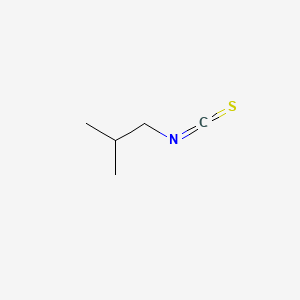
- Formula
- C5H9NS
- Molecular weight
- 115.20 g/mol
- PubChem CID
- 68960 — full record on PubChem
Properties
- Odor description
- green
- Odor threshold — in a food matrix
- 142 ppb 1 published value · see all 1 with sources
- Volatility
- high
- CAS number
- 591-82-2
- Retention index
- 1713
FEMA GRAS — Generally Recognized As Safe for flavoring use
- FEMA number
- 4424
- GRAS publication
- GRAS 23
- FEMA primary name
- Isobutyl isothiocyanate
Reported use levels (ppm by food category)
Typical vs maximum reported addition levels in finished food. Use as a regulatory ceiling reference — verify against the current GRAS publication for your product category.
| Food category | Typical (ppm) | Maximum (ppm) |
|---|---|---|
| beverages (alcoholic) | 1 | 10 |
| beverages (nonalcoholic) | 1 | 10 |
| cheese | 0.5 | 5 |
| chewing gum | 2 | 20 |
| condiments/ relishes | 5 | 25 |
| hard candy | 1 | 10 |
| nut products | 0.5 | 5 |
| other grains | 0.1 | 0.5 |
| seasonings/ flavors | 0.5 | 2.5 |
| snack foods | 0.5 | 5 |
| soft candy | 1 | 10 |
| soups | 0.5 | 5 |
Published thresholds
1 measured value from the literature. Grouped by what was actually measured — a threshold smelled in clean water, tasted in the mouth, or measured in a real food are three different quantities and are not pooled.
In a food matrix
142 ppbMeasured in a real food, where the matrix shifts detection — not a clean-water value.
| Threshold | Matrix | Source | Paper |
|---|---|---|---|
| 142 ppb | water (food: unknown) | Literature corpus | 39025896 |
Only values we can attribute are listed. Where a compendium's licence does not permit public attribution its figures are omitted here, so every number on this page traces to a citable source.
Found in
Measured impact first, then profile shareEvery ingredient known to contain isobutyl isothiocyanate. Ingredients with a measured concentration come first, ranked by odour activity; the rest follow by how large a share of that ingredient's profile this molecule is. The figure beside each is how many different compounds that ingredient has in total — not the concentration of isobutyl isothiocyanate in it.
Get a molecule-level pairing breakdown each week — which ingredients share a compound, and why it matters at the table. Free, no spam.
Prefer an account? Create a free account to save pairings and unlock the full chemistry.
Try the pairing tools to see which ingredient combinations rely on isobutyl isothiocyanate, or compare two ingredients side-by-side.