
Rock Salt Encrusted Prime Rib
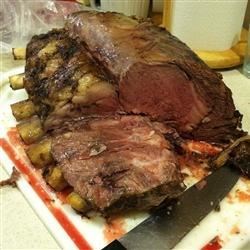
"This is one of the absolute best ways to taste what a real prime rib tastes like, and it's NOT like plain old roast beef!! This method also makes an extremely cool presentation that fascinates people with its looks. A big plus is that this method makes it easier to remove the rock salt from your roast. The only drawback I've found is that you can't really use the drippings for au jus or gravy because it's way too salty, so make that separately. Enjoy!"
Estimated Nutrition (whole recipe, rough)
Counts 5 of 8 ingredients — the other 3 aren't in our nutrition table and contribute nothing above, so the real totals are higher.
What these numbers assume — 5 portions →
| Ingredient | Portion assumed | kcal |
|---|---|---|
| Flour | 1 cup (125g) all-purpose | 455 |
| Onion | 1 medium (110g) | 44 |
| Black Pepper | 1 tsp ground (2.3g) | 6 |
| Rosemary | 1 tsp dried (1.2g) | 4 |
| Salt | 1 tsp (6g) | 0 |
| Soup | not in our table | 0 |
| Water | not in our table | 0 |
| Horseradish | not in our table | 0 |
Totals for the whole recipe, adding one typical portion per ingredient — listed above. Quantities in the recipe are not counted, so this is a rough guide only — not suitable for medical or dietary planning.
Ingredients
- 20 pounds standing rib roast (weight with bones), top fat trimmed
- 2 (1 ounce) packages dry onion soup mix
- 2 tablespoons freshly ground black pepper
- 8 cups rock salt
- 8 cups all-purpose flour
- 2 tablespoons crushed dried rosemary
- 2 cups water, or more if needed
- 1 (4 ounce) jar prepared horseradish, for serving
- 3 (1 ounce) packages au jus gravy mix, for serving