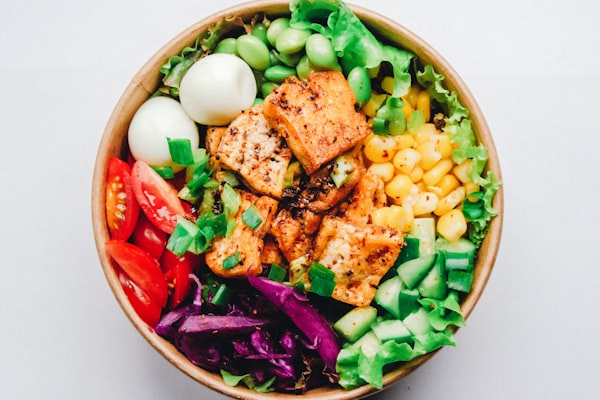
Photo: Lily Banse
Crispy Chicken with Soy-Mayo Sauce
13 ingredients
15 min + 10 min
2 servings
openrecipes

"This is one of my favorite dishes. The sake and mayo marinade makes chicken tender and juicy. It is great with steamed white rice and some simple salt and pepper sautéed asparagus with garlic. I sometimes use chicken tender strips to save time. You can also use shrimp instead of chicken. I understand that many of you don't have sake, but if you use white wine instead, the chicken will not the taste the same."
Estimated Nutrition (whole recipe, rough)
1200
Calories
58g
Protein
24g
Fat
171g
Carbs
What these numbers assume — 13 portions →
| Ingredient | Portion assumed | kcal |
|---|---|---|
| Flour | 1 cup (125g) all-purpose | 455 |
| Rice | 1 cup cooked (158g) white | 206 |
| Chicken | 100g cooked | 165 |
| Olive Oil | 1 tbsp (14g) | 119 |
| Egg | 1 large egg (50g) | 78 |
| Honey | 1 tbsp (21g) | 64 |
| Sake | 1 oz (30ml) | 39 |
| Wine | 2 tbsp cooking wine (30ml) | 25 |
| Tomato | 1 medium (123g) | 22 |
| Lemon | juice of 1 lemon (48ml) | 12 |
| Soy Sauce | 1 tbsp (15ml) | 9 |
| Black Pepper | 1 tsp ground (2.3g) | 6 |
| Salt | 1 tsp (6g) | 0 |
Totals for the whole recipe, adding one typical portion per ingredient — listed above. Quantities in the recipe are not counted, so this is a rough guide only — not suitable for medical or dietary planning.
Ingredients
- 1/2 pound skinless, boneless chicken breast, cut into 1-inch cubes
- 1/8 teaspoon salt
- 1/8 teaspoon ground black pepper
- 2 tablespoons sake (Japanese rice wine)
- 5 tablespoons mayonnaise, divided
- 1 tablespoon ketchup
- 1 1/2 teaspoons honey
- 3/4 teaspoon soy sauce
- 1/2 teaspoon lemon juice
- 2 tablespoons cornstarch
- 2 tablespoons all-purpose flour
- 1 egg
- 1 cup vegetable oil, or as needed
Directions
Step-by-step directions aren't available for this recipe in our database.
View the full recipe at the original source →
By allrecipes ·
Recipe sourced from
openrecipes