
Photo: K8
Lentils with Wine-Glazed Vegetables
13 ingredients
10 min + 30 min
openrecipes
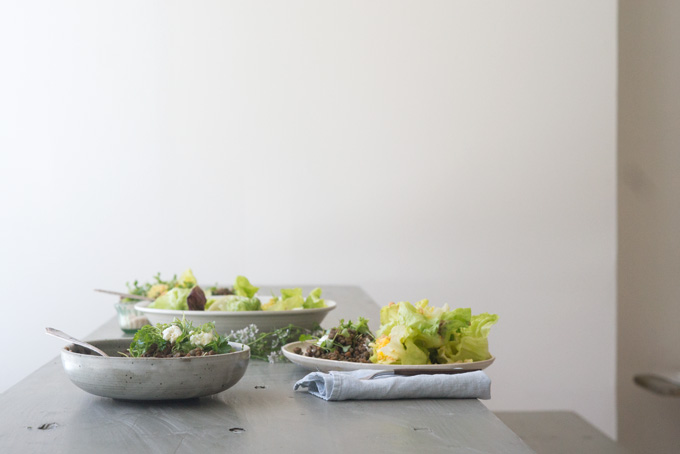
These simple, wine-glazed lentils, from Deborah Madison, saw me through my twenties, and then my thirties. I made them often in my first solo apartment in San Francisco. And, because they travel well, they've kept me well-fed on a range of flights...
Estimated Nutrition (whole recipe, rough)
590
Calories
20g
Protein
35g
Fat
49g
Carbs
What these numbers assume — 17 portions →
| Ingredient | Portion assumed | kcal |
|---|---|---|
| Olive Oil | 1 tbsp (14g) | 119 |
| Lentil | 1/2 cup cooked (99g) | 115 |
| Goat Cheese | 1 oz (28g) | 103 |
| Butter | 1 tbsp (14g) | 102 |
| Onion | 1 medium (110g) | 44 |
| Carrot | 1 medium (61g) | 25 |
| Wine | 2 tbsp cooking wine (30ml) | 25 |
| Tomato | 1 medium (123g) | 22 |
| Clove | 1 tsp ground (2g) | 7 |
| Black Pepper | 1 tsp ground (2.3g) | 6 |
| Celery | 1 stalk (40g) | 6 |
| Arugula | 1 cup (20g) | 5 |
| Garlic | 1 clove (3g) | 4 |
| Mustard | 1 tsp (5g) yellow | 3 |
| Bay Leaf | 1 leaf (0.6g) | 2 |
| Tarragon | 1 tsp dried (0.5g) | 2 |
| Salt | 1 tsp (6g) | 0 |
Totals for the whole recipe, adding one typical portion per ingredient — listed above. Quantities in the recipe are not counted, so this is a rough guide only — not suitable for medical or dietary planning.
Ingredients
- 1 1/2 cups Umbrian lentils or lentils du Puy
- salt and freshly ground pepper
- 1 bay leaf
- 2 teaspoons extra virgin olive oil, plus more
- 1 onion, cut into 1/2-inch dice
- 1 large carrot, cut into 1/4-inch dice
- 1 celery rib, cut into 1/4-inch dice
- 1 garlic clove, mashed
- 1 tablespoon tomato paste
- 2/3 cup / 80 ml dry red wine
- 2 teaspoons Dijon mustard
- 2 tablespoons butter
- to serve: chopped tarragon, micro greens or arugula, crumbled goat cheese or a dollop of creme fraiche
Directions
Step-by-step directions aren't available for this recipe in our database.
View the full recipe at the original source →
By 101cookbooks ·
Recipe sourced from
openrecipes