easiest fridge dill pickles
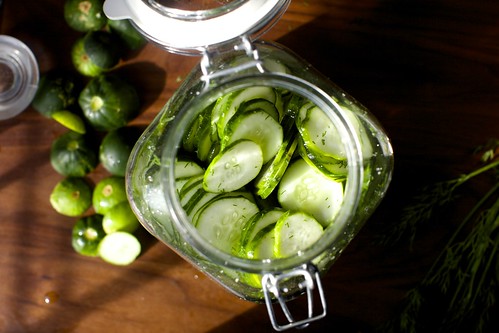
Every summer, I make a note on my Oh My God Good Vegetables Are Finally Here! cooking to-do list (what, you don’t keep one?) to post about how to make classic dill pickles. Every week they’re available, I pick up nearly a bucket of perfect-for-pickling kirby cucumbers from the Greenmarket for my cucumber-junkie family with the greatest intention of finally making good on this promise. And I never, ever do. It might be that the first couple times I tried, many years ago, my always-too-hot kitchen molded both jars, traumatizing me at the end of the jars’ incubation periods. It might be that because I live in NYC, when I want an insanely good sour pickle, I just go to on Essex Street or track down some from . Like bagels, killer soup dumplings, or Halal cart street meat, amazing pickles are in a category of food you have to be extremely driven and possibly cuckoo to make at home in NYC. I mean, I am, but apparently not enough.
Estimated Nutrition (whole recipe, rough)
What these numbers assume — 4 portions →
| Ingredient | Portion assumed | kcal |
|---|---|---|
| Cucumber | 1/2 cup sliced (52g) | 16 |
| Dill | 5 sprigs fresh (1g) / 1 tsp dried | 4 |
| Vinegar | 1 tbsp (15ml) distilled | 3 |
| Salt | 1 tsp (6g) | 0 |
Totals for the whole recipe, adding one typical portion per ingredient — listed above. Quantities in the recipe are not counted, so this is a rough guide only — not suitable for medical or dietary planning.
Ingredients
- 8 larger or to 10 smaller firm, fresh Kirby (pickling) cucumbers
- 5 teaspoons kosher, coarse or pickling salt (if using a
- , use a little more)
- 1 to 2 tablespoons chopped fresh dill
- 1/2 cup white vinegar