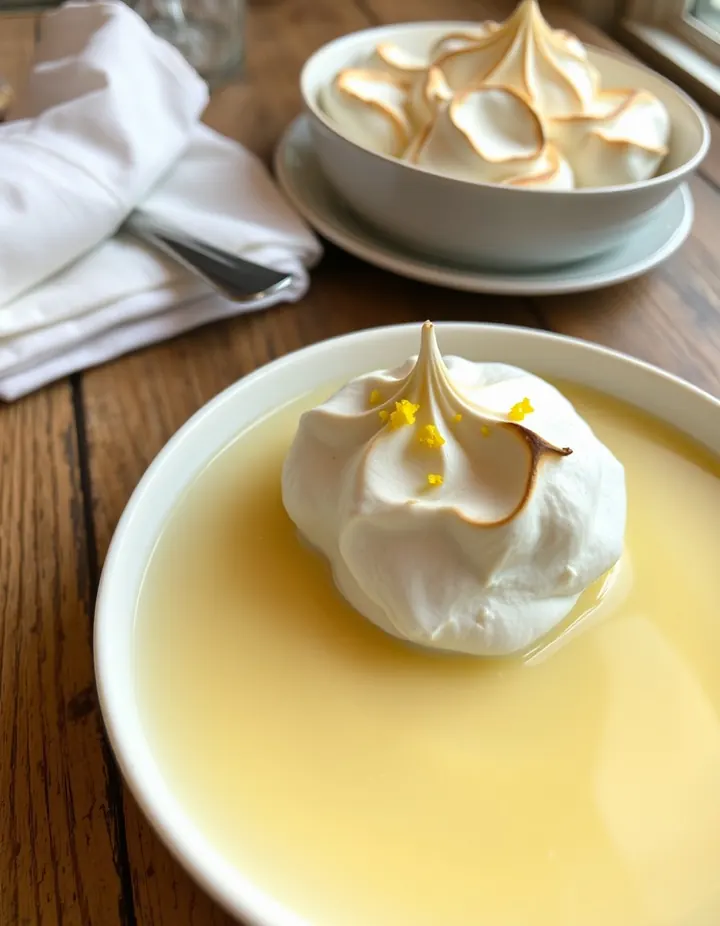
 Illustration
Why it works: Sugar and cream are a kitchen classic. They rank in the top 5% of all ingredient pairs, and 43,437 recipes mention both. Both carry 2,3-butanedione, which smells butter, sweet. The science ↓
The recipe
Ingredients
Contains: egg, milk (auto-detected from the ingredients and method; we can miss things, so check labels)
Directions
Set a heatproof bowl over a pan of barely simmering water, making sure the bowl does not touch the water. Add the whites of two eggs and the fine sugar, and whisk until the mixture reaches 160°F (71°C) on an instant-read thermometer.
Remove the bowl from the heat. Add the juice of two lemons and the three spoonfuls of currant jelly, then beat until the froth is stiff and holds its shape. Let it cool completely.
Put the stiff froth into the middle of a serving dish and decorate it with the sweetmeats.
Chill the dish in the refrigerator. Just before serving, pour cold cream into the dish around the froth so that it floats.
Refrigerate any leftovers within 2 hours and eat within 3 to 4 days. Do not leave the dish out at room temperature for more than 2 hours.
Original text from the book (2 steps)
Put the juice of two lemons, the whites of two eggs, three spoonfuls currant jelly and a gill and a half fine sugar together, and beat to a stiff froth.
Put it into the middle of the dish, dress it with sweetmeats, and just before it is served pour into the dish cream enough to float it.
From a scanned old cookbook. The method has been rewritten by AI to follow current food-safety guidance (safe cooking temperatures, refrigeration, no raw-egg shortcuts). It hasn't been kitchen-tested. The original text is under the method. See the original page.
Found this recipe through an AI assistant? CompKitchen also shows which ingredients go well together and why, from the aroma molecules they share and how often recipes combine them. Try the pairing tools.
The picture is an illustration, not a photo of this recipe · Contact us to use it
Explore the science
The flavor team
The pairs that carry this dish. Each one is judged two ways: how much aroma chemistry they share, and how many recipes mention both.
-
Sugar + creamtop 5% of all pairsAroma overlapmoderateMentioned together43,437 recipes
Shared aroma: 2,3-butanedione (butter, sweet).
-
Lemon + curranttop 9% of all pairsAroma overlapmoderateMentioned together4,270 recipes
Shared aroma: trans-2-hexenal (green, leafy).
-
Lemon + eggtop 9% of all pairsAroma overlapmoderateMentioned together43,327 recipes
Shared aroma: (e,e)-2,4-decadienal (fatty, deep fried).
-
Lemon + sugartop 10% of all pairsAroma overlaplowMentioned together53,530 recipes
Shared aroma: 2-nonenal (fatty, green).
-
Egg + sugartop 10% of all pairsAroma overlapstrongMentioned together122,252 recipes
Shared aroma: 2-nonenal (fatty, green).
Lemon and sugar share little aroma chemistry, yet 53,530 recipes mention both: they likely work on texture and structure more than aroma.
Ranks compare each pair with 20,000 random ingredient pairs on CompKitchen. How we score pairs
Flavor stand-ins for the currant
How well each one fits the dish's main ingredients (lemon, egg, sugar, cream):
- Vanillabetter flavor fit
- Raspberrybetter flavor fit
- Orangebetter flavor fit
- Currantthe original
Fit is the average pairing score against lemon, egg, sugar, cream. Candidates are from the same food group and used in at least 100 recipes. This compares flavor only: it does not check the job the ingredient does in the dish (bulk, moisture, acidity, structure).
Make it your own
Stand-ins, a drink, and quick taste fixes for this dish, ranked by how well each fits its other ingredients: shared aroma molecules and how often recipes combine them.
The Sunday pairing: one pairing, the chemistry behind it, and how to cook it. No spam, unsubscribe anytime.
Prefer an account? Create a free account for sign-in; Pro adds the full results and chemistry.