 Illustration
Why it works: White wine and rose work together. They rank in the top 8% of all ingredient pairs, and 156 recipes mention both. Both carry beta-damascenone, which smells apple, rose. The science ↓
The recipe
Ingredients
Contains: egg, milk, wheat, tree nuts (auto-detected from the ingredients and method; we can miss things, so check labels)
Directions
The book gives no oven temperature. The 300°F (150°C) in the steps was added when the recipe was transcribed, as a starting point.
Prepare
Preheat the oven to 300°F (150°C).
Make the batter
Cream the butter and sugar together until light and fluffy.
Add the egg whites and mix well.
Sift the flour and baking powder together, then gradually add to the mixture.
Fold in the chopped citron, almonds, coconut, white wine, and rose water.
Bake
Pour the batter into a greased cake pan.
Bake for about 3 hours or until a toothpick inserted in the center comes out clean.
Transcribed from a scanned cookbook and modernised for today's kitchens. Where the book gave no heat or time, or said "a moderate oven", the temperatures and times here may be modern equivalents rather than the book's own figures.
Found this recipe through an AI assistant? CompKitchen also shows which ingredients go well together and why, from the aroma molecules they share and how often recipes combine them. Try the pairing tools.
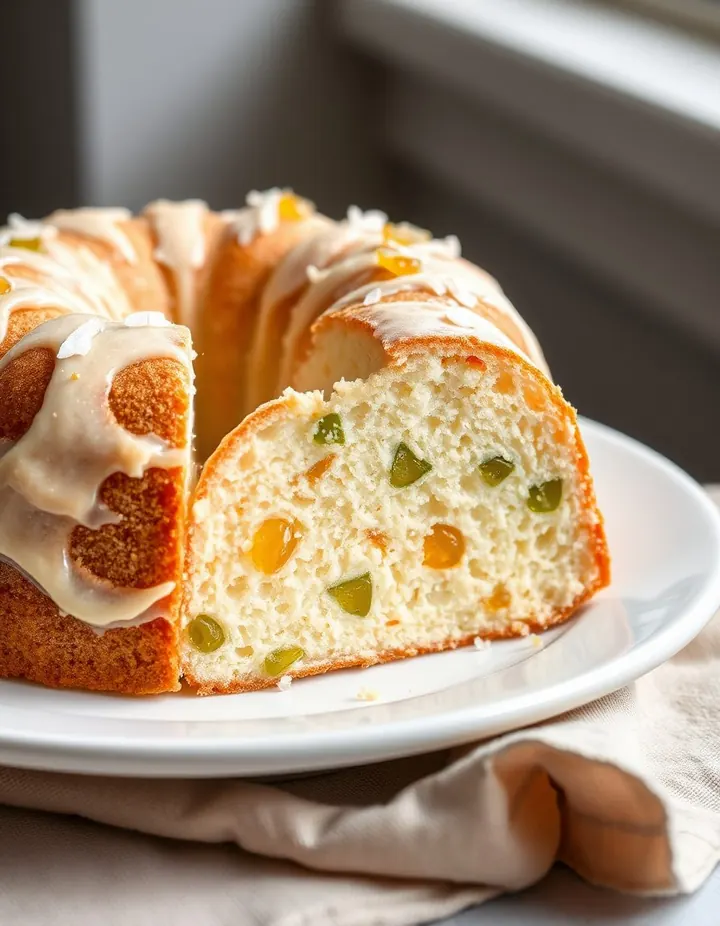
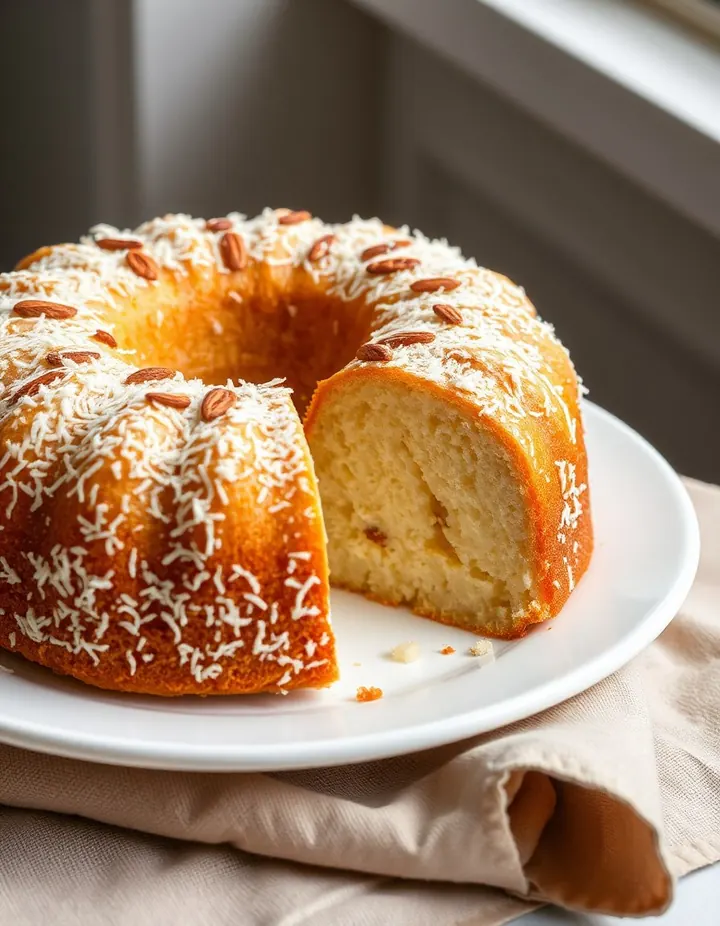
The picture is an illustration, not a photo of this recipe · Contact us to use it
Explore the science
The flavor team
The pairs that carry this dish. Each one is judged two ways: how much aroma chemistry they share, and how many recipes mention both.
-
White wine + rosetop 8% of all pairsAroma overlapmoderateMentioned together156 recipes
Shared aroma: beta-damascenone (apple, rose).
-
Butter + white winetop 3% of all pairsAroma overlapstrongMentioned together5,039 recipes
Shared aroma: ethyl octanoate (fruity, wine).
-
Almond + coconuttop 4% of all pairsAroma overlapstrongMentioned together1,091 recipes
Shared aroma: 2,3,5-trimethylpyrazine (cocoa, roasted).
-
Flour + almondtop 4% of all pairsAroma overlapmoderateMentioned together8,450 recipes
Shared aroma: isobutyraldehyde (malty, green).
-
Almond + rosetop 5% of all pairsAroma overlapmoderateMentioned together1,465 recipes
Shared aroma: nonanal (fat, citrus).
Ranks compare each pair with 20,000 random ingredient pairs on CompKitchen. How we score pairs
What each ingredient does
- Butter
- Creams with sugar to trap air, giving the cake a light, tender crumb and rich flavor.
- Egg whites
- Add structure and help set the batter as it bakes.
- Flour
- Forms the main structure of the cake as it sets in the oven.
- Baking powder
- Releases gas during baking so the cake rises and stays light.
- Candied citron
- Adds sweetness and chewy fruit texture throughout the cake.
- Almonds
- Add crunch and a nutty flavor to the crumb.
The step that matters
Baking for a long time at low heat. A long, low bake lets the centre set without the outside over-browning or drying out. Testing with a toothpick confirms the centre is fully cooked before cooling.
Flavor stand-ins for the coconut
How well each one fits the dish's main ingredients (butter, sugar, flour, egg, almond, white wine, rose):
- Vanillabetter flavor fit
- Raisinbetter flavor fit
- Raspberrybetter flavor fit
- Coconutthe original
Fit is the average pairing score against butter, sugar, flour, egg, almond, white wine, rose. Candidates are from the same food group and used in at least 100 recipes. This compares flavor only: it does not check the job the ingredient does in the dish (bulk, moisture, acidity, structure).
“What each ingredient does” and “The step that matters” were written by Claude, an AI, from this recipe’s own method. They are not checked recipe by recipe, so they can be wrong.
Make it your own
Stand-ins, a drink, and quick taste fixes for this dish, ranked by how well each fits its other ingredients: shared aroma molecules and how often recipes combine them.
You might also like
 Illustration
 Illustration
 Illustration
 Illustration
The Sunday pairing: one pairing, the chemistry behind it, and how to cook it. No spam, unsubscribe anytime.
Prefer an account? Create a free account for sign-in; Pro adds the full results and chemistry.