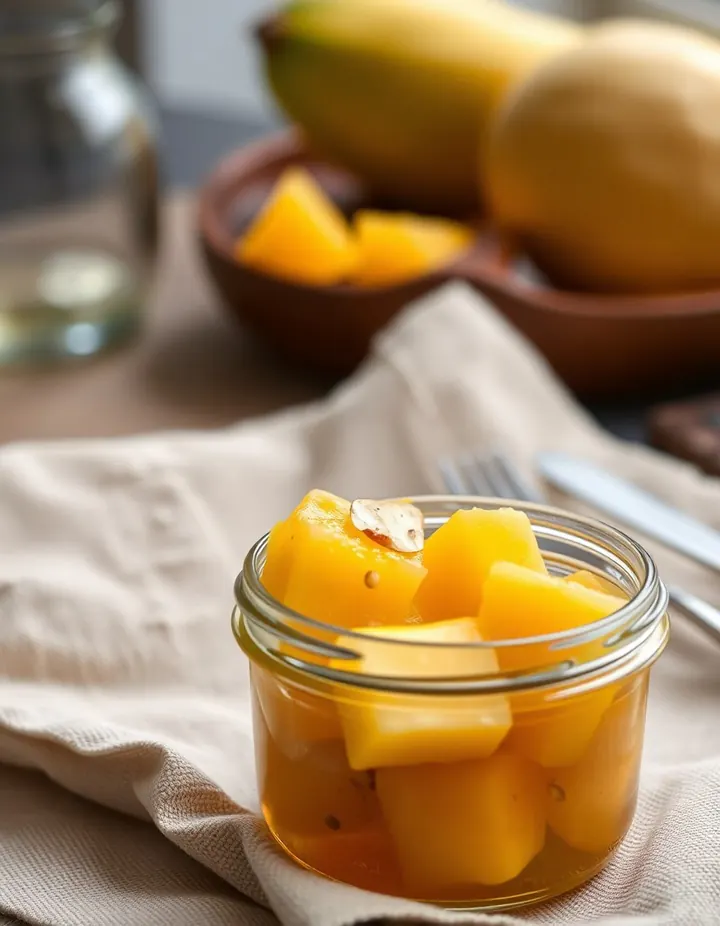
Why it works: Cucumber and melon match in chemistry and in kitchens. They rank in the top 3% of all ingredient pairs, and 142 recipes mention both. Both carry 2,6-nonadienal, which smells cucumber, green. The science ↓
The recipe
Ingredients
Directions
Brine the vegetables
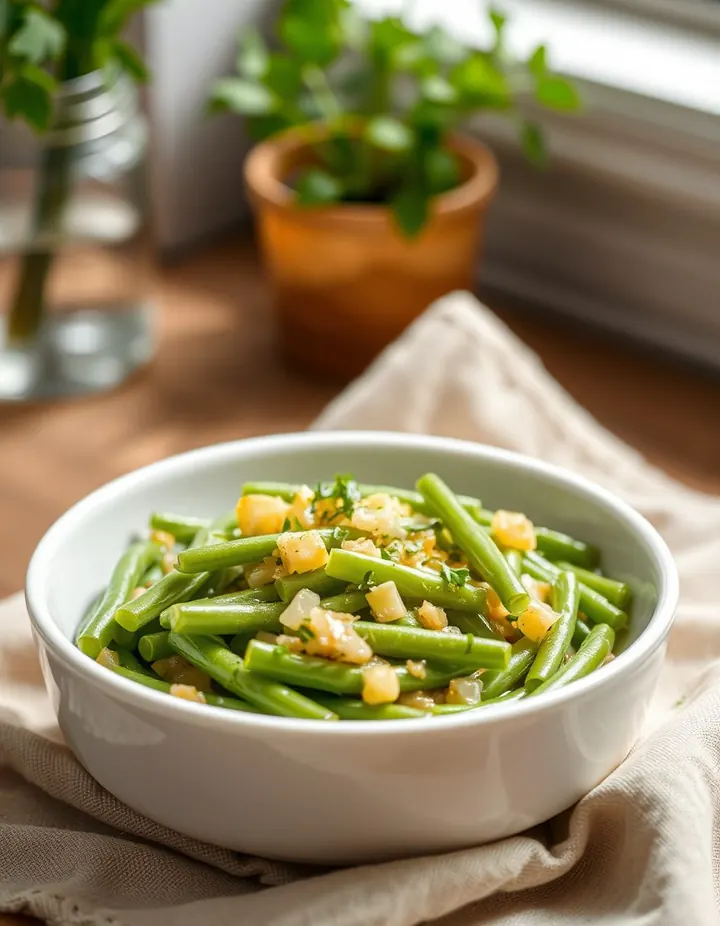
Gather cucumbers, small melons, and beans.
Prepare strong brine and heat it until scalding hot.
Pour the hot brine over the vegetables every morning for ten days.
After ten days, boil the brine and pour it over the vegetables every two to three weeks.
To prepare for use, soak the vegetables in clear water, changing the water daily until fresh.
Make the pickle
Place the vegetables in an iron vessel with cold vinegar and heat until near boiling.
Remove the vegetables from the vinegar and place them in a new vessel with cold vinegar.
Add cloves, mace, ginger, allspice, horseradish, olive oil, mustard seed, and green pepper pods.
Add 1 pound of brown sugar for each gallon of vinegar.
Transcribed from a scanned cookbook and modernised for today's kitchens. Where the book gave no heat or time, or said "a moderate oven", the temperatures and times here may be modern equivalents rather than the book's own figures.
Found this recipe through an AI assistant? CompKitchen also shows which ingredients go well together and why, from the aroma molecules they share and how often recipes combine them. Try the pairing tools.
Explore the science
The flavor team
The pairs that carry this dish. Each one is judged two ways: how much aroma chemistry they share, and how many recipes mention both.
-
Cucumber + melontop 3% of all pairsAroma overlapstrongMentioned together142 recipes
Shared aroma: 2,6-nonadienal (cucumber, green).
-
Clove + allspicetop 1% of all pairsAroma overlapstrongMentioned together7,711 recipes
Shared aroma: methyleugenol (clove, spice).
-
Clove + gingertop 1% of all pairsAroma overlapstrongMentioned together5,171 recipes
Shared aroma: myrcene (balsamic, herbaceous).
-
Ginger + allspicetop 2% of all pairsAroma overlapstrongMentioned together2,620 recipes
Shared aroma: beta-phellandrene (minty, terpene).
-
Clove + macetop 2% of all pairsAroma overlapmoderateMentioned together8,199 recipes
Shared aroma: methyleugenol (clove, spice).
Ranks compare each pair with 20,000 random ingredient pairs on CompKitchen. How we score pairs
What each ingredient does
- Cucumbers
- Main vegetable that becomes crisp-tender and tangy after brining and pickling.
- Brown sugar
- Adds sweetness that balances the sharp acidity of the vinegar.
- Cold vinegar
- Provides the acidity that preserves the vegetables and gives the pickle its sharp flavor.
- Strong brine
- Salt draws water out of the vegetables and firms their texture before pickling.
- Horseradish
- Adds a sharp, pungent aroma that complements the spices.
The step that matters
Pouring the hot brine every morning for ten days. The brine must stay scalding hot each time it is poured. Repeated hot brining draws water out and firms the vegetables, so letting the brine cool or skipping days weakens the texture.
Flavor stand-ins for the mace
How well each one fits the dish's main ingredients (cucumber, melon, beans, vinegar, clove, ginger, allspice):
- Cinnamonbetter flavor fit
- Peppermintbetter flavor fit
- Corianderbetter flavor fit
- Macethe original
Fit is the average pairing score against cucumber, melon, beans, vinegar, clove, ginger, allspice. Candidates are from the same food group and used in at least 100 recipes. This compares flavor only: it does not check the job the ingredient does in the dish (bulk, moisture, acidity, structure).
“What each ingredient does” and “The step that matters” were written by Claude, an AI, from this recipe’s own method. They are not checked recipe by recipe, so they can be wrong.
Make it your own
Stand-ins, a drink, and quick taste fixes for this dish, ranked by how well each fits its other ingredients: shared aroma molecules and how often recipes combine them.
You might also like
 Illustration
 Illustration
 Illustration
 Illustration
The Sunday pairing: one pairing, the chemistry behind it, and how to cook it. No spam, unsubscribe anytime.
Prefer an account? Create a free account for sign-in; Pro adds the full results and chemistry.