Photo: Anna Pelzer
Saffron Pasta Salad
13 ingredients
20 min + 35 min
openrecipes
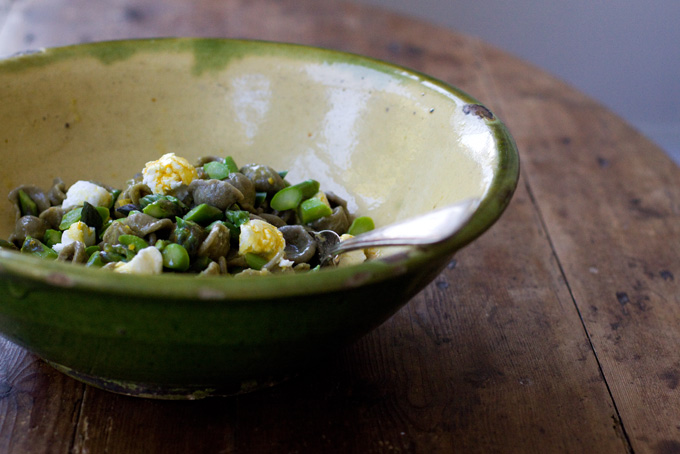
A spring pasta salad made with a vibrant red-wine and saffron vinaigrette, asparagus, and toasted whole wheat orecchiette pasta from Puglia.
Estimated Nutrition (whole recipe, rough)
880
Calories
23g
Protein
52g
Fat
90g
Carbs
Counts 16 of 17 ingredients — the other 1 aren't in our nutrition table and contribute nothing above, so the real totals are higher.
What these numbers assume — 16 portions →
| Ingredient | Portion assumed | kcal |
|---|---|---|
| Pasta | 1 cup cooked (140g) | 220 |
| Pine | 1 oz (28g) | 191 |
| Olive Oil | 1 tbsp (14g) | 119 |
| Goat Cheese | 1 oz (28g) | 103 |
| Honey | 1 tbsp (21g) | 64 |
| Cream | 1 tbsp (15ml) heavy | 51 |
| Sugar | 1 tbsp (12.5g) granulated | 49 |
| Asparagus | 6 spears (90g) | 27 |
| Walnut | 1 walnut half (4g) | 26 |
| Lemon | juice of 1 lemon (48ml) | 12 |
| Clove | 1 tsp ground (2g) | 7 |
| Garlic | 1 clove (3g) | 4 |
| Vinegar | 1 tbsp (15ml) distilled | 3 |
| Mustard | 1 tsp (5g) yellow | 3 |
| Chive | 1 tbsp (3g) | 1 |
| Salt | 1 tsp (6g) | 0 |
| Saffron | not in our table | 0 |
Totals for the whole recipe, adding one typical portion per ingredient — listed above. Quantities in the recipe are not counted, so this is a rough guide only — not suitable for medical or dietary planning.
Ingredients
- Saffron vinaigrette:
- 1/4 cup red wine vinegar
- 1/2 teaspoon saffron threads
- 1 medium garlic clove, smashed
- 1/2 teaspoon salt
- 2 tablespoons lemon juice
- 2 teaspoons Dijon mustard
- 1/2 cup / 120 ml olive oil
- bit of sugar/honey or splash of cream (if needed)
- 12 ounces / 340 g dried pasta (see head notes)
- 1 pound / 16 oz / 453g thin asparagus, ends trimmed, cut into 1/2-inch segments
- 3 ounces / 85g goat cheese, crumbled
- fresh chopped chive and toasted pine nuts (optional)
Directions
Step-by-step directions aren't available for this recipe in our database.
View the full recipe at the original source →
By 101cookbooks ·
Recipe sourced from
openrecipes