Molecule · hydrocarbon
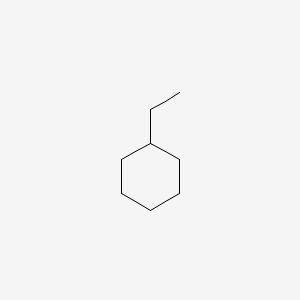
ethylcyclohexane
Found in 1 ingredient. We hold no measured concentration for it in any of them yet, so we cannot say where it is strong enough to smell.
Working on a formulation or a product line? This compound data is available by API for R&D teams.
01How little it takes
No published odour threshold on file for ethylcyclohexane.
02Where it turns up
- Vegetables1
of the 1 ingredient that contain it, by food group
03What it travels with
Too few ingredients to say what it travels with.
What does ethylcyclohexane smell like?
We hold no odour description for ethylcyclohexane.
Which foods contain ethylcyclohexane?
We list 1 ingredient that contain it, but presence is not the same as smell. What matters is how much is there compared with how little it takes to notice it. That ratio is the odour activity value (OAV). Above 1 suggests it may be noticeable; it is a screening indicator, not a guarantee.
Found in
Measured foods first, then real food profiles, then thin or composite records (marked). The figure beside each is how many compounds that ingredient has in total, not the amount of ethylcyclohexane in it. ✓n = sources that recorded the link.
How strong is ethylcyclohexane?
We hold no published odour threshold for ethylcyclohexane, so we cannot say how little of it you could smell.
- Volatility
- high
- Retention index
- 830
Is ethylcyclohexane safe to eat?
A substance matching this name is listed by FEMA as generally recognized as safe (GRAS) for use as a flavoring: FEMA number 4881, published in GRAS 29. Check current FDA and EFSA guidance for your market and use level.
- FEMA number
- 4881 ? partial match
- Publication
- GRAS 29
- CAS (FEMA)
- 1857331-84-0
- FEMA name
- N-(3-Hydroxy-4-methoxyphenyl)-2-isopropyl-5,5-dimethylcyclohexanecarboxamide
| Food category | Typical | Maximum |
|---|---|---|
| beverages, alcoholic | 0.1 | 10 |
| beverages, non-alcoholic | 0.1 | 10 |
| chewing gum | 1 | 100 |
| condiments and relishes | 0.1 | 10 |
| confections and frostings | 1 | 100 |
| fats and oils | 0.05 | 5 |
| frozen dairy | 0.1 | 10 |
| fruit ices | 0.1 | 10 |
| gelatins and puddings | 0.05 | 5 |
| gravies | 0.05 | 5 |
| hard candy | 0.1 | 10 |
| imitation dairy | 0.05 | 5 |
| instant coffee and tea | 0.01 | 1 |
| jams and jellies | 0.1 | 10 |
| milk products | 0.05 | 5 |
| seasonings and flavors | 3 | 900 |
| snack foods | 0.1 | 10 |
| soft candy | 0.1 | 10 |
| soups | 0.1 | 10 |
| sugar substitutes | 0.005 | 0.5 |
| sweet sauces | 0.5 | 50 |
Typical vs maximum reported addition levels in finished food. A regulatory ceiling reference; verify against the current GRAS publication for your product category.
Source: FEMA GRAS publications 1–33. 2 related FEMA records for this name; verify the exact substance for regulatory use.
Look up another compound — search by name, CAS number, PubChem CID, or FEMA #.
The Sunday pairing: one pairing, the chemistry behind it, and how to cook it. No spam, unsubscribe anytime.
Prefer an account? Create a free account for sign-in; Pro adds the full results and chemistry.
Try the pairing tools to see which ingredient combinations rely on ethylcyclohexane, or compare two ingredients side by side.
Cite this analysis
CompKitchen (2026). ethylcyclohexane compound data sheet. https://compkitchen.com/compound/ethylcyclohexane. Accessed 2026-11-23.
@misc{compkitchen_compound_ethylcyclohexane_compound_data_sheet_2026,
  title  = {ethylcyclohexane compound data sheet},
  author = {{CompKitchen}},
  year   = {2026},
  url    = {https://compkitchen.com/compound/ethylcyclohexane},
  note   = {Accessed: 2026-11-23}
}
Methodology DOI: 10.5281/zenodo.19719458 · CC BY 4.0 · Citations are a request, not a requirement.