Photo: Lily Banse
Moroccan Chicken Sann
16 ingredients
15 min + 45 min
6 servings
openrecipes
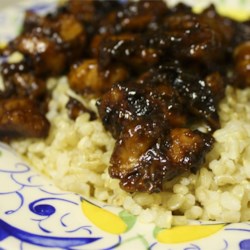
"My friend made this dish for me when I had a newborn baby. It quickly became a family favorite. The marinade is incredible and the pieces of prune and apricot create a nice sweet balance. Serve with Basmati rice."
Estimated Nutrition (whole recipe, rough)
647
Calories
38g
Protein
18g
Fat
78g
Carbs
Counts 14 of 16 ingredients — the other 2 aren't in our nutrition table and contribute nothing above, so the real totals are higher.
What these numbers assume — 14 portions →
| Ingredient | Portion assumed | kcal |
|---|---|---|
| Rice | 1 cup cooked (158g) white | 206 |
| Chicken | 100g cooked | 165 |
| Olive Oil | 1 tbsp (14g) | 119 |
| Honey | 1 tbsp (21g) | 64 |
| Wine | 2 tbsp cooking wine (30ml) | 25 |
| Apricot | 1 medium (35g) | 17 |
| Lemon | juice of 1 lemon (48ml) | 12 |
| Soy Sauce | 1 tbsp (15ml) | 9 |
| Turmeric | 1 tsp ground (3g) | 9 |
| Black Pepper | 1 tsp ground (2.3g) | 6 |
| Oregano | 1 tsp dried (1.8g) | 5 |
| Thyme | 1 tsp dried (1.4g) | 4 |
| Garlic | 1 clove (3g) | 4 |
| Ginger | 1 tsp grated fresh (2g) | 2 |
| Water | not in our table | 0 |
| Prune | not in our table | 0 |
Totals for the whole recipe, adding one typical portion per ingredient — listed above. Quantities in the recipe are not counted, so this is a rough guide only — not suitable for medical or dietary planning.
Ingredients
- 1/2 cup soy sauce
- 1/2 cup fresh lemon juice
- 1/2 cup sherry
- 1/2 cup honey
- 1/2 teaspoon ground thyme
- 2 teaspoons curry powder
- 1/2 teaspoon dried oregano
- 1/2 teaspoon ground ginger
- 1/2 teaspoon ground black pepper
- 1 clove garlic, pressed
- 3 pounds cut up chicken pieces
- 1 1/2 cups uncooked brown rice
- 3 cups water
- 2 tablespoons olive oil
- 8 pitted prunes
- 8 dried apricot halves
Directions
Step-by-step directions aren't available for this recipe in our database.
View the full recipe at the original source →
By allrecipes ·
Recipe sourced from
openrecipes