
Photo: Alexander Maasch
Pumpkin Cream Cheese Dessert
15 ingredients
30 min + 30 min
15 cups
openrecipes
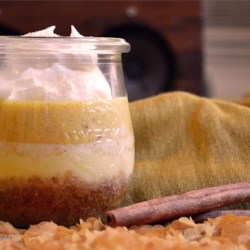
"This light and delicious three layered pumpkin dessert is a nice alternative to pumpkin pie. An easy to make graham cracker crust forms the foundation for cream cheese and pumpkin layers topped with whipped cream. This recipe contains raw eggs. We recommend that pregnant women, young children, the elderly and the infirm do not consume raw eggs."
Estimated Nutrition (whole recipe, rough)
1012
Calories
36g
Protein
41g
Fat
124g
Carbs
Counts 10 of 12 ingredients — the other 2 aren't in our nutrition table and contribute nothing above, so the real totals are higher.
What these numbers assume — 10 portions →
| Ingredient | Portion assumed | kcal |
|---|---|---|
| Flour | 1 cup (125g) all-purpose | 455 |
| Milk | 1 cup (244ml) whole | 149 |
| Butter | 1 tbsp (14g) | 102 |
| Cream Cheese | 1 oz (28g) | 99 |
| Egg | 1 large egg (50g) | 78 |
| Cream | 1 tbsp (15ml) heavy | 51 |
| Sugar | 1 tbsp (12.5g) granulated | 49 |
| Gelatin | 1 envelope (7g) | 23 |
| Cinnamon | 1 tsp ground (2.6g) | 6 |
| Salt | 1 tsp (6g) | 0 |
| Water | not in our table | 0 |
| Pumpkin | not in our table | 0 |
Totals for the whole recipe, adding one typical portion per ingredient — listed above. Quantities in the recipe are not counted, so this is a rough guide only — not suitable for medical or dietary planning.
Ingredients
- 1/2 cup butter
- 1/3 cup white sugar
- 24 graham crackers, crushed
- 2 eggs
- 3/4 cup white sugar
- 1 (8 ounce) package cream cheese, softened
- 1 envelope (1 tablespoon) unflavored gelatin
- 1/4 cup water
- 1 (15 ounce) can pumpkin
- 3 eggs, separated
- 1/2 cup milk
- 1/2 cup white sugar
- 1/2 teaspoon salt
- 2 teaspoons ground cinnamon
- 1/2 pint whipped cream
Directions
Step-by-step directions aren't available for this recipe in our database.
View the full recipe at the original source →
By allrecipes ·
Recipe sourced from
openrecipes