
Photo: Sam Loyd
Shichimi-Seared Pork Tenderloin
17 ingredients
30 min + 30 min
8 servings
openrecipes
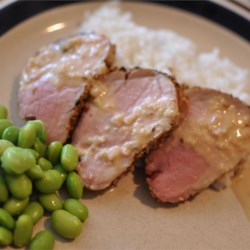
"Asian flavors and French technique come together to make a great dish. You can also use chicken, scallops, or most types of hearty fish (i.e. tuna, salmon, etc.) to make this."
Estimated Nutrition (whole recipe, rough)
759
Calories
32g
Protein
59g
Fat
21g
Carbs
Counts 12 of 14 ingredients — the other 2 aren't in our nutrition table and contribute nothing above, so the real totals are higher.
What these numbers assume — 12 portions →
| Ingredient | Portion assumed | kcal |
|---|---|---|
| Pork | 100g cooked | 242 |
| Sesame | 1 tbsp (14g) | 120 |
| Olive Oil | 1 tbsp (14g) | 119 |
| Butter | 1 tbsp (14g) | 102 |
| Cream | 1 tbsp (15ml) heavy | 51 |
| Onion | 1 medium (110g) | 44 |
| Miso | 1 tbsp (18g) | 34 |
| Wine | 2 tbsp cooking wine (30ml) | 25 |
| Lime | juice of 1 lime (44ml) | 11 |
| Soy Sauce | 1 tbsp (15ml) | 9 |
| Ginger | 1 tsp grated fresh (2g) | 2 |
| Salt | 1 tsp (6g) | 0 |
| Black Sesame Seed | not in our table | 0 |
| Sauce | not in our table | 0 |
Totals for the whole recipe, adding one typical portion per ingredient — listed above. Quantities in the recipe are not counted, so this is a rough guide only — not suitable for medical or dietary planning.
Ingredients
- For the Pork:
- 1/4 cup white sesame seeds
- 1/4 cup black sesame seeds
- 2 tablespoons shichimi togarashi (Japanese 7 spice)
- 4 pounds pork tenderloins
- Kosher salt
- 2 tablespoons canola oil
- For the Sauce:
- 3 shallots, minced
- 2 tablespoons minced fresh ginger
- 3/4 cup dry white wine
- 2 tablespoons fresh lime juice
- 1 cup whipping cream
- 2 tablespoons soy sauce
- 3 tablespoons white miso paste
- 1 cup cold, unsalted butter, cut into 1-inch cubes
- Kosher salt to taste
Directions
Step-by-step directions aren't available for this recipe in our database.
View the full recipe at the original source →
By allrecipes ·
Recipe sourced from
openrecipes