
Photo: Dana DeVolk
Shrimp Provencal
12 ingredients
30 min + 25 min
6 servings
openrecipes
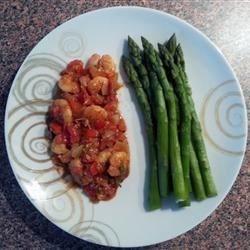
"For a gourmet meal this is very easy to prepare. Leftovers reheat well the next day too! Instead of using fresh shrimp like the recipe originally called (took too long the first time I did it) we now use frozen, raw, peeled and it tastes the exact same, but with 1/4 of the time! This is great over rice and served with French bread."
Estimated Nutrition (whole recipe, rough)
357
Calories
28g
Protein
15g
Fat
27g
Carbs
Counts 12 of 13 ingredients — the other 1 aren't in our nutrition table and contribute nothing above, so the real totals are higher.
What these numbers assume — 12 portions →
| Ingredient | Portion assumed | kcal |
|---|---|---|
| Olive Oil | 1 tbsp (14g) | 119 |
| Shrimp | 100g cooked | 99 |
| Onion | 1 medium (110g) | 44 |
| Fennel | 1/2 bulb (87g) | 27 |
| Wine | 2 tbsp cooking wine (30ml) | 25 |
| Tomato | 1 medium (123g) | 22 |
| Pepper | 1 tsp ground (2.3g) | 6 |
| Black Pepper | 1 tsp ground (2.3g) | 6 |
| Garlic | 1 clove (3g) | 4 |
| Thyme | 1 tsp dried (1.4g) | 4 |
| Basil | 5 leaves fresh (2.5g) | 1 |
| Salt | 1 tsp (6g) | 0 |
| Seed | not in our table | 0 |
Totals for the whole recipe, adding one typical portion per ingredient — listed above. Quantities in the recipe are not counted, so this is a rough guide only — not suitable for medical or dietary planning.
Ingredients
- 3 tablespoons olive oil
- 1 1/2 pounds large shrimp (21-25 per pound), peeled and deveined
- 2 cups red peppers, diced
- 1 cup chopped onion
- 3 large cloves garlic, chopped
- 1/2 teaspoon fennel seeds
- 2 tablespoons chopped fresh thyme
- 1/2 cup dry white wine
- 2 tablespoons tomato paste
- 1 (14.5 ounce) can canned diced tomatoes
- 1/2 cup chopped fresh basil
- Salt and freshly ground pepper to taste
Directions
Step-by-step directions aren't available for this recipe in our database.
View the full recipe at the original source →
By allrecipes ·
Recipe sourced from
openrecipes