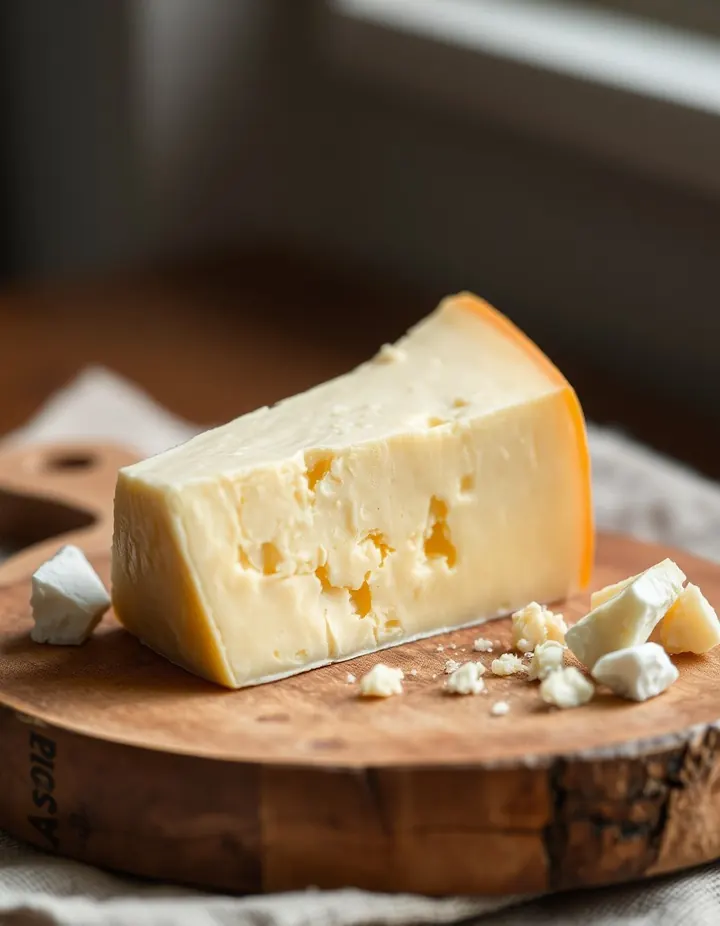
Why it works: Parmesan cheese and butter match in chemistry and in kitchens. They rank in the top 3% of all ingredient pairs, and 4,158 recipes mention both. Both carry guaiacol, which smells smoky, sweet. The science ↓
The recipe
Ingredients
Contains: milk (auto-detected from the ingredients and method; we can miss things, so check labels)
Directions
Melt the butter to just coat the bottom of the pan.
Sprinkle a fine layer of grated cheese on the pan.
Cook over medium heat until it has melted and formed a light crust, about 3 to 4 minutes.
Continue to cook the cheese until the edges set and a golden crust develops, about 1/2 minute.
Carefully lift and turn the layer of cheese with a spatula and cook until lightly golden on the second side, about 1/2 minute.
Remove the Frico from the pan and either set it flat on a paper towel or shape it over an inverted custard cup.
This recipe comes from the Recipes Wiki on Fandom and is licensed CC BY-SA 4.0. Our formatting and summaries are shared under the same licence.
Steps grouped into stages for easier reading; the method is the source's own.
Found this recipe through an AI assistant? CompKitchen also shows which ingredients go well together and why, from the aroma molecules they share and how often recipes combine them. Try the pairing tools.
Explore the science
The flavor team
The pairs that carry this dish. Each one is judged two ways: how much aroma chemistry they share, and how many recipes mention both.
-
Parmesan cheese + buttertop 3% of all pairsAroma overlapstrongMentioned together4,158 recipes
Shared aroma: guaiacol (smoky, sweet).
Ranks compare each pair with 20,000 random ingredient pairs on CompKitchen. How we score pairs
What each ingredient does
- Asiago or parmesan cheese
- Melts and crisps into a lacy, savory crust that forms the whole dish.
- Butter
- Lightly coats the pan so the cheese browns evenly and releases cleanly.
The step that matters
Cooking the cheese over medium heat. Cheese has little water and browns quickly, so if the heat is too high it can scorch before melting into a crisp. Keeping the heat moderate lets the layer melt, set, and turn golden evenly.
“What each ingredient does” and “The step that matters” were written by Claude, an AI, from this recipe’s own method. They are not checked recipe by recipe, so they can be wrong.
Make it your own
Stand-ins, a drink, and quick taste fixes for this dish, ranked by how well each fits its other ingredients: shared aroma molecules and how often recipes combine them.
You might also like
 Illustration
 Illustration
 Illustration
 Illustration
The Sunday pairing: one pairing, the chemistry behind it, and how to cook it. No spam, unsubscribe anytime.
Prefer an account? Create a free account for sign-in; Pro adds the full results and chemistry.