Why it works: Ginger and lemon match in chemistry and in kitchens. They rank in the top 3% of all ingredient pairs, and 5,154 recipes mention both. Both carry beta-phellandrene, which smells minty, terpene. The science ↓
The recipe
Ingredients
Contains: wheat, peanut, shellfish, sesame (auto-detected from the ingredients and method; we can miss things, so check labels)
Directions
Prepare the garlic oil
Cut 8 medium garlic cloves horizontally into thin slices.
Heat 1/4 cup corn or peanut oil in a wok, drop the garlic slices in and fry over moderate heat for 2–3 minutes, until the slices turn light brown.
Remove the garlic slices and drain on paper towels. Cool the oil.
Place the cooled oil in a jar with a tight cover and refrigerate.
Prepare the ginger
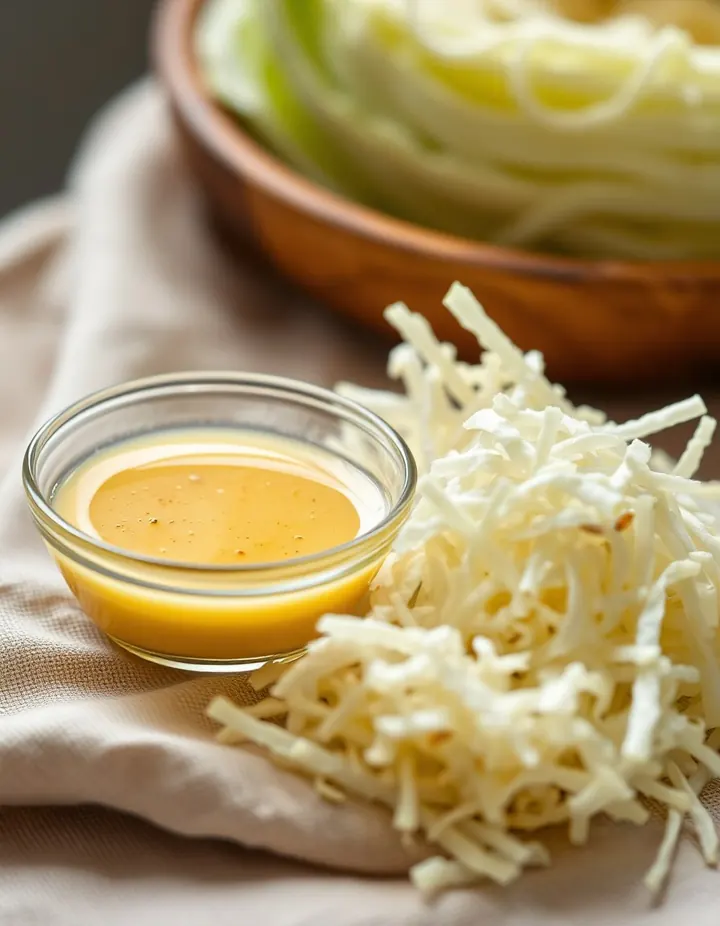
Shred the young ginger into a small bowl and cover it with lemon or lime juice.
Refrigerate for at least 3 days. Then firmly squeeze out and discard the lemon juice.
Assemble and serve
Mix the ginger with all the other ingredients, including those that have been toasted and fried.
Serve at room temperature.
This recipe comes from the Recipes Wiki on Fandom and is licensed CC BY-SA 4.0. Our formatting and summaries are shared under the same licence.
Steps grouped into stages for easier reading; the method is the source's own.
Found this recipe through an AI assistant? CompKitchen also shows which ingredients go well together and why, from the aroma molecules they share and how often recipes combine them. Try the pairing tools.
Explore the science
The flavor team
The pairs that carry this dish. Each one is judged two ways: how much aroma chemistry they share, and how many recipes mention both.
-
Ginger + lemontop 3% of all pairsAroma overlapstrongMentioned together5,154 recipes
Shared aroma: beta-phellandrene (minty, terpene).
-
Ginger + sesametop 3% of all pairsAroma overlapmoderateMentioned together1,531 recipes
Shared aroma: nonanal (fat, citrus).
-
Corn + coconuttop 3% of all pairsAroma overlapstrongMentioned together306 recipes
Shared aroma: gamma-nonanolactone (coconut, creamy).
-
Sweet potato + coconuttop 3% of all pairsAroma overlapstrongMentioned together159 recipes
Shared aroma: isoamyl acetate (banana, pear).
-
Ginger + coconuttop 4% of all pairsAroma overlapstrongMentioned together1,168 recipes
Shared aroma: isoamyl acetate (banana, pear).
Ranks compare each pair with 20,000 random ingredient pairs on CompKitchen. How we score pairs
What each ingredient does
- Fresh young ginger
- Provides the main flavour and crisp, fibrous texture of the salad.
- Lemon or lime juice
- Acidity that softens and mellows the raw ginger's sharpness during marinating.
- Corn or peanut oil
- Carries flavour and, when fried, gives the garlic slices and other crisp toppings their browning.
- Sesame seeds
- Adds toasted, nutty aroma and a slight crunch.
- Roasted skinless peanuts
- Adds crunch and a rich, nutty flavour.
- Shrimp sauce
- Adds salty, savoury depth typical of this kind of salad.
The step that matters
Squeezing out the lemon juice after refrigerating. The ginger must be firmly squeezed dry before mixing. Leftover acidic liquid would make the salad soggy and sharpen the flavour, and the crisp fried toppings would lose their texture.
Flavor stand-ins for the lemon
How well each one fits the dish's main ingredients (ginger, garlic, corn, flour, sesame, sweet potato, coconut):
- Limebetter flavor fit
- Avocadobetter flavor fit
- Mangobetter flavor fit
- Lemonthe original
Fit is the average pairing score against ginger, garlic, corn, flour, sesame, sweet potato, coconut. Candidates are from the same food group and used in at least 100 recipes. This compares flavor only: it does not check the job the ingredient does in the dish (bulk, moisture, acidity, structure).
“What each ingredient does” and “The step that matters” were written by Claude, an AI, from this recipe’s own method. They are not checked recipe by recipe, so they can be wrong.
Make it your own
Stand-ins, a drink, and quick taste fixes for this dish, ranked by how well each fits its other ingredients: shared aroma molecules and how often recipes combine them.
You might also like
 Illustration
 Illustration
 Illustration
 Illustration
The Sunday pairing: one pairing, the chemistry behind it, and how to cook it. No spam, unsubscribe anytime.
Prefer an account? Create a free account for sign-in; Pro adds the full results and chemistry.