The recipe
Ingredients
Contains: milk, wheat (auto-detected from the ingredients and method; we can miss things, so check labels)
Also mentioned in the method: milk, butter, cream, flour
Directions
Prepare the gizzards
Put the gizzards in a pot with enough water to cover them.
Add a teaspoon of salt and cook until boiling.
Cook for 10–15 minutes, then pour off the water.
Let cool, then cut the gizzards very finely.
Simmer and make the sauce
Add new water and boil again for 2½ hours.
Add chopped onion and celery, salt, and pepper.
When tender, make a basic cream sauce with milk, flour, and butter until thick.
Serve
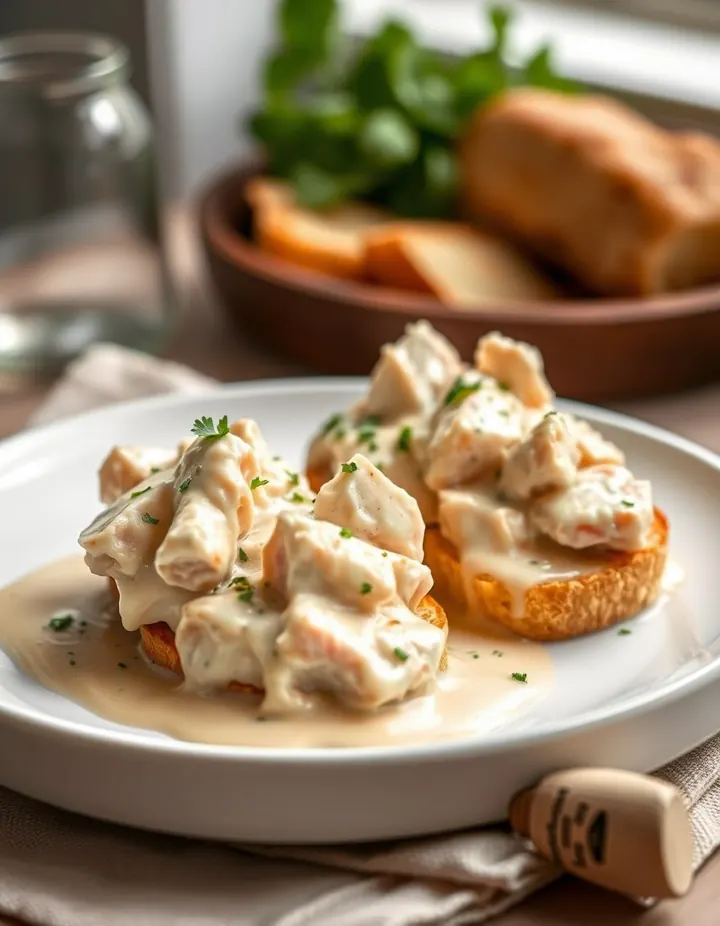
Serve, poured over mashed potatoes or toast.
Cook to a safe temperature. This method doesn't say how hot the inside should get. Check with a food thermometer in the thickest part:
- Chicken, turkey and other poultry: 165°F (74°C), and any stuffing inside it too.
Figures from the USDA's safe minimum internal temperatures.
This recipe comes from the Recipes Wiki on Fandom and is licensed CC BY-SA 4.0. Our formatting and summaries are shared under the same licence.
Steps grouped into stages for easier reading; the method is the source's own.
Found this recipe through an AI assistant? CompKitchen also shows which ingredients go well together and why, from the aroma molecules they share and how often recipes combine them. Try the pairing tools.
Explore the science
What each ingredient does
- Chicken gizzards
- Provide the main meat, which becomes tender through long simmering.
- Flour (in the method)
- Thickens the milk and butter into a smooth cream sauce.
- Butter (in the method)
- Adds fat and richness to the cream sauce.
- Milk (in the method)
- Forms the liquid base of the cream sauce.
The step that matters
Simmer until tender. Gizzards are dense connective tissue and need long, gentle simmering to become tender. Stopping early leaves them tough, so test for tenderness before making the sauce.
“What each ingredient does” and “The step that matters” were written by Claude, an AI, from this recipe’s own method. They are not checked recipe by recipe, so they can be wrong.
Make it your own
Stand-ins, a drink, and quick taste fixes for this dish, ranked by how well each fits its other ingredients: shared aroma molecules and how often recipes combine them.
You might also like
 Illustration
 Illustration
 Illustration
 Illustration
The Sunday pairing: one pairing, the chemistry behind it, and how to cook it. No spam, unsubscribe anytime.
Prefer an account? Create a free account for sign-in; Pro adds the full results and chemistry.