Why it works: Swiss cheese and butter match in chemistry and in kitchens. They rank in the top 3% of all ingredient pairs, and 412 recipes mention both. Both carry delta-decalactone, which smells sweet, creamy. The science ↓
The recipe
Ingredients
Contains: egg, milk, wheat (auto-detected from the ingredients and method; we can miss things, so check labels)
Directions
Make the dough
Mix one pound flour, 6–8 eggs, and 1 teaspoon salt together in a large bowl, whipping and stirring until a paste forms bubbles.
Add water as needed until the paste is semi‑pasty.
Shape and boil the noodles
Boil a large pot of water, adding a teaspoon of salt and a touch of oil.
Use a spätzle hobel or a large holed colander to shape the noodles.
Press dough into the hobel and move back and forth so noodles fall into the boiling water.
When all dough is turned into noodles, stir the boiling water for 1–2 minutes.
When the noodles rise to the top, use a skimmer or holed spoon to transfer them to a large bowl.
Do not rinse the noodles.
Assemble and serve
Layer the noodles and Swiss cheese in the bowl, alternating until all are used.
Stir the cheese and noodles together with a large spoon.
Cover the bowl with a lid.
Chop a medium onion.
Heat 3 tablespoons of butter and cook the onions until browned.
Pour the onions over the spätzle and cover again.
Serve the dish.
If desired, warm in an oven at 320 °F for 15 minutes.
This recipe comes from the Recipes Wiki on Fandom and is licensed CC BY-SA 4.0. Our formatting and summaries are shared under the same licence.
Steps grouped into stages for easier reading; the method is the source's own.
Found this recipe through an AI assistant? CompKitchen also shows which ingredients go well together and why, from the aroma molecules they share and how often recipes combine them. Try the pairing tools.
Explore the science
The flavor team
The pairs that carry this dish. Each one is judged two ways: how much aroma chemistry they share, and how many recipes mention both.
-
Swiss cheese + buttertop 3% of all pairsAroma overlapstrongMentioned together412 recipes
Shared aroma: delta-decalactone (sweet, creamy).
-
Flour + buttertop 6% of all pairsAroma overlaplowMentioned together122,858 recipes
Shared aroma: isobutyraldehyde (malty, green).
-
Onion + buttertop 7% of all pairsAroma overlapmoderateMentioned together42,827 recipes
Shared aroma: guaiacol (smoky, sweet).
-
Swiss cheese + oniontop 8% of all pairsAroma overlapmoderateMentioned together436 recipes
Shared aroma: ethyl butyrate (apple, fruity).
-
Egg + buttertop 8% of all pairsAroma overlapstrongMentioned together118,511 recipes
Shared aroma: nonanal (fat, citrus).
Flour and butter share little aroma chemistry, yet 122,858 recipes mention both: they likely work on texture and structure more than aroma.
Ranks compare each pair with 20,000 random ingredient pairs on CompKitchen. How we score pairs
What each ingredient does
- Eggs
- Bind the dough and add structure and richness to the noodles as they cook.
- All-purpose flour
- Forms the gluten network that gives the spätzle its body and chew.
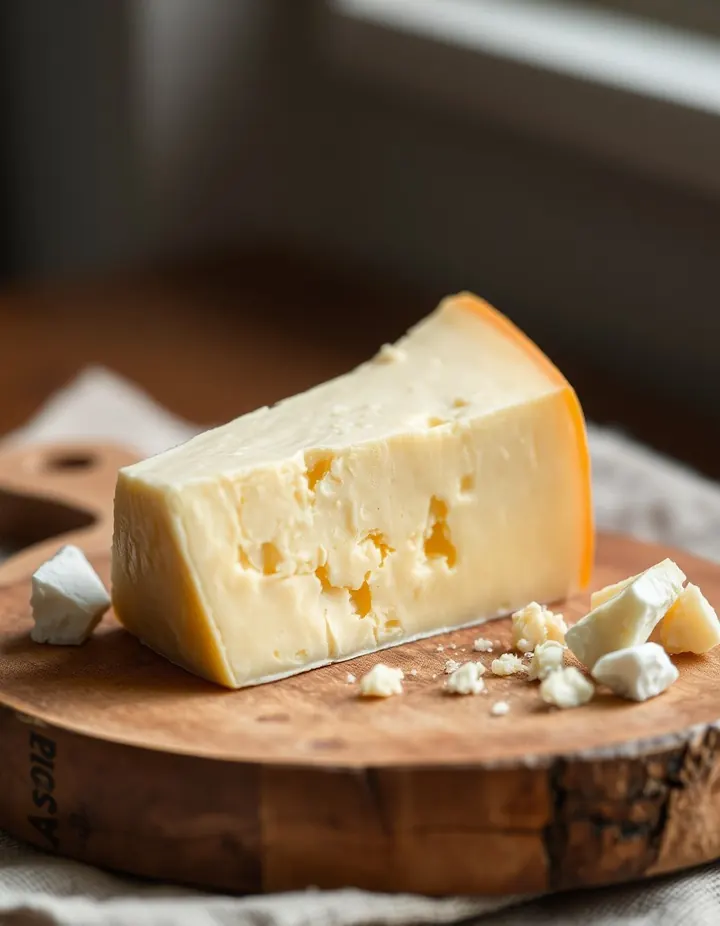
- Swiss cheese
- Melts into the warm noodles, adding creamy texture and savory flavor.
- Butter
- Adds fat and nutty browning flavor to the cooked onions.
- Onion
- Browns in butter to add sweetness and savory depth.
The step that matters
Stir the dough until a paste forms bubbles. Vigorous whipping develops gluten and traps air, giving spätzle a tender yet springy bite. Adding water gradually keeps the paste at the right consistency to pass through the hobel without becoming runny.
Flavor stand-ins for the onion
How well each one fits the dish's main ingredients (flour, egg, swiss cheese, butter):
- Potatobetter flavor fit
- Asparagusbetter flavor fit
- Chivebetter flavor fit
- Onionthe original
Fit is the average pairing score against flour, egg, swiss cheese, butter. Candidates are from the same food group and used in at least 100 recipes. This compares flavor only: it does not check the job the ingredient does in the dish (bulk, moisture, acidity, structure).
“What each ingredient does” and “The step that matters” were written by Claude, an AI, from this recipe’s own method. They are not checked recipe by recipe, so they can be wrong.
Make it your own
Stand-ins, a drink, and quick taste fixes for this dish, ranked by how well each fits its other ingredients: shared aroma molecules and how often recipes combine them.
You might also like
 Illustration
 Illustration
 Illustration
 Illustration
The Sunday pairing: one pairing, the chemistry behind it, and how to cook it. No spam, unsubscribe anytime.
Prefer an account? Create a free account for sign-in; Pro adds the full results and chemistry.