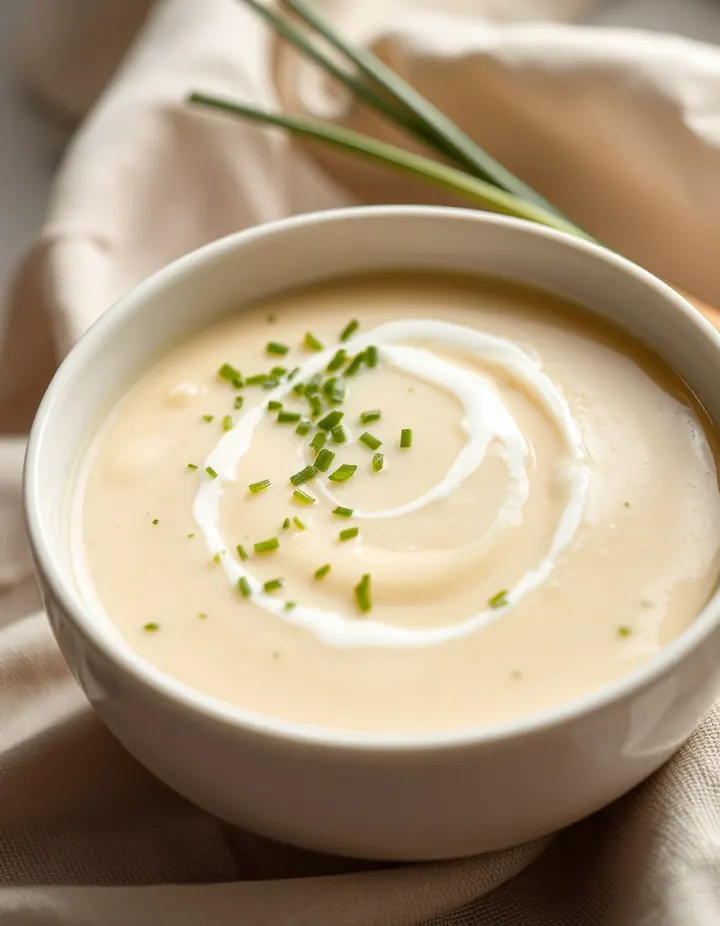
 Illustration
Why it works: Potato and parsley match in chemistry and in kitchens. They rank in the top 3% of all ingredient pairs, and 2,855 recipes mention both. Both carry 4'-methylacetophenone, which smells bitter almond. The science ↓
The recipe
Serves 8Ingredients
Contains: milk (auto-detected from the ingredients and method; we can miss things, so check labels)
Directions
Prepare
If using leeks, remove the roots and dark green leaves; wash twice as long as you think necessary to remove grit.
Make the soup
Place the vegetables, water and salt in a pot and bring to a boil. Lower the heat and gently simmer (partially covered) for 45–50 minutes. The soup is done when you can easily mash the vegetables against the side of the pot.
Puree the soup using a food mill fitted with the fine disc. Optionally, pulse it in a blender just until smooth and pass through a fine sieve.
Chill the soup if it is to be served cold, or gently reheat it to a simmer. Refrigerate any leftovers. It will keep for days if refrigerated in a covered container as soon as it cools.
Finish and serve
Add 1½–2 tsp cream (or whole milk) per portion just before serving. You’ll need more cream if you’re serving the soup hot or if it’s a bit watery; the idea is to create a smooth, silky puree, but you don’t want the taste or mouth feel of the cream to predominate. Taste and adjust for salt and pepper.
Steps grouped into stages for easier reading; the method is the source's own.
Found this recipe through an AI assistant? CompKitchen also shows which ingredients go well together and why, from the aroma molecules they share and how often recipes combine them. Try the pairing tools.
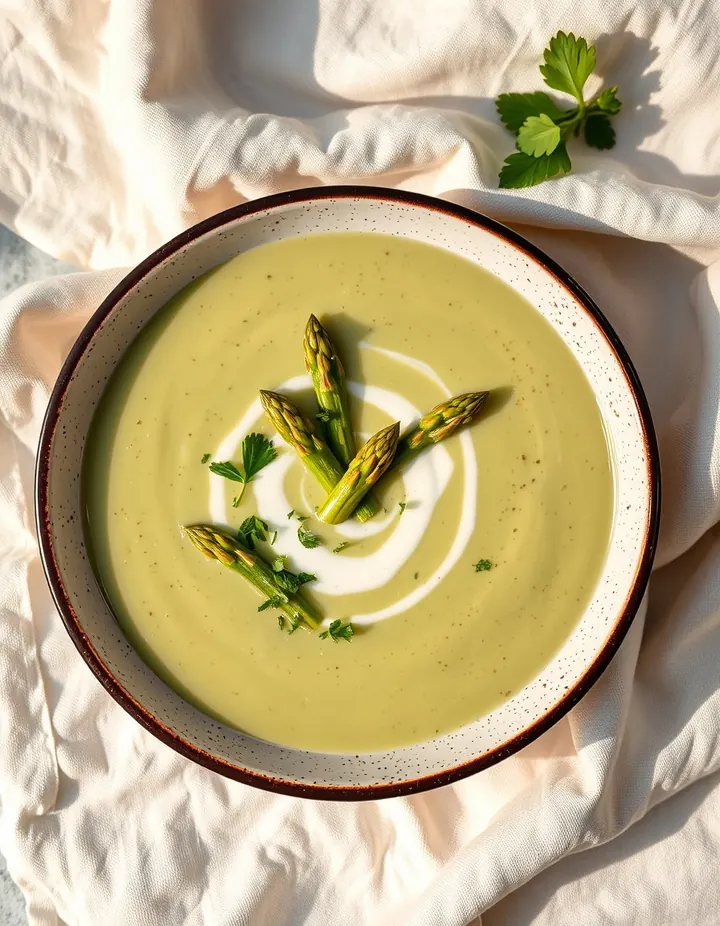
The picture is an illustration, not a photo of this recipe · Contact us to use it
Explore the science
The flavor team
The pairs that carry this dish. Each one is judged two ways: how much aroma chemistry they share, and how many recipes mention both.
-
Potato + parsleytop 3% of all pairsAroma overlapstrongMentioned together2,855 recipes
Shared aroma: 4'-methylacetophenone (bitter almond).
-
Leek + potatotop 4% of all pairsAroma overlapstrongMentioned together30 recipes
Shared aroma: 1-octen-3-ol (mushroom, earthy).
-
Leek + parsleytop 5% of all pairsAroma overlapstrongMentioned together759 recipes
Shared aroma: trans-2-hexenal (green, leafy).
-
White pepper + parsleytop 5% of all pairsAroma overlapmoderateMentioned together1,451 recipes
Shared aroma: myrcene (balsamic, herbaceous).
-
Potato + creamtop 8% of all pairsAroma overlapmoderateMentioned together2,481 recipes
Shared aroma: gamma-decalactone (peach, creamy).
Ranks compare each pair with 20,000 random ingredient pairs on CompKitchen. How we score pairs
What each ingredient does
- Leeks or onions
- Provide the sweet, aromatic base that gives the soup its flavour.
- Potatoes
- Their starch thickens the soup and gives it a smooth, creamy body when pureed.
- Cream
- Adds richness and a silky mouthfeel to the finished puree.
The step that matters
Pureeing the soup until smooth. Potato starch turns gluey if overworked in a blender, so a food mill or a brief pulse followed by sieving gives a silky texture without a gummy result.
Flavor stand-ins for the parsley
The recipe marks parsley as optional. How well each one fits the dish's main ingredients (leek, potato, white pepper, cream):
- Celerybetter flavor fit
- Nutmegabout as good a flavor fit
- Thymeabout as good a flavor fit
- Parsleythe original
Fit is the average pairing score against leek, potato, white pepper, cream. Candidates are from the same food group and used in at least 100 recipes. This compares flavor only: it does not check the job the ingredient does in the dish (bulk, moisture, acidity, structure).
“What each ingredient does” and “The step that matters” were written by Claude, an AI, from this recipe’s own method. They are not checked recipe by recipe, so they can be wrong.
Make it your own
Stand-ins, a drink, and quick taste fixes for this dish, ranked by how well each fits its other ingredients: shared aroma molecules and how often recipes combine them.
You might also like
 Illustration
 Illustration
 Illustration
 Illustration
The Sunday pairing: one pairing, the chemistry behind it, and how to cook it. No spam, unsubscribe anytime.
Prefer an account? Create a free account for sign-in; Pro adds the full results and chemistry.