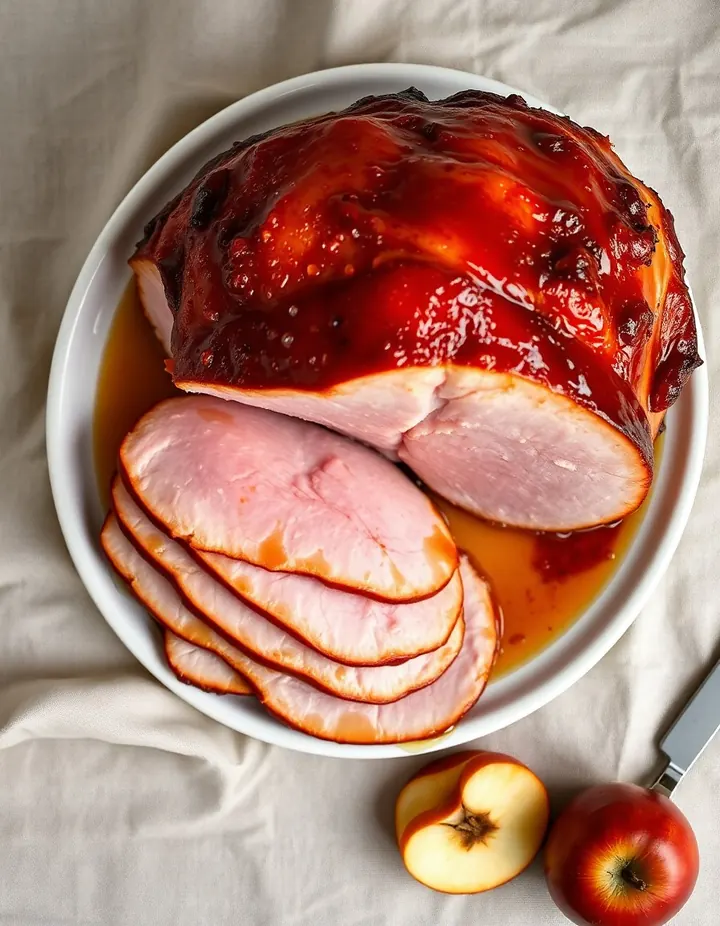
 Illustration
Why it works: Sage and cider work together. They rank in the top 12% of all ingredient pairs, and 69 recipes mention both. Both carry linalool, which smells floral, citrus. The science ↓
The recipe
Ingredients
Directions
Boil and prepare the ham for baking. Baste it every few minutes with a quart of hot cider.
SAUSAGES (Mrs. Lincoln).
Use sweet fresh pork. Take one-third fat and two- thirds lean. Chop or grind very fine; season for
every pound of meat and fat two teaspoonfuls of salt, two teaspoonfuls of sage, one-half teaspoonful of pep- per. Make cotton bags, one-half yard long and four inches wide. Dip them in strong salt and water and dry. Crowd the meat into them, tie the bag tightly and keep in a cool place. When wanted for use turn the end of the bag back, cut off the meat in half-inch slices, fry in hot frying pan until brown on both sides.
Transcribed from a scanned cookbook and modernised for today's kitchens. Where the book gave no heat or time, or said "a moderate oven", the temperatures and times here may be modern equivalents rather than the book's own figures. See the original page.
Found this recipe through an AI assistant? CompKitchen also shows which ingredients go well together and why, from the aroma molecules they share and how often recipes combine them. Try the pairing tools.
The picture is an illustration, not a photo of this recipe · Contact us to use it
Explore the science
The flavor team
The pairs that carry this dish. Each one is judged two ways: how much aroma chemistry they share, and how many recipes mention both.
-
Sage + cidertop 12% of all pairsAroma overlaplowMentioned together69 recipes
Shared aroma: linalool (floral, citrus).
Ranks compare each pair with 20,000 random ingredient pairs on CompKitchen. How we score pairs
Make it your own
Stand-ins, a drink, and quick taste fixes for this dish, ranked by how well each fits its other ingredients: shared aroma molecules and how often recipes combine them.
You might also like
 Illustration
 Illustration
 Illustration
 Illustration
The Sunday pairing: one pairing, the chemistry behind it, and how to cook it. No spam, unsubscribe anytime.
Prefer an account? Create a free account for sign-in; Pro adds the full results and chemistry.