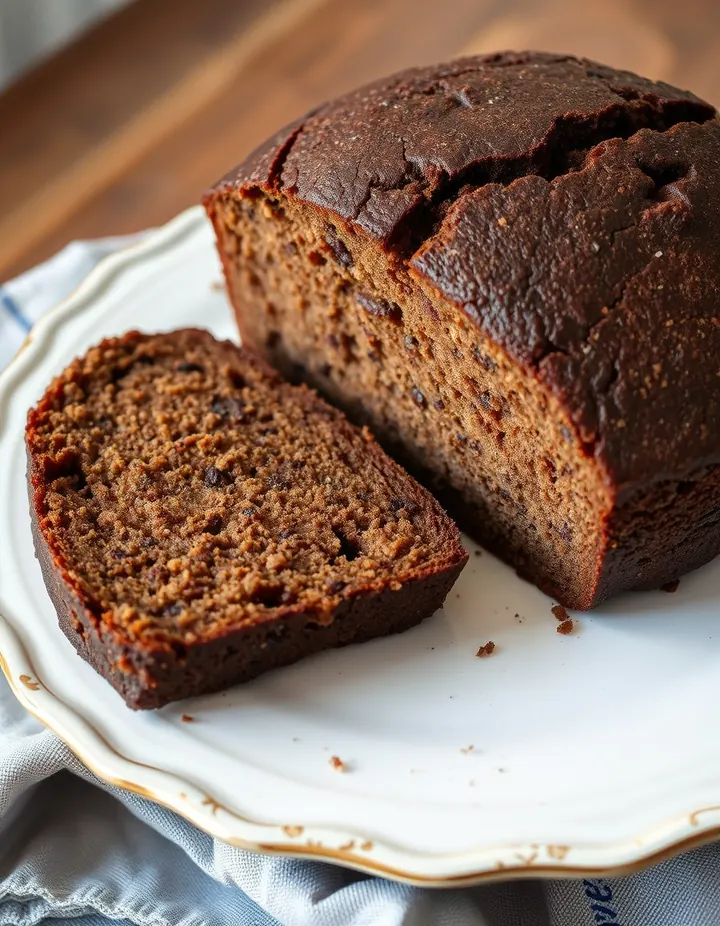
 Illustration
Why it works: Rye and molasses work together. They rank in the top 8% of all ingredient pairs, and 804 recipes mention both. Both carry ethanol, which smells alcoholic, ethereal. The science ↓
The recipe
Ingredients
Contains: wheat (auto-detected from the ingredients and method; we can miss things, so check labels)
Directions
Prepare the dough
Scald the rye meal and Indian meal by placing them in a pan and pouring just enough boiling water over them, stirring constantly with a spoon, until they are merely wet but not turned into a batter.
Add one-half tea-cup molasses, two tea-spoons salt, one tea-spoon soda, and one tea-cup yeast to the scalded mixture.
Mix the ingredients with warm water until the dough is as stiff as can be stirred with a spoon.
Rise and shape
Let the dough rise all night.
Place the risen dough in a large pan, smooth the top with a hand dipped in cold water, and let it stand a short time.
Bake
Bake the dough for five or six hours.
If the dough is put in the oven late in the day, let it remain all night.
Variations and history
Alternatively, use Graham flour instead of rye and bake as above.
Historically, the dough was placed in a kettle, allowed to rise, then placed on the hearth before the fire with coals on top of the lid and baked.
Transcribed from a scanned cookbook and modernised for today's kitchens. Where the book gave no heat or time, or said "a moderate oven", the temperatures and times here may be modern equivalents rather than the book's own figures. See the original page.
Found this recipe through an AI assistant? CompKitchen also shows which ingredients go well together and why, from the aroma molecules they share and how often recipes combine them. Try the pairing tools.
The picture is an illustration, not a photo of this recipe · Contact us to use it
Explore the science
The flavor team
The pairs that carry this dish. Each one is judged two ways: how much aroma chemistry they share, and how many recipes mention both.
-
Rye + molassestop 8% of all pairsAroma overlaplowMentioned together804 recipes
Shared aroma: ethanol (alcoholic, ethereal).
-
Tea + breadtop 8% of all pairsAroma overlapmoderateMentioned together383 recipes
Shared aroma: ethyl octanoate (fruity, wine).
-
Rye + breadtop 8% of all pairsAroma overlapmoderateMentioned together59 recipes
Shared aroma: ethyl octanoate (fruity, wine).
-
Rye + teatop 10% of all pairsAroma overlapmoderateMentioned together25 recipes
Shared aroma: ethyl octanoate (fruity, wine).
-
Tea + molassestop 19% of all pairsAroma overlaplowMentioned together139 recipes
Shared aroma: ethanol (alcoholic, ethereal).
Ranks compare each pair with 20,000 random ingredient pairs on CompKitchen. How we score pairs
What each ingredient does
- Rye meal
- Forms the main structure and bulk of the dense loaf.
- Indian meal
- Provides body and a coarse, crumbly texture to the dough.
- Molasses
- Adds sweetness, moisture, and deeper browning to the crust.
- Yeast
- Produces gas during the overnight rise, lightening the dough.
- Soda
- Adds leavening that helps the loaf rise and open up during baking.
The step that matters
Scalding the meals. Pour just enough boiling water to wet the meals without making a batter. Hot water partly gelatinizes the starch, so the meal absorbs moisture and bakes into a tender, cohesive dough rather than a soggy or crumbly one.
“What each ingredient does” and “The step that matters” were written by Claude, an AI, from this recipe’s own method. They are not checked recipe by recipe, so they can be wrong.
Make it your own
Stand-ins, a drink, and quick taste fixes for this dish, ranked by how well each fits its other ingredients: shared aroma molecules and how often recipes combine them.
You might also like
 Illustration
 Illustration
 Illustration
 Illustration
The Sunday pairing: one pairing, the chemistry behind it, and how to cook it. No spam, unsubscribe anytime.
Prefer an account? Create a free account for sign-in; Pro adds the full results and chemistry.