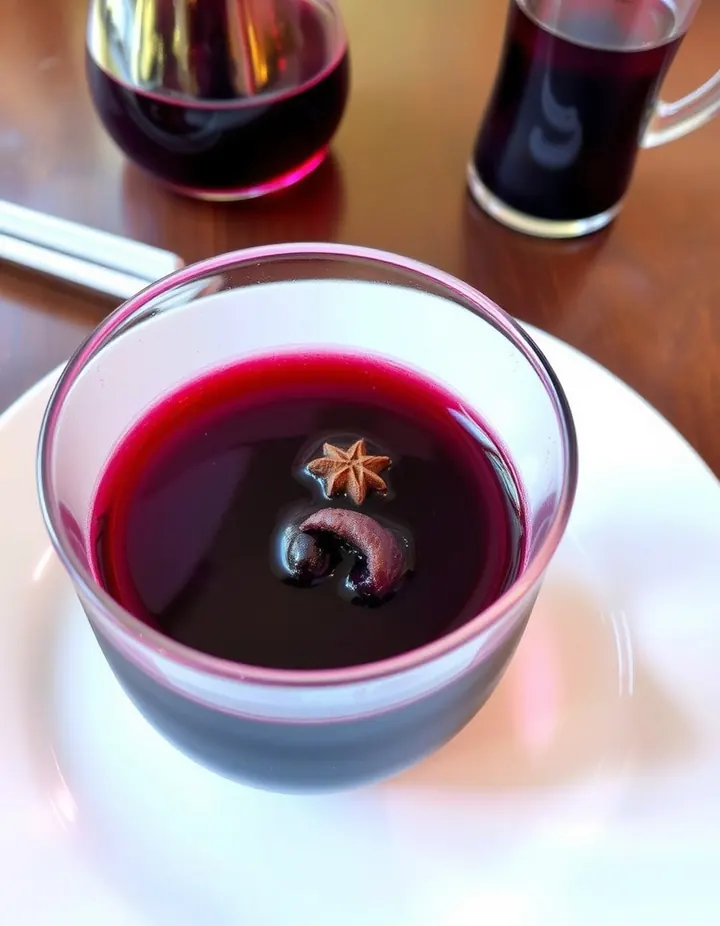
 Illustration
Why it works: Brandy and wine are a kitchen classic. They rank in the top 3% of all ingredient pairs, and 2,423 recipes mention both. Both carry gamma-nonanolactone, which smells coconut, sweet. The science ↓
The recipe
Ingredients
Contains: wheat (auto-detected from the ingredients and method; we can miss things, so check labels)
Directions
Clean and sanitize all equipment: a food-grade fermenting container with an airlock, spoons, sieve or bag, and bottles made for carbonated drinks. Rinse well after sanitizing.
Pick the ripe elderberries from the stalks, discarding stems and any green or unripe berries. Never eat or ferment elderberries raw; they must be cooked, as in the boiling step below.
Pour 3 gallons of boiling water over the berries. Cover and let stand 24 hours at room temperature, then strain through a sieve or clean bag, pressing the fruit to extract all the juice.
Measure the juice. For each gallon, add 3 lb sugar, 1/2 oz ground ginger, 6 cloves and 1 lb raisins. Boil gently for 1 hour, skimming off the foam.
Cool the liquid to lukewarm, about 80°F (27°C) or below. Hotter liquid will kill the yeast.
Pour into the sanitized fermenter. Stir in 4 tablespoons of fresh brewer's yeast per 9 gallons, and add the hops in a mesh bag. Fit the airlock.
Ferment for about 2 weeks at room temperature, away from sunlight, until bubbling in the airlock slows. Then add the brandy, half a pint per gallon.
Rack the wine off the sediment into a clean, sanitized container. Use a hydrometer: bottle only when the reading is the same on 3 days in a row, not based on bubbles alone.
Bottle the wine into sanitized bottles made for carbonated drinks, leaving headspace. Store cool, at about 50-60°F (10-16°C), and age for several months.
To serve mulled, gently warm a cup of the wine without boiling it, to about 160°F (71°C), and add nutmeg if you like. Refrigerate any leftovers and use within 1 week.
Original text from the book (6 steps)
1818. INGREDIENTS.--To every 3 gallons of water allow 1 peck of elderberries; to every gallon of juice allow 3 lbs. of sugar, 1/2 oz. of ground ginger, 6 cloves, 1 lb. of good Turkey raisins; 1/2 pint of brandy to every gallon of wine. To every 9 gallons of wine 3 or 4 tablespoonfuls of fresh brewer's yeast.
_Mode_.--Pour the water, quite boiling, on the elderberries, which should be picked from the stalks, and let these stand covered for 24 hours; then strain the whole through a sieve or bag, breaking the fruit to express all the juice from it. Measure the liquor, and to every gallon allow the above proportion of sugar. Boil the juice and sugar with the ginger, cloves, and raisins for 1 hour, skimming the liquor the whole time; let it stand until milk-warm, then put it into a clean dry cask, with 3 or 4 tablespoonfuls of good fresh yeast to every 9 gallons of wine. Let it ferment for about a fortnight; then add the brandy, bung up the cask, and let it stand some months before it is bottled, when it will be found excellent. A bunch of hops suspended to a string from the bung, some persons say, will preserve the wine good for several years. Elder wine is usually mulled, and served with sippets of toasted bread and a little grated nutmeg.
_Time_.--To stand covered 24 hours; to be boiled 1 hour.
_Average cost_, when made at home, 3s. 6d. per gallon.
_Seasonable_.--Make this in September.
ELDER-BERRY WINE.--The elder-berry is well adapted for the production of wine; its juice contains a considerable portion of the principle necessary for a vigorous fermentation, and its beautiful colour communicates a rich tint to the wine made from it. It is, however, deficient in sweetness, and therefore demands an addition of sugar. It is one of the very best of the genuine old English wines; and a cup of it mulled, just previous to retiring to bed on a winter night, is a thing to be "run for," as Cobbett would say: it is not, however, agreeable to every taste.
From a scanned old cookbook. The method has been rewritten by AI to follow current food-safety guidance (safe cooking temperatures, refrigeration, no raw-egg shortcuts). It hasn't been kitchen-tested. The original text is under the method. See the original page.
Found this recipe through an AI assistant? CompKitchen also shows which ingredients go well together and why, from the aroma molecules they share and how often recipes combine them. Try the pairing tools.
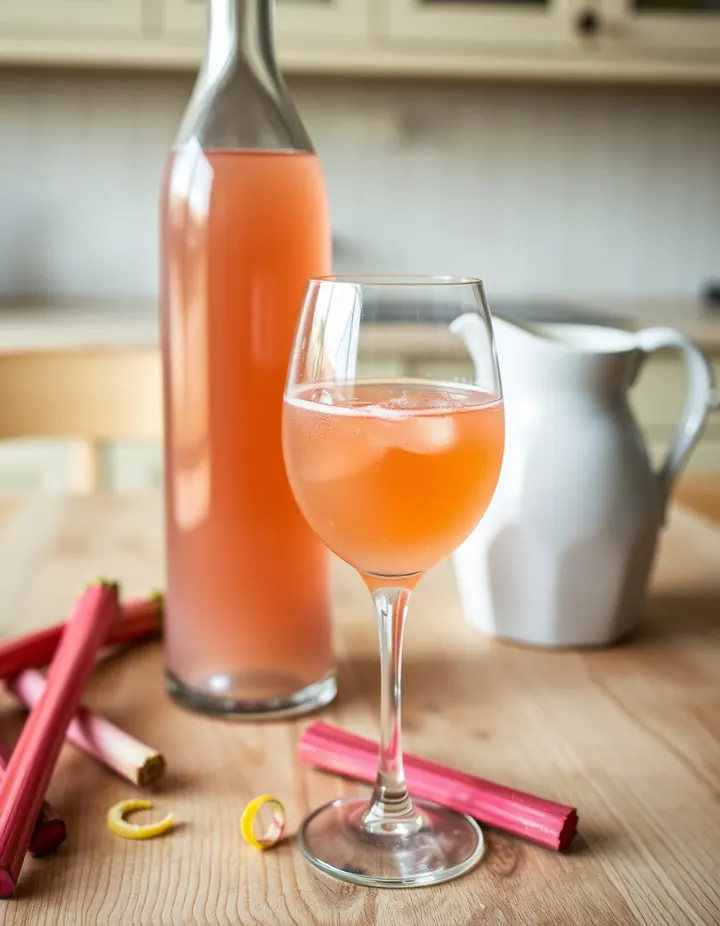
The picture is an illustration, not a photo of this recipe · Contact us to use it
Explore the science
The flavor team
The pairs that carry this dish. Each one is judged two ways: how much aroma chemistry they share, and how many recipes mention both.
-
Brandy + winetop 3% of all pairsAroma overlapmoderateMentioned together2,423 recipes
Shared aroma: gamma-nonanolactone (coconut, sweet).
-
Brandy + clovetop 6% of all pairsAroma overlapmoderateMentioned together2,282 recipes
Shared aroma: ethyl cinnamate (sweet, balsamic).
-
Wine + clovetop 8% of all pairsAroma overlapmoderateMentioned together2,069 recipes
Shared aroma: cis-isoeugenol (clove, spicy).
-
Wine + hopstop 11% of all pairsAroma overlapmoderateMentioned together4 recipes
Shared aroma: 4-methylguaiacol (smoky, spicy).
-
Brandy + hopstop 14% of all pairsAroma overlapmoderateMentioned together3 recipes
Shared aroma: guaiacol (smoky, sweet).
Ranks compare each pair with 20,000 random ingredient pairs on CompKitchen. How we score pairs
Flavor stand-ins for the clove
How well each one fits the dish's main ingredients (brandy, wine, hops):
- Cinnamonabout as good a flavor fit
- Clovethe original
- Gingerabout as good a flavor fit
Fit is the average pairing score against brandy, wine, hops. Candidates are from the same food group and used in at least 100 recipes. This compares flavor only: it does not check the job the ingredient does in the dish (bulk, moisture, acidity, structure).
Make it your own
Stand-ins, a drink, and quick taste fixes for this dish, ranked by how well each fits its other ingredients: shared aroma molecules and how often recipes combine them.
You might also like
 Illustration
 Illustration
 Illustration
 Illustration
The Sunday pairing: one pairing, the chemistry behind it, and how to cook it. No spam, unsubscribe anytime.
Prefer an account? Create a free account for sign-in; Pro adds the full results and chemistry.