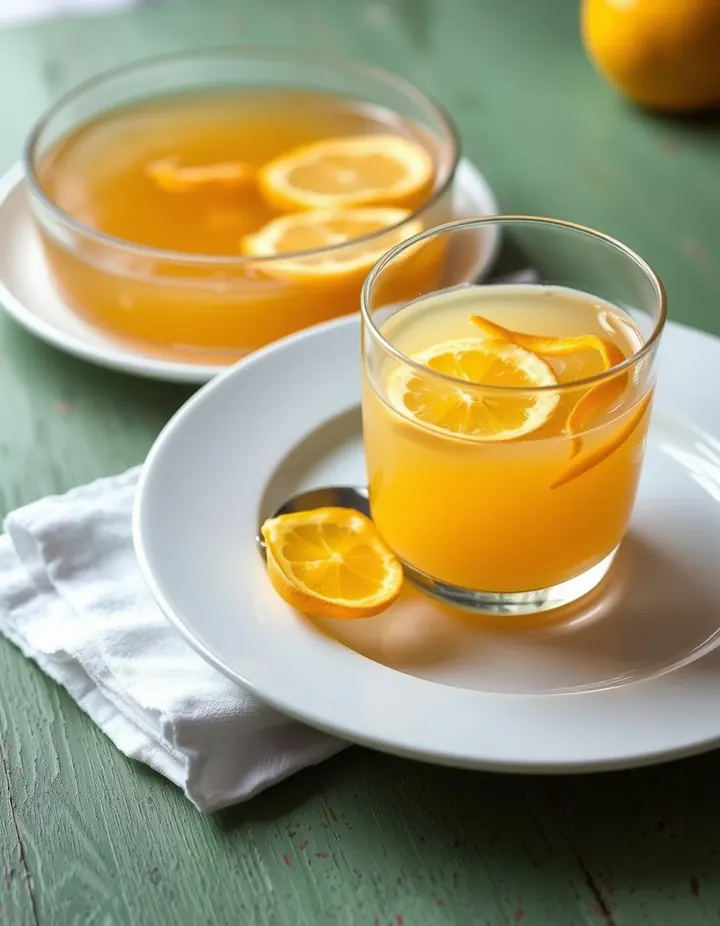
 Illustration
Why it works: White wine and rum match in chemistry and in kitchens. They rank in the top 2% of all ingredient pairs, and 103 recipes mention both. Both carry beta-damascenone, which smells apple, rose. The science ↓
The recipe
Ingredients
Directions
Prepare the essence
Extract the essence from the rinds of three lemons by rubbing them with sugar in lumps.
Make the punch
Put these into a large jug with the peel of two Seville oranges, the peel of two lemons cut extremely thin, the juice of four Seville oranges, the juice of ten lemons, and six glasses of calf's feet jelly in a liquid state. Stir these well together.
Pour two quarts of boiling water into the jug.
Cover the jug closely and set it near the fire for a quarter of an hour.
Strain the mixture through a sieve into a punch bowl or jug.
Sweeten and finish
Sweeten it with a bottle of capillaire.
Add half a pint of white wine, a pint of French brandy, a pint of Jamaica rum, and a bottle of orange shrub.
Stir the punch as the spirit is poured in.
If not sufficiently sweet, add sugar in small quantities, or a spoonful or two of capillaire.
Transcribed from a scanned cookbook and modernised for today's kitchens. Where the book gave no heat or time, or said "a moderate oven", the temperatures and times here may be modern equivalents rather than the book's own figures. See the original page.
Found this recipe through an AI assistant? CompKitchen also shows which ingredients go well together and why, from the aroma molecules they share and how often recipes combine them. Try the pairing tools.
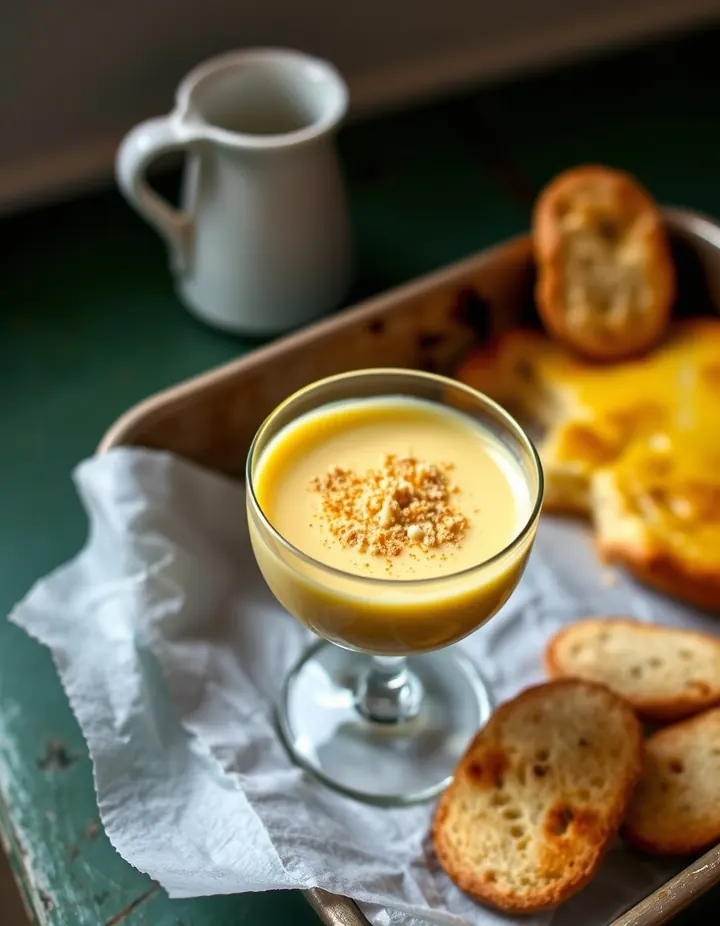
The picture is an illustration, not a photo of this recipe · Contact us to use it
Explore the science
The flavor team
The pairs that carry this dish. Each one is judged two ways: how much aroma chemistry they share, and how many recipes mention both.
-
White wine + rumtop 2% of all pairsAroma overlapstrongMentioned together103 recipes
Shared aroma: beta-damascenone (apple, rose).
-
Lemon + orangetop 1% of all pairsAroma overlapstrongMentioned together10,632 recipes
Shared aroma: 3-hexenal (apple, fruity).
-
Brandy + rumtop 2% of all pairsAroma overlapstrongMentioned together1,058 recipes
Shared aroma: beta-damascenone (apple, rose).
-
White wine + brandytop 3% of all pairsAroma overlapstrongMentioned together615 recipes
Shared aroma: beta-damascenone (apple, rose).
-
White wine + lemontop 5% of all pairsAroma overlapmoderateMentioned together3,764 recipes
Shared aroma: myrcene (balsamic, herbaceous).
Ranks compare each pair with 20,000 random ingredient pairs on CompKitchen. How we score pairs
What each ingredient does
- Lemons
- Supply acidity and aromatic oils from the peel, balancing the sweetness.
- Seville oranges
- Add bitter-sharp citrus flavour and aromatic oils from the peel.
- Calf's feet jelly
- Adds gelatin for body and a smoother, richer mouthfeel to the punch.
- French brandy
- Contributes alcohol strength and warm, fruity aroma to the punch.
- Jamaica rum
- Adds alcohol strength and a deep, molasses-like aroma.
- White wine
- Adds liquid volume and light fruity flavour that dilutes the spirits.
The step that matters
Rubbing the lemon rinds with sugar. Rubbing the rinds into sugar breaks the oil sacs in the peel and lifts the aromatic oils into the sugar. Skipping or rushing this step leaves the punch with weak citrus aroma.
Flavor stand-ins for the lemon
How well each one fits the dish's main ingredients (white wine, brandy, rum, orange):
- Pineapplebetter flavor fit
- Applebetter flavor fit
- Apricotbetter flavor fit
- Lemonthe original
Fit is the average pairing score against white wine, brandy, rum, orange. Candidates are from the same food group and used in at least 100 recipes. This compares flavor only: it does not check the job the ingredient does in the dish (bulk, moisture, acidity, structure).
“What each ingredient does” and “The step that matters” were written by Claude, an AI, from this recipe’s own method. They are not checked recipe by recipe, so they can be wrong.
Make it your own
Stand-ins, a drink, and quick taste fixes for this dish, ranked by how well each fits its other ingredients: shared aroma molecules and how often recipes combine them.
You might also like
 Illustration
 Illustration
 Illustration
 Illustration
The Sunday pairing: one pairing, the chemistry behind it, and how to cook it. No spam, unsubscribe anytime.
Prefer an account? Create a free account for sign-in; Pro adds the full results and chemistry.