Why it works: Sage and onion are a kitchen classic. They rank in the top 10% of all ingredient pairs, and 3,629 recipes mention both. Both carry coumarin, which smells sweet, hay. The science ↓
The recipe
Ingredients
Directions
Buy a dressed goose, already plucked and cleaned. Remove the giblets and neck from the cavity. Pat the goose dry with paper towels. Do not rinse it.
Heat the oven to 350°F (175°C). Set the rack on a shallow roasting pan, and prick the skin all over with a fork without piercing the meat.
Season the goose inside and out with the salt and pepper.
Finely chop the onion and sage. Mix them with a little salt and pepper. Put the mixture in a lightly greased, covered baking dish, separate from the goose.
Bake the stuffing covered at 350°F (175°C) for 30 to 40 minutes, until hot all the way through and a thermometer reads 165°F (74°C) in the centre.
Roast the goose breast side up for about 15 to 20 minutes per pound (about 7 to 9 minutes per 450 g). Pour off the rendered fat from the pan every 30 minutes.
The goose is done when a thermometer inserted into the thickest part of the thigh, not touching the bone, reads 165°F (74°C) and the juices run clear.
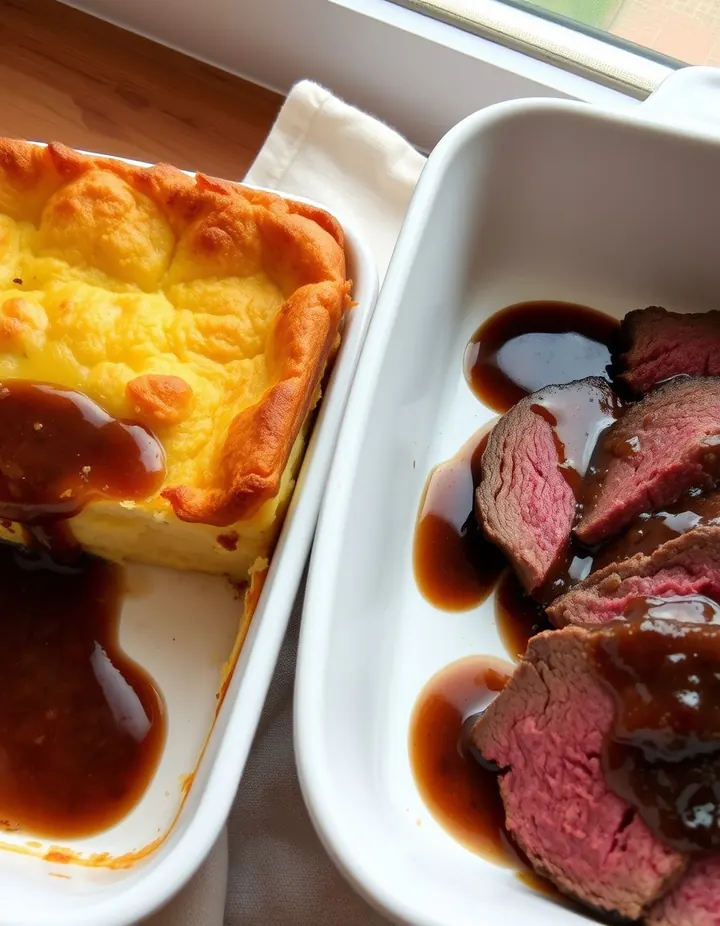
Let the goose rest for 15 minutes before carving. Serve the stuffing alongside.
Refrigerate any leftover goose and stuffing within 2 hours and eat within 3 to 4 days, or freeze them.
Original text from the book (7 steps)
For reference only, not instructions. This text may include storage, bottling, preserving or cooking steps that don't meet current food-safety guidance. Use the method above.
Pluck the goose carefully.
Remove the quill sockets.
Singe off any remaining feathers.
Prepare the stuffing with sage and onion.
Season the goose with salt and pepper.
Stuff the goose with the prepared mixture.
Roast in a preheated oven at 350°F (175°C) until cooked through.
From a scanned old cookbook. The method has been rewritten by AI to follow current food-safety guidance (safe cooking temperatures, refrigeration, no raw-egg shortcuts). It hasn't been kitchen-tested. The original text is under the method.
Found this recipe through an AI assistant? CompKitchen also shows which ingredients go well together and why, from the aroma molecules they share and how often recipes combine them. Try the pairing tools.
Explore the science
The flavor team
The pairs that carry this dish. Each one is judged two ways: how much aroma chemistry they share, and how many recipes mention both.
-
Sage + oniontop 10% of all pairsAroma overlapmoderateMentioned together3,629 recipes
Shared aroma: coumarin (sweet, hay).
-
Sage + peppertop 2% of all pairsAroma overlapstrongMentioned together5,388 recipes
Shared aroma: beta-phellandrene (minty, terpene).
-
Onion + peppertop 7% of all pairsAroma overlapmoderateMentioned together68,463 recipes
Shared aroma: 2-isopropyl-3-methoxypyrazine (earthy, pea).
Ranks compare each pair with 20,000 random ingredient pairs on CompKitchen. How we score pairs
Make it your own
Stand-ins, a drink, and quick taste fixes for this dish, ranked by how well each fits its other ingredients: shared aroma molecules and how often recipes combine them.
You might also like
 Illustration
 Illustration
 Illustration
 Illustration
The Sunday pairing: one pairing, the chemistry behind it, and how to cook it. No spam, unsubscribe anytime.
Prefer an account? Create a free account for sign-in; Pro adds the full results and chemistry.