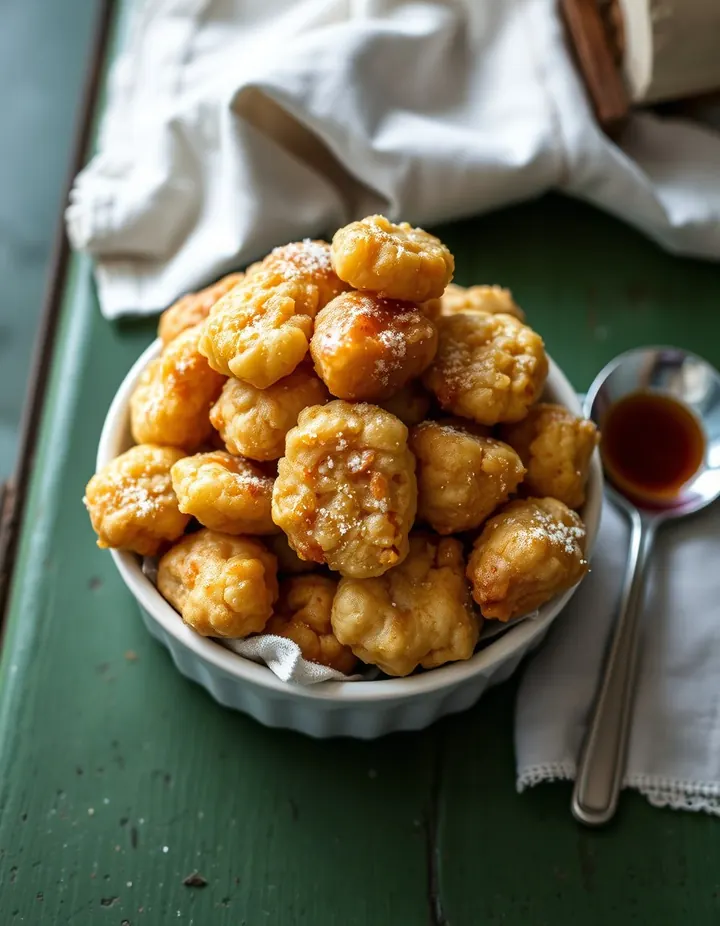
 Illustration
Why it works: Sugar and rice are a kitchen classic. They rank in the top 15% of all ingredient pairs, and 8,324 recipes mention both. Both carry 2-nonenal, which smells fatty, green. The science ↓
The recipe
Ingredients
Contains: egg, milk, wheat (auto-detected from the ingredients and method; we can miss things, so check labels)
Directions
Cook the rice
Pare the rind of the lemon very thin.
Boil the lemon rind in milk with sugar and rice until the rice is soft.
Remove the lemon peel.
Beat the rice with brandy.
Shape and coat the fritters
Shape the mixture into fritters.
Brush the fritters with egg yolks.
Cover the fritters with bread crumbs.
Fry and glaze
Fry the fritters in lard.
Dust the fritters with fine sugar.
Glaze with a salamander.
Make the jelly-filled fritters
Let the rice cool.
Spread the cooled rice out ½ inch thick.
Cut the spread rice into rounds.
Make an opening in each round.
Insert a piece of jelly or jam into each opening.
Close the opening.
Egg and crumb the fritters.
Fry the fritters in hot lard.
Transcribed from a scanned cookbook and modernised for today's kitchens. Where the book gave no heat or time, or said "a moderate oven", the temperatures and times here may be modern equivalents rather than the book's own figures.
Found this recipe through an AI assistant? CompKitchen also shows which ingredients go well together and why, from the aroma molecules they share and how often recipes combine them. Try the pairing tools.
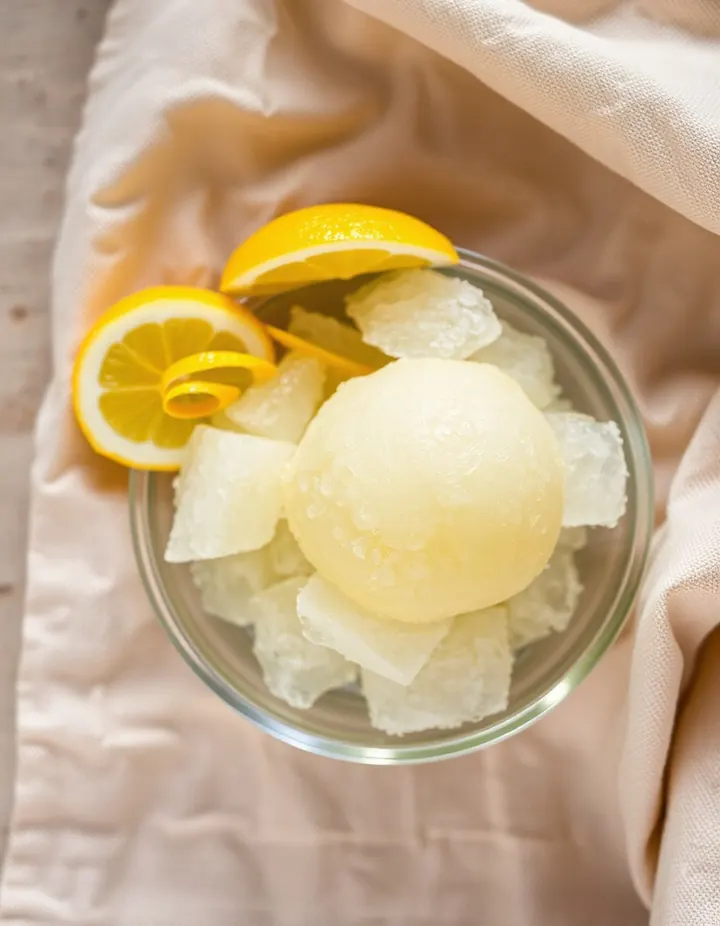
The picture is an illustration, not a photo of this recipe · Contact us to use it
Explore the science
The flavor team
The pairs that carry this dish. Each one is judged two ways: how much aroma chemistry they share, and how many recipes mention both.
-
Sugar + ricetop 15% of all pairsAroma overlapmoderateMentioned together8,324 recipes
Shared aroma: 2-nonenal (fatty, green).
-
Brandy + curranttop 3% of all pairsAroma overlapmoderateMentioned together3,057 recipes
Shared aroma: ethyl cinnamate (sweet, balsamic).
-
Milk + ricetop 3% of all pairsAroma overlapstrongMentioned together7,354 recipes
Shared aroma: 2-nonenal (fatty, green).
-
Milk + breadtop 4% of all pairsAroma overlapstrongMentioned together11,363 recipes
Shared aroma: 2-undecenal (sweet).
-
Egg + breadtop 6% of all pairsAroma overlapstrongMentioned together22,584 recipes
Shared aroma: 2-nonenal (fatty, green).
Ranks compare each pair with 20,000 random ingredient pairs on CompKitchen. How we score pairs
What each ingredient does
- Rice
- Cooked soft, then cooled, it becomes a firm mass that holds its shape.
- Milk
- Cooking the rice in milk softens it and adds richness and tenderness.
- Sugar
- Adds sweetness and helps the fritters brown when fried and dusted.
- Egg yolks
- Act as a binder and give the coating a golden colour when fried.
- Bread crumbs
- Form a crisp, golden crust around the soft rice when fried.
- Lemon rind
- Adds bright citrus aroma from the oils in the peel.
The step that matters
Let the rice cool before shaping. Cooled rice sets firm enough to spread, cut and seal around the jelly. Warm rice stays soft and sticky, so the rounds tear and the filling can leak out during frying.
Flavor stand-ins for the currant
The recipe marks currant as optional. How well each one fits the dish's main ingredients (lemon, milk, sugar, rice, brandy, egg, bread):
- Vanillabetter flavor fit
- Figbetter flavor fit
- Orangeabout as good a flavor fit
- Currantthe original
Fit is the average pairing score against lemon, milk, sugar, rice, brandy, egg, bread. Candidates are from the same food group and used in at least 100 recipes. This compares flavor only: it does not check the job the ingredient does in the dish (bulk, moisture, acidity, structure).
“What each ingredient does” and “The step that matters” were written by Claude, an AI, from this recipe’s own method. They are not checked recipe by recipe, so they can be wrong.
Make it your own
Stand-ins, a drink, and quick taste fixes for this dish, ranked by how well each fits its other ingredients: shared aroma molecules and how often recipes combine them.
You might also like
 Illustration
 Illustration
 Illustration
 Illustration
The Sunday pairing: one pairing, the chemistry behind it, and how to cook it. No spam, unsubscribe anytime.
Prefer an account? Create a free account for sign-in; Pro adds the full results and chemistry.