
corn, buttermilk and chive popovers
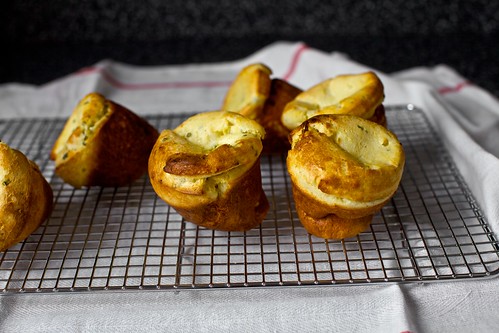
I hope you didn’t think I forgot about you this week, or actually hopped on a plane to Mexico, as repeatedly threatened during . The truth of where I’ve been is far less interesting and could be roughly summarized as: man, am I a terrible cook this week. However, the week started out promisingly; I nailed a cookbook chicken dish on the first try (that I’d been certain would be no good at all) and brimming with confidence — maybe I trust all of my cooking instincts! maybe I good at this? — I decided to make a dish of slow-roasted vegetables that turn out should never have been slow-roasted, unless vegetable leather is your thing. Oops.
Estimated Nutrition (whole recipe, rough)
What these numbers assume — 9 portions →
| Ingredient | Portion assumed | kcal |
|---|---|---|
| Flour | 1 cup (125g) all-purpose | 455 |
| Milk | 1 cup (244ml) whole | 149 |
| Butter | 1 tbsp (14g) | 102 |
| Egg | 1 large egg (50g) | 78 |
| Corn | 1/2 cup kernels (82g) | 77 |
| Sugar | 1 tbsp (12.5g) granulated | 49 |
| Black Pepper | 1 tsp ground (2.3g) | 6 |
| Chives | 1 tbsp (3g) | 1 |
| Salt | 1 tsp (6g) | 0 |
Totals for the whole recipe, adding one typical portion per ingredient — listed above. Quantities in the recipe are not counted, so this is a rough guide only — not suitable for medical or dietary planning.
Ingredients
- 1 cup buttermilk (or
- )
- 1/2 cup corn kernels (from most of one cob)
- 3 large eggs
- 2 tablespoons melted butter, cooled, divided
- 1 cup all-purpose flour
- 1 tablespoon yellow cornmeal
- 1 teaspoon granulated sugar
- 1/2 teaspoon table salt
- Freshly ground black pepper
- 1 tablespoon snipped fresh chives