Why it works: Haddock and sauce match in chemistry and in kitchens. They rank in the top 1% of all ingredient pairs, and 200 recipes mention both. Both carry ethanol, which smells alcoholic, ethereal. The science ↓
The recipe
Ingredients
Contains: egg, milk, wheat, fish (auto-detected from the ingredients and method; we can miss things, so check labels)
Also mentioned in the method: egg
Directions
Make the stock
Combine the heads and bones of the fish with the sliced onion, peppercorns, parsley, and mace in a saucepan.
Cover with cold water and bring to a boil, cooking for 20 minutes.
Strain the mixture.
Make the sauce and cook the fish
Melt the butter in a stew pan.
Stir in the flour until nicely browned.
Brush the fillets with beaten egg.
Brown the fillets in the butter on both sides.
Remove the fish from the pan.
Gradually add the strained stock to the pan, stirring continuously.
Replace the fish in the pan and simmer for 15 minutes.
If desired, add ketchup and chili vinegar.
Serve
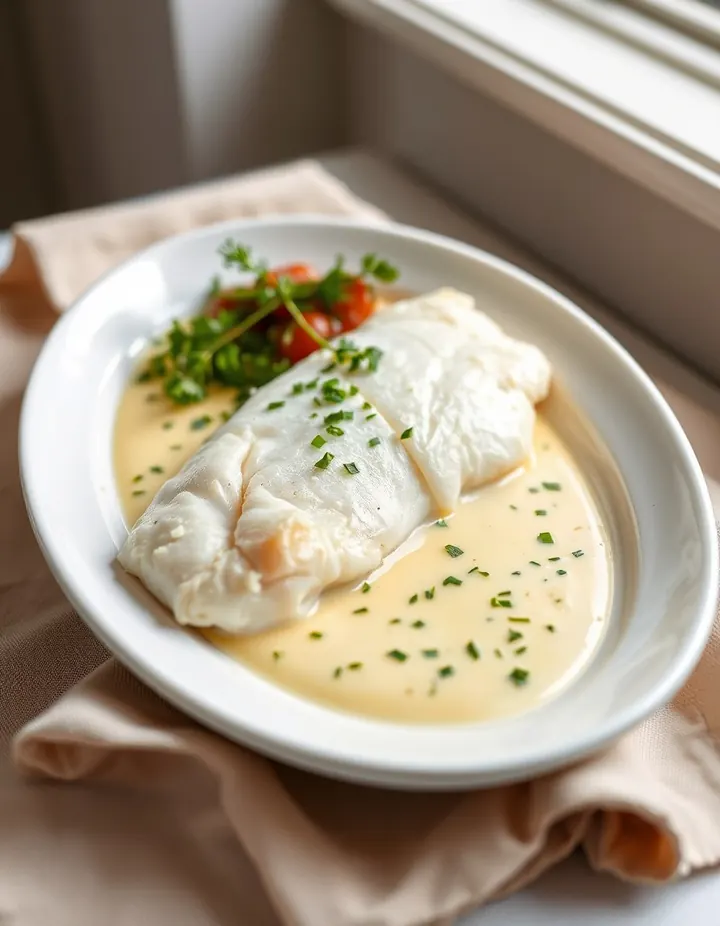
Arrange the fillets on a serving dish.
Pour the sauce in the center.
Garnish with parsley.
Cook to a safe temperature. This method doesn't say how hot the inside should get. Check with a food thermometer in the thickest part:
- Fish: 145°F (63°C), or until the flesh is opaque and flakes easily.
Figures from the USDA's safe minimum internal temperatures.
Transcribed from a scanned cookbook and modernised for today's kitchens. Where the book gave no heat or time, or said "a moderate oven", the temperatures and times here may be modern equivalents rather than the book's own figures.
Found this recipe through an AI assistant? CompKitchen also shows which ingredients go well together and why, from the aroma molecules they share and how often recipes combine them. Try the pairing tools.
Explore the science
The flavor team
The pairs that carry this dish. Each one is judged two ways: how much aroma chemistry they share, and how many recipes mention both.
-
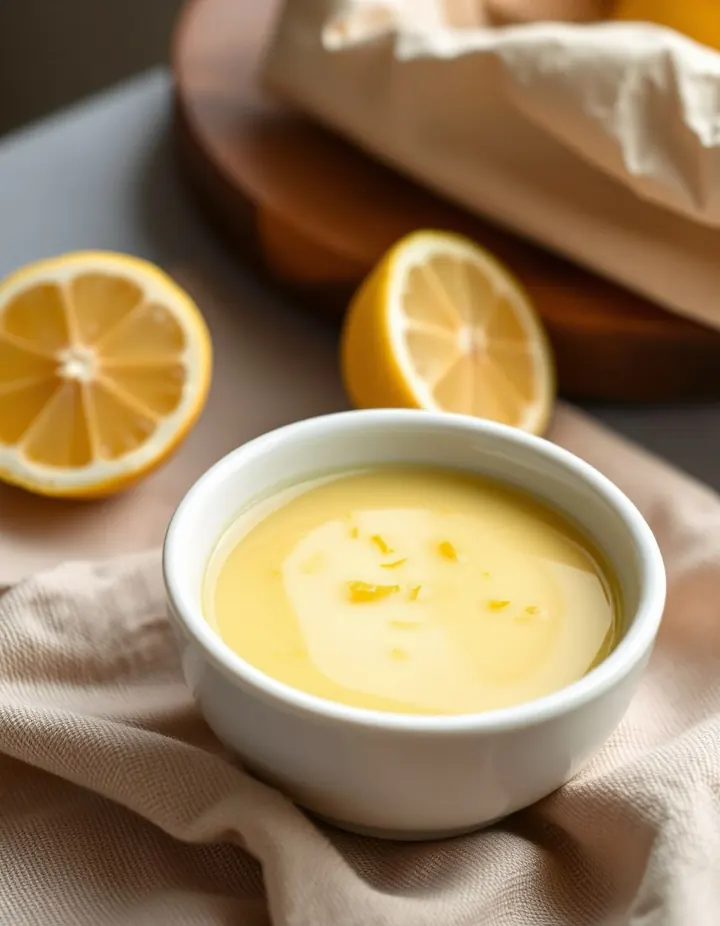
Haddock + saucetop 1% of all pairsAroma overlapstrongMentioned together200 recipes
Shared aroma: ethanol (alcoholic, ethereal).
-
Parsley + lemontop 1% of all pairsAroma overlapstrongMentioned together14,036 recipes
Shared aroma: beta-phellandrene (minty, terpene).
-
Parsley + macetop 5% of all pairsAroma overlapstrongMentioned together4,268 recipes
Shared aroma: myristicin (spice, warm).
-
Parsley + oniontop 6% of all pairsAroma overlapstrongMentioned together25,834 recipes
Shared aroma: coumarin (sweet, hay).
-
Butter + flourtop 6% of all pairsAroma overlaplowMentioned together122,858 recipes
Shared aroma: isobutyraldehyde (malty, green).
Butter and flour share little aroma chemistry, yet 122,858 recipes mention both: they likely work on texture and structure more than aroma.
Ranks compare each pair with 20,000 random ingredient pairs on CompKitchen. How we score pairs
What each ingredient does
- Flour
- Browns in the butter and thickens the stock into a smooth brown sauce.
- Butter
- Carries the browning and gives the fillets and sauce a rich flavor.
- Haddock fillets
- Provide the flaky white fish that is browned and then gently simmered in the sauce.
- Haddock heads and bones
- Release gelatin and savory flavor into the stock that forms the sauce base.
The step that matters
Stirring in the stock gradually. Adding liquid slowly while stirring keeps the flour smoothly dispersed, preventing lumps and producing an even, glossy sauce.
Flavor stand-ins for the mace
How well each one fits the dish's main ingredients (haddock, parsley, butter, onion, flour, lemon, sauce):
- Capersbetter flavor fit
- Thymebetter flavor fit
- Celerybetter flavor fit
- Macethe original
Fit is the average pairing score against haddock, parsley, butter, onion, flour, lemon, sauce. Candidates are from the same food group and used in at least 100 recipes. This compares flavor only: it does not check the job the ingredient does in the dish (bulk, moisture, acidity, structure).
“What each ingredient does” and “The step that matters” were written by Claude, an AI, from this recipe’s own method. They are not checked recipe by recipe, so they can be wrong.
Make it your own
Stand-ins, a drink, and quick taste fixes for this dish, ranked by how well each fits its other ingredients: shared aroma molecules and how often recipes combine them.
You might also like
 Illustration
 Illustration
 Illustration
 Illustration
The Sunday pairing: one pairing, the chemistry behind it, and how to cook it. No spam, unsubscribe anytime.
Prefer an account? Create a free account for sign-in; Pro adds the full results and chemistry.