Why it works: White wine and red currant work together. They rank in the top 8% of all ingredient pairs, and 43 recipes mention both. Both carry isoamyl acetate, which smells banana, pear. The science ↓
The recipe
Ingredients
Directions
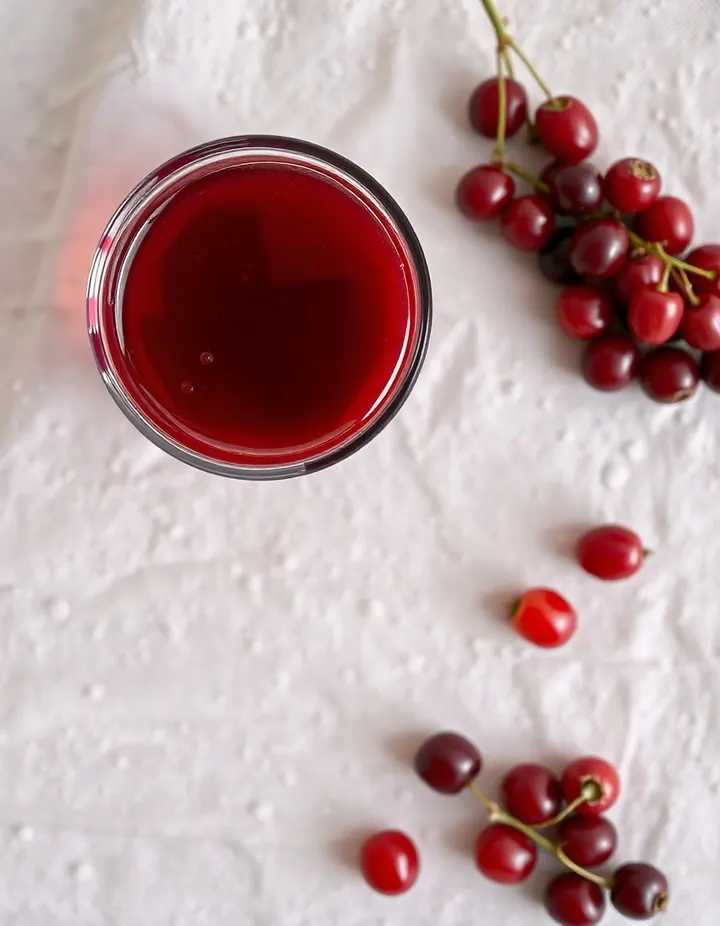
Choose firm, unblemished red currants just before they are fully colored. Remove stems if you like, rinse gently, and drain well on a towel.
In a large, clean saucepan, combine the vinegar or white wine, sifted sugar, fine sea salt and shredded bay leaves. Stir over medium heat until the sugar dissolves.
Add the currants and simmer for about 5 minutes, until their color changes and the skins begin to soften. Skim off any foam.
Cool the mixture for up to 2 hours. Strain through a sieve, then press the fruit gently to extract the juice.
Return the strained liquid to a simmer and skim until clear, about 5 minutes. Keep it hot.
Pack the currants into clean, heat-proof glass jars. Pour the hot liquid over them to cover completely, leaving 1/2 inch headspace.
Cover with clean lids. Cool to room temperature within 2 hours, then refrigerate. Eat within 2 weeks.
Original text from the book (7 steps)
For reference only, not instructions. This text may include storage, bottling, preserving or cooking steps that don't meet current food-safety guidance. Use the method above.
Select red currants just before they reach perfect color, ensuring they are clear and sound.
Boil the currants with the vinegar until the color changes.
Skim the mixture well and let it cool.
Strain the mixture and press the fruit in a sieve to extract color.
Boil again and skim until clear.
Place the currants in glass jars and pour the hot liquid over them to cover completely.
Seal jars with paper and bladder.
From a scanned old cookbook. The method has been rewritten by AI to follow current food-safety guidance (safe cooking temperatures, refrigeration, no raw-egg shortcuts). It hasn't been kitchen-tested. The original text is under the method.
Found this recipe through an AI assistant? CompKitchen also shows which ingredients go well together and why, from the aroma molecules they share and how often recipes combine them. Try the pairing tools.
Explore the science
The flavor team
The pairs that carry this dish. Each one is judged two ways: how much aroma chemistry they share, and how many recipes mention both.
-
White wine + red curranttop 8% of all pairsAroma overlapmoderateMentioned together43 recipes
Shared aroma: isoamyl acetate (banana, pear).
-
Sugar + red curranttop 15% of all pairsAroma overlaplowMentioned together1,156 recipes
Shared aroma: 2,3-butanedione (butter, sweet).
-
Sugar + white winetop 19% of all pairsAroma overlaplowMentioned together2,382 recipes
Shared aroma: beta-damascenone (apple, rose).
Ranks compare each pair with 20,000 random ingredient pairs on CompKitchen. How we score pairs
Make it your own
Stand-ins, a drink, and quick taste fixes for this dish, ranked by how well each fits its other ingredients: shared aroma molecules and how often recipes combine them.
You might also like
 Illustration
 Illustration
 Illustration
 Illustration
The Sunday pairing: one pairing, the chemistry behind it, and how to cook it. No spam, unsubscribe anytime.
Prefer an account? Create a free account for sign-in; Pro adds the full results and chemistry.