Why it works: Ham and orange work together. They rank in the top 20% of all ingredient pairs, and 115 recipes mention both. Both carry ethyl caproate, which smells fruity, apple peel. The science ↓
The recipe
Ingredients
Directions
Prepare
Trim the excess fat off the pork leg and make shallow slits all over the pork with the tip of a knife.
Mash the garlic, salt, oregano, cumin, pepper, bay leaf, and olive oil to a paste in a mortar.
Rub the paste all over the roast, forcing it into the slits.
Combine the sour orange juice, sherry, and onions in a small bowl.
Place the roast in a large, heavy plastic bag and add the sour orange juice mixture, ensuring the roast is fully covered.
Refrigerate and marinate the roast in the bag overnight, turning occasionally.
Roast
Preheat the oven to 350°F.
Drain the roast and pat it dry, reserving the marinade.
Place the roast in a lightly oiled, nonreactive, heavy roasting pan.
Cook the roast for 1 hour, turning once or twice to brown it on all sides.
Reduce the heat to 325°F, pour the marinade and onions over the pork, and tent the pan with heavy‑duty aluminum foil.
Continue roasting the pork, basting from time to time with the pan juices, until almost cooked, about 1 hour; add a little water or sherry if the pan dries out.
Uncover the roast and continue cooking until the internal temperature reads at least 150°F, about 30 minutes more.
Rest and serve
Let the roast stand for 10 minutes before carving.
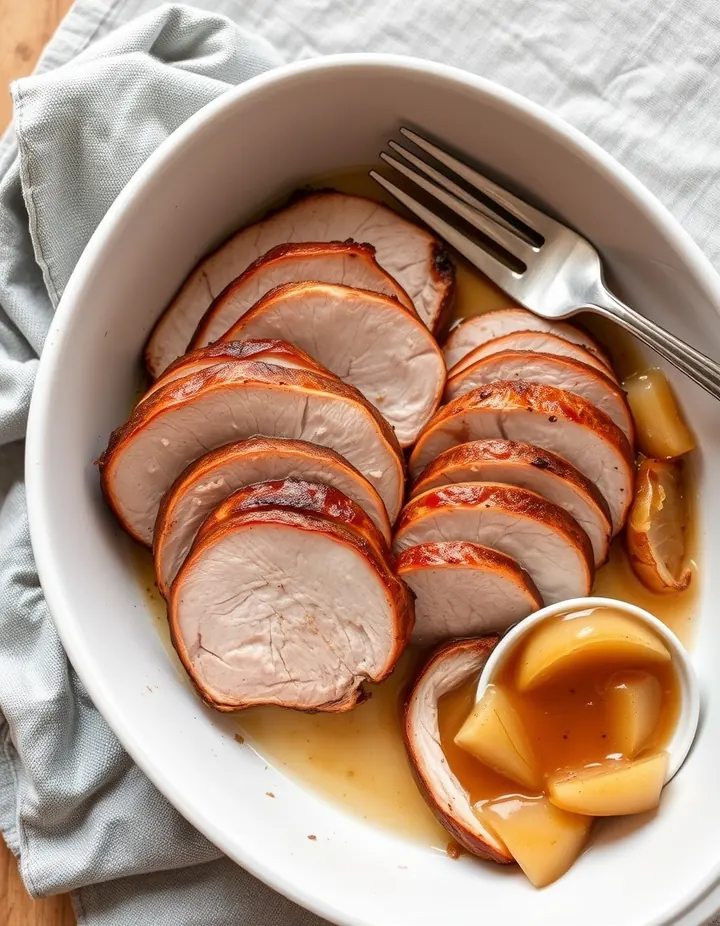
Serve with black bean soup, white rice, fried sweet plantains, and flan for dessert.
This recipe comes from the Recipes Wiki on Fandom and is licensed CC BY-SA 4.0. Our formatting and summaries are shared under the same licence.
Steps grouped into stages for easier reading; the method is the source's own.
Found this recipe through an AI assistant? CompKitchen also shows which ingredients go well together and why, from the aroma molecules they share and how often recipes combine them. Try the pairing tools.
Explore the science
The flavor team
The pairs that carry this dish. Each one is judged two ways: how much aroma chemistry they share, and how many recipes mention both.
-
Ham + orangetop 20% of all pairsAroma overlapmoderateMentioned together115 recipes
Shared aroma: ethyl caproate (fruity, apple peel).
-
Oregano + cumintop 1% of all pairsAroma overlapstrongMentioned together983 recipes
Shared aroma: beta-phellandrene (minty, terpene).
-
Garlic + cumintop 3% of all pairsAroma overlapmoderateMentioned together5,083 recipes
Shared aroma: beta-phellandrene (minty, terpene).
-
Garlic + olivetop 3% of all pairsAroma overlapmoderateMentioned together23,449 recipes
Shared aroma: linalool (floral, citrus).
-
Garlic + oreganotop 3% of all pairsAroma overlapmoderateMentioned together3,756 recipes
Shared aroma: beta-phellandrene (minty, terpene).
Ranks compare each pair with 20,000 random ingredient pairs on CompKitchen. How we score pairs
What each ingredient does
- Fresh ham (pork leg)
- Forms the main meat; its connective tissue and fat soften into a moist, tender roast during long cooking.
- Garlic
- Adds pungent aroma that mellows and deepens during roasting and marinating.
- Sour orange juice
- Acidity tenderizes the meat surface and brightens the rich pork flavor.
- Onions
- Sweetness and moisture from the marinade caramelize slightly and flavor the pan juices for basting.
- Cumin
- Contributes warm, earthy aroma that penetrates the meat through the slits.
- Dry sherry
- Adds aromatic depth to the marinade and helps keep the pan moist during roasting.
The step that matters
Uncovering and finishing the roast to 150°F. Pork cooked too long loses moisture as its proteins tighten, so checking the internal temperature and resting the meat before carving helps keep it juicy.
Flavor stand-ins for the clove
How well each one fits the dish's main ingredients (ham, pork, garlic, oregano, cumin, pepper, olive):
- Thymebetter flavor fit
- Rosemarybetter flavor fit
- Basilbetter flavor fit
- Clovethe original
Fit is the average pairing score against ham, pork, garlic, oregano, cumin, pepper, olive. Candidates are from the same food group and used in at least 100 recipes. This compares flavor only: it does not check the job the ingredient does in the dish (bulk, moisture, acidity, structure).
“What each ingredient does” and “The step that matters” were written by Claude, an AI, from this recipe’s own method. They are not checked recipe by recipe, so they can be wrong.
Make it your own
Stand-ins, a drink, and quick taste fixes for this dish, ranked by how well each fits its other ingredients: shared aroma molecules and how often recipes combine them.
You might also like
 Illustration
 Illustration
 Illustration
 Illustration
The Sunday pairing: one pairing, the chemistry behind it, and how to cook it. No spam, unsubscribe anytime.
Prefer an account? Create a free account for sign-in; Pro adds the full results and chemistry.