Why it works: Basil and sugar are a kitchen classic. They rank in the top 25% of all ingredient pairs, and 1,231 recipes mention both. Both carry 1-penten-3-one, which smells fish, pungent. The science ↓
The recipe
Ingredients
Contains: egg, milk (auto-detected from the ingredients and method; we can miss things, so check labels)
Directions
Infuse the milk
Combine milk and heavy cream in a large saucepan.
Split the vanilla bean lengthwise and scrape out the seeds with a small paring knife, then add the seeds and pod to the milk mixture.
Add fennel seeds and 3/4 cup of basil leaves.
Bring the mixture to a boil over medium heat.
Remove from heat and let the flavors steep for 30 minutes.
Make the custard
Finely chop the remaining 1/4 cup of basil and set aside in a moist paper towel to keep fresh.
In a medium stainless steel bowl, combine egg yolks and sugar.
Whisk the yolk mixture for 2 to 3 minutes until it reaches a pale yellow color and the sugar is dissolved.
Reheat the milk mixture until very hot but not boiling.
Slowly pour about a third of the hot milk into the eggs, whisking constantly.
Pour the egg mixture back into the saucepan with the remaining milk.
Over medium heat, stir constantly with a wooden spoon until the custard thickens and can coat the back of the spoon. Do not let the custard boil.
Remove the bean pods and strain the seeds, beans, and leaves into a large bowl.
Allow the mixture to cool to room temperature, stirring occasionally.
Refrigerate for at least 2 hours.
Churn and serve
Using an ice cream machine, process the custard according to the manufacturer's instructions.
Just before the custard is frozen, add the reserved chopped basil to the ice cream machine.
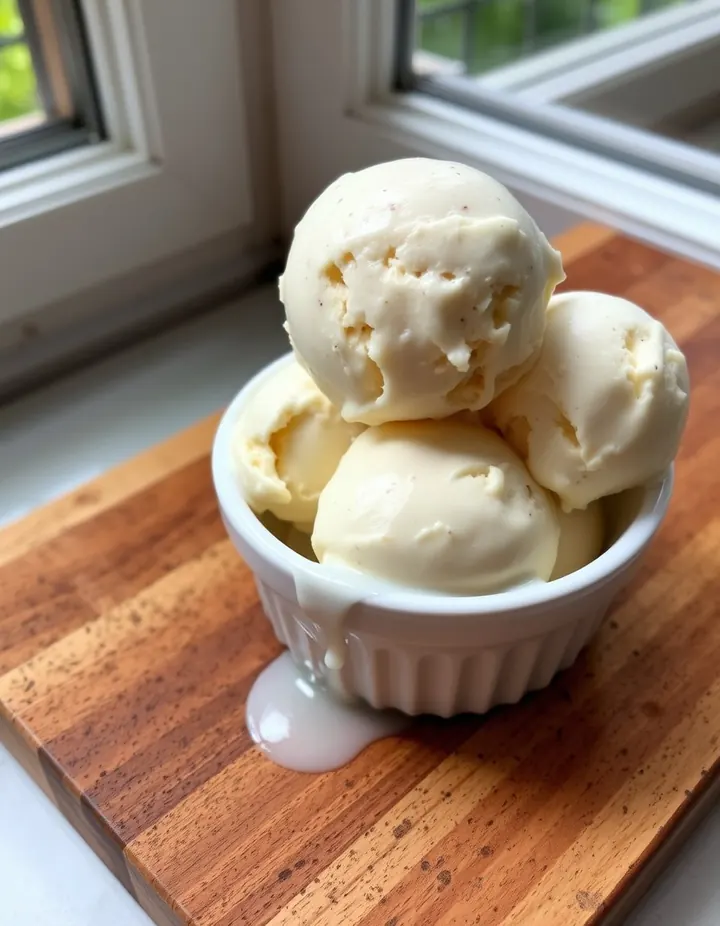
Serve when the ice cream is firm enough to scoop.
This recipe comes from the Recipes Wiki on Fandom and is licensed CC BY-SA 4.0. Our formatting and summaries are shared under the same licence.
Steps grouped into stages for easier reading; the method is the source's own.
Found this recipe through an AI assistant? CompKitchen also shows which ingredients go well together and why, from the aroma molecules they share and how often recipes combine them. Try the pairing tools.
Explore the science
The flavor team
The pairs that carry this dish. Each one is judged two ways: how much aroma chemistry they share, and how many recipes mention both.
-
Basil + sugartop 25% of all pairsAroma overlaplowMentioned together1,231 recipes
Shared aroma: 1-penten-3-one (fish, pungent).
-
Fennel + basiltop 2% of all pairsAroma overlapstrongMentioned together192 recipes
Shared aroma: cis-anethole (anise).
-
Milk + vanillatop 2% of all pairsAroma overlapmoderateMentioned together19,175 recipes
Shared aroma: ethyl caproate (fruity, apple peel).
-
Vanilla + sugartop 3% of all pairsAroma overlaplowMentioned together35,031 recipes
Shared aroma: beta-damascenone (apple, rose).
-
Cream + sugartop 5% of all pairsAroma overlapmoderateMentioned together43,437 recipes
Shared aroma: 2,3-butanedione (butter, sweet).
Vanilla and sugar share little aroma chemistry, yet 35,031 recipes mention both: they likely work on texture and structure more than aroma.
Ranks compare each pair with 20,000 random ingredient pairs on CompKitchen. How we score pairs
What each ingredient does
- Egg yolks
- Thicken the custard as they set with gentle heat and add richness.
- Heavy cream
- Adds fat for a rich, smooth texture and a creamy mouthfeel.
- Milk
- Provides the liquid base that carries the flavors and forms the custard.
- Sugar
- Adds sweetness and softens the frozen texture so it scoops more easily.
- Vanilla beans
- Supply the main vanilla aroma that infuses into the milk and cream.
- Fennel seeds
- Contribute an anise-like aroma that flavors the base during steeping.
The step that matters
Keep the custard from boiling. Egg yolks thicken as they warm, but past about 170°F they can scramble, leaving a grainy texture. Stirring constantly over medium heat and stopping once it coats the spoon keeps the custard smooth.
“What each ingredient does” and “The step that matters” were written by Claude, an AI, from this recipe’s own method. They are not checked recipe by recipe, so they can be wrong.
Make it your own
Stand-ins, a drink, and quick taste fixes for this dish, ranked by how well each fits its other ingredients: shared aroma molecules and how often recipes combine them.
You might also like
 Illustration
 Illustration
 Illustration
 Illustration
The Sunday pairing: one pairing, the chemistry behind it, and how to cook it. No spam, unsubscribe anytime.
Prefer an account? Create a free account for sign-in; Pro adds the full results and chemistry.