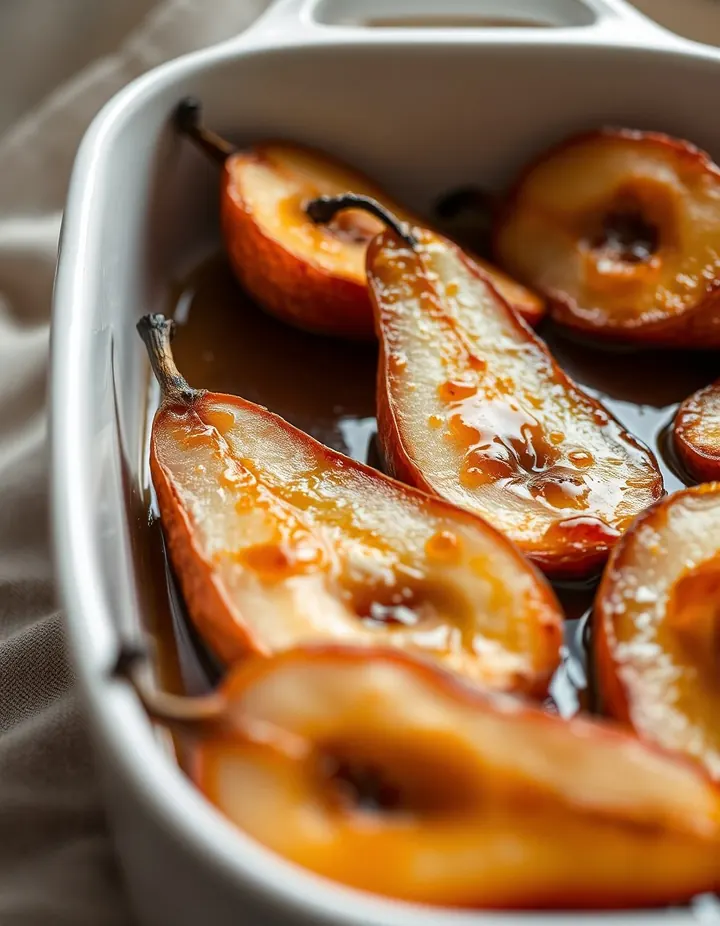
 Illustration
Why it works: Pear and clove match in chemistry and in kitchens. They rank in the top 5% of all ingredient pairs, and 490 recipes mention both. Both carry ethyl octanoate, which smells fruity, wine. The science ↓
The recipe
Ingredients
Directions
Preheat the oven to 275°F (135°C). Peel the pears, cut each in half lengthwise (into quarters if very large), and remove the cores. Leave the stalks on.
Place the pear pieces cut-side up in a baking dish with a tight-fitting lid.
Add the lemon peel cut into strips, the juice of half the lemon, the cloves, and the allspice crushed lightly.
Dissolve the sugar (about 1/2 lb, or 225g, per pint, or 570ml, of water) in enough water to just cover the pears. Pour it over the fruit.
Cover the dish tightly and bake for 2 to 3 hours, until a knife slides easily into the thickest part of a pear.
Let the pears cool, then refrigerate them within 2 hours of baking. Do not leave them at room temperature longer than that.
Serve the pears warm or cold, spooning over the syrup.
Store covered in the refrigerator for up to 3 to 4 days.
Original text from the book (7 steps)
For reference only, not instructions. This text may include storage, bottling, preserving or cooking steps that don't meet current food-safety guidance. Use the method above.
1574. INGREDIENTS.--12 pears, the rind of 1 lemon, 6 cloves, 10 whole allspice; to every pint of water allow 1/2 lb. of loaf sugar.
_Mode_.--Pare and cut the pears into halves, and, should they be very large, into quarters; leave the stalks on, and carefully remove the cores. Place them in a clean baking-jar, with a closely-fitting lid; add to them the lemon-rind cut in strips, the juice of 1/2 lemon, the cloves, pounded allspice, and sufficient water just to cover the whole, with sugar in the above proportion. Cover the jar down closely, put it into a very cool oven, and bake the pears from 5 to 6 hours, but be very careful that the oven is not too hot. To improve the colour of the fruit, a few drops of prepared cochineal may be added; but this will not be found necessary if the pears are very gently baked.
_Time_.--Large pears, 5 to 6 hours, in a very slow oven.
_Average cost_, 1d. to 2d. each.
_Sufficient_ for 7 or 8 persons.
_Seasonable_ from September to January.
PEAR.--The pear, like the apple, is indigenous to this country; but the wild pear is a very unsatisfactory fruit. The best varieties were brought from the East by the Romans, who cultivated them with care, and probably introduced some of their best sorts into this island, to which others were added by the inhabitants of the monasteries. The Dutch and Flemings, as well as the French, have excelled in the cultivation of the pear, and most of the late varieties introduced are from France and Flanders. The pear is a hardy tree, and a longer liver than the apple: it has been known to exist for centuries. There are now about 150 varieties of this fruit. Though perfectly wholesome when ripe, the pear is not so when green; but in this state it is fit for stewing. An agreeable beverage, called perry, is made from pears, and the varieties which are least fit for eating make the best perry.
From a scanned old cookbook. The method has been rewritten by AI to follow current food-safety guidance (safe cooking temperatures, refrigeration, no raw-egg shortcuts). It hasn't been kitchen-tested. The original text is under the method. See the original page.
Found this recipe through an AI assistant? CompKitchen also shows which ingredients go well together and why, from the aroma molecules they share and how often recipes combine them. Try the pairing tools.
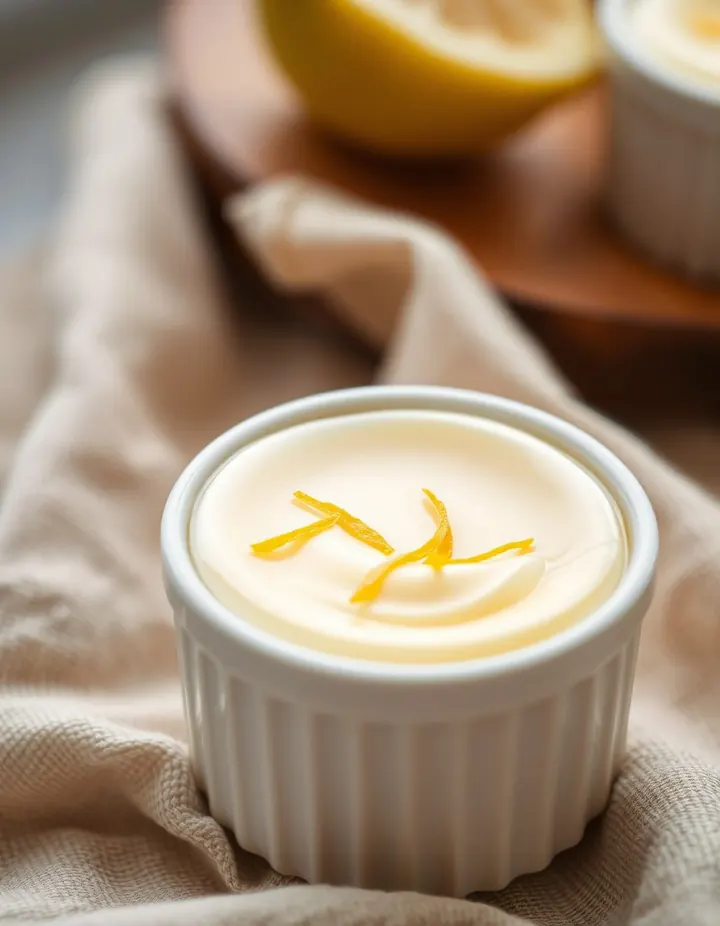
The picture is an illustration, not a photo of this recipe · Contact us to use it
Explore the science
The flavor team
The pairs that carry this dish. Each one is judged two ways: how much aroma chemistry they share, and how many recipes mention both.
-
Pear + clovetop 5% of all pairsAroma overlapstrongMentioned together490 recipes
Shared aroma: ethyl octanoate (fruity, wine).
-
Clove + allspicetop 1% of all pairsAroma overlapstrongMentioned together7,711 recipes
Shared aroma: methyleugenol (clove, spice).
-
Lemon + allspicetop 4% of all pairsAroma overlapstrongMentioned together2,083 recipes
Shared aroma: beta-phellandrene (minty, terpene).
-
Lemon + clovetop 7% of all pairsAroma overlapstrongMentioned together6,234 recipes
Shared aroma: myrcene (balsamic, herbaceous).
-
Pear + allspicetop 7% of all pairsAroma overlapstrongMentioned together162 recipes
Shared aroma: 2-methylbutyl acetate (fruit).
Ranks compare each pair with 20,000 random ingredient pairs on CompKitchen. How we score pairs
Flavor stand-ins for the lemon
How well each one fits the dish's main ingredients (pear, clove, allspice):
- Applebetter flavor fit
- Plumbetter flavor fit
- Orangebetter flavor fit
- Lemonthe original
Fit is the average pairing score against pear, clove, allspice. Candidates are from the same food group and used in at least 100 recipes. This compares flavor only: it does not check the job the ingredient does in the dish (bulk, moisture, acidity, structure).
Make it your own
Stand-ins, a drink, and quick taste fixes for this dish, ranked by how well each fits its other ingredients: shared aroma molecules and how often recipes combine them.
You might also like
 Illustration
 Illustration
 Illustration
 Illustration
The Sunday pairing: one pairing, the chemistry behind it, and how to cook it. No spam, unsubscribe anytime.
Prefer an account? Create a free account for sign-in; Pro adds the full results and chemistry.