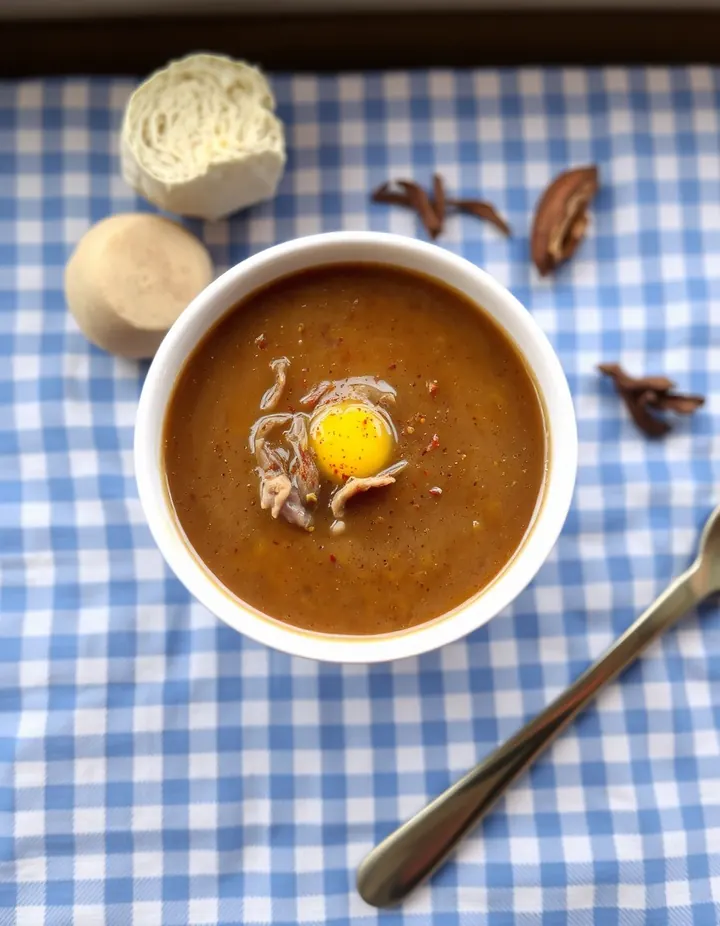
 Illustration
Why it works: Veal and pheasant work together. They rank in the top 7% of all ingredient pairs, and 132 recipes mention both. Both carry 1-hexanol, which smells resin, flower. The science ↓
The recipe
Ingredients
Contains: egg, milk, wheat (auto-detected from the ingredients and method; we can miss things, so check labels)
Also mentioned in the method: butter, flour, bread
Directions
Prepare the pheasants
Half roast a brace of well-kept pheasants, and flour them rather thickly when they are first laid to the fire.
As soon as they are nearly cold, take all the flesh from the breasts, put it aside, and keep it covered from the air.
Make the soup
Carve down the remainder of the birds into joints, bruise the bodies thoroughly, and stew the whole gently from two to three hours in five pints of strong beef broth.
Then strain off the soup, and press as much of it as possible from the pheasants.
Make the forcemeat
Let it cool; in the meantime strip the skins from the breasts, mince them small, and pound them to the finest paste, with half as much fresh butter and half of dry crumbs of bread.
Season the paste well with cayenne, sufficiently with salt, and moderately with pounded mace and grated nutmeg, and add, when their flavour is liked, three or four eschalots previously boiled tender in a little of the soup, left till cold, and minced before they are put into the mortar.
Moisten the mixture with the yolks of two or three eggs, roll it into small balls of equal size, and dust a little flour upon them.
Finish and serve
Skim all the fat from the soup, heat it in a clean stewpan, and when it boils throw the balls in and poach them from ten to twelve minutes, but first ascertain that the soup is properly seasoned with salt and cayenne.
Add a slight thickening of rice-flour and arrow-root to the soup at pleasure.
Fry the forcemeat balls and drop them into the tureen when preferred.
Half a dozen eschalots lightly browned in butter, and a small head of celery, may also be thrown in after the birds begin to stew, but nothing should be allowed to prevail.
Cook to a safe temperature. This method doesn't say how hot the inside should get. Check with a food thermometer in the thickest part:
- Chicken, turkey and other poultry: 165°F (74°C), and any stuffing inside it too.
- Beef, pork, lamb and veal steaks, chops and roasts: 145°F (63°C), then rest 3 minutes.
Figures from the USDA's safe minimum internal temperatures.
Transcribed from a scanned cookbook and modernised for today's kitchens. Where the book gave no heat or time, or said "a moderate oven", the temperatures and times here may be modern equivalents rather than the book's own figures. See the original page.
Found this recipe through an AI assistant? CompKitchen also shows which ingredients go well together and why, from the aroma molecules they share and how often recipes combine them. Try the pairing tools.
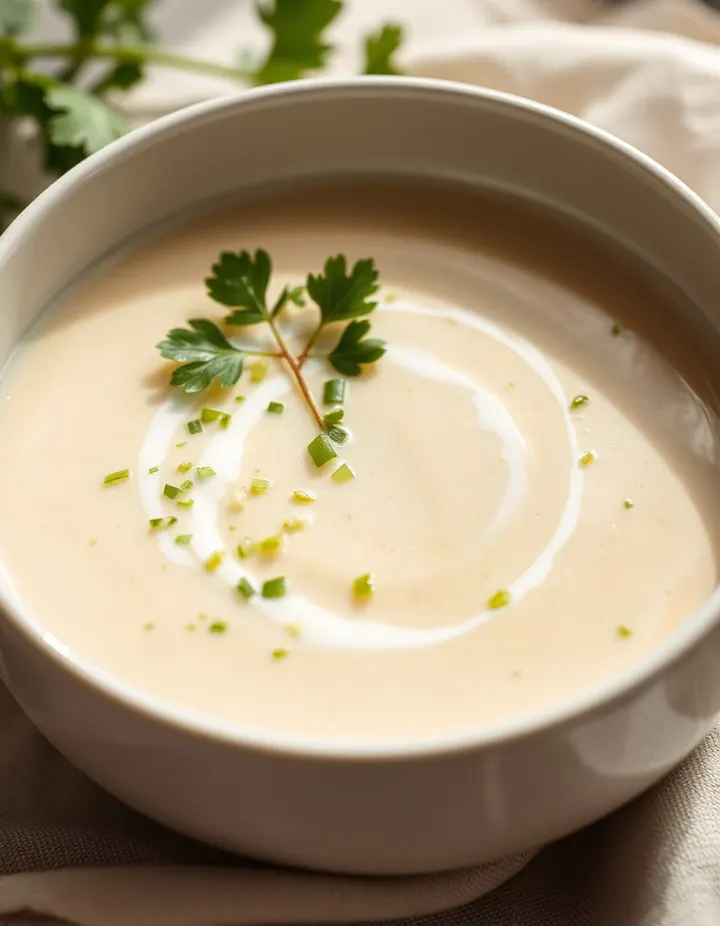
The picture is an illustration, not a photo of this recipe · Contact us to use it
Explore the science
The flavor team
The pairs that carry this dish. Each one is judged two ways: how much aroma chemistry they share, and how many recipes mention both.
-
Veal + pheasanttop 7% of all pairsAroma overlaplowMentioned together132 recipes
Shared aroma: 1-hexanol (resin, flower).
-
Mace + nutmegtop 1% of all pairsAroma overlapstrongMentioned together6,557 recipes
Shared aroma: myristicin (spice, warm).
-
Beef + pheasanttop 4% of all pairsAroma overlapstrongMentioned together131 recipes
Shared aroma: sabinene (woody, terpenic).
-
Beef + vealtop 4% of all pairsAroma overlapmoderateMentioned together3,784 recipes
Shared aroma: 2,6-nonadienal (cucumber, green).
-
Celery + nutmegtop 5% of all pairsAroma overlapstrongMentioned together1,331 recipes
Shared aroma: 4'-methylacetophenone (bitter almond).
Ranks compare each pair with 20,000 random ingredient pairs on CompKitchen. How we score pairs
What each ingredient does
- Pheasants
- Provide the main flavour and meat for the soup and forcemeat.
- Beef broth
- Forms the liquid base that carries the flavour of the birds.
- Butter (in the method)
- Enriches the forcemeat paste, adding richness and a smooth texture.
- Bread crumbs (in the method)
- Bind the forcemeat paste and help it hold its shape.
- Eggs
- Bind the forcemeat mixture so the balls hold together when poached.
The step that matters
Poaching the forcemeat balls. Poach them gently in simmering soup for the full time so they set through without breaking apart or turning tough from rough boiling.
Flavor stand-ins for the celery
How well each one fits the dish's main ingredients (beef, veal, pheasant, egg, mace, nutmeg):
- Cinnamonbetter flavor fit
- Allspicebetter flavor fit
- Parsleybetter flavor fit
- Celerythe original
Fit is the average pairing score against beef, veal, pheasant, egg, mace, nutmeg. Candidates are from the same food group and used in at least 100 recipes. This compares flavor only: it does not check the job the ingredient does in the dish (bulk, moisture, acidity, structure).
“What each ingredient does” and “The step that matters” were written by Claude, an AI, from this recipe’s own method. They are not checked recipe by recipe, so they can be wrong.
Make it your own
Stand-ins, a drink, and quick taste fixes for this dish, ranked by how well each fits its other ingredients: shared aroma molecules and how often recipes combine them.
You might also like
 Illustration
 Illustration
 Illustration
 Illustration
The Sunday pairing: one pairing, the chemistry behind it, and how to cook it. No spam, unsubscribe anytime.
Prefer an account? Create a free account for sign-in; Pro adds the full results and chemistry.