Why it works: Cabbage and vinegar are a kitchen classic. They rank in the top 6% of all ingredient pairs, and 2,924 recipes mention both. Both carry 4'-methylacetophenone, which smells bitter almond. The science ↓
The recipe
Ingredients
Contains: milk, wheat (auto-detected from the ingredients and method; we can miss things, so check labels)
Directions
Prepare the cabbage
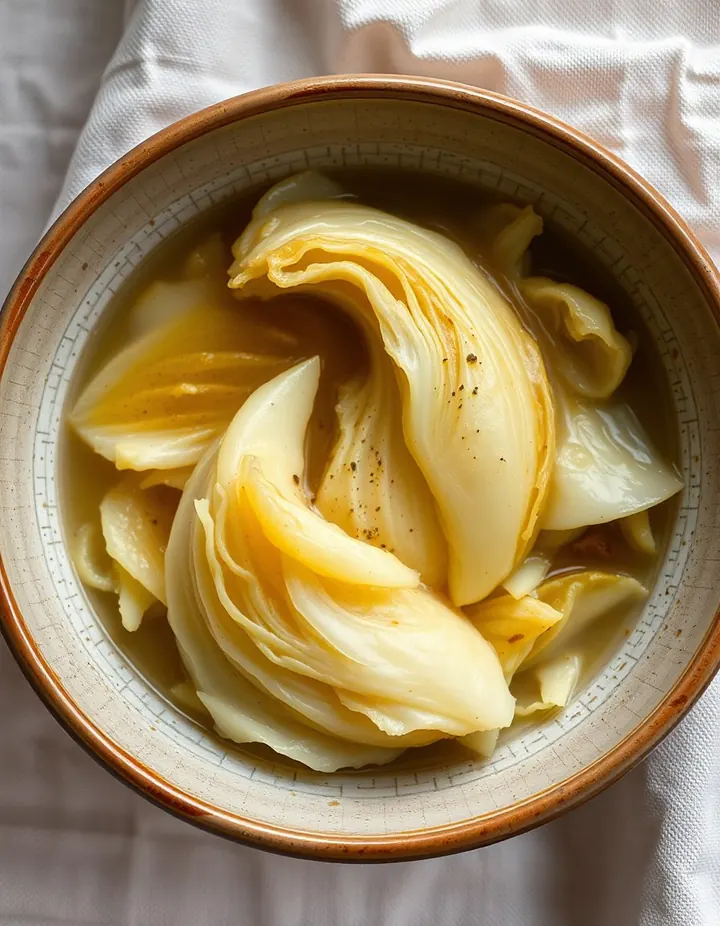
Remove the heart from the cabbage and boil it in two waters until three-quarters done.
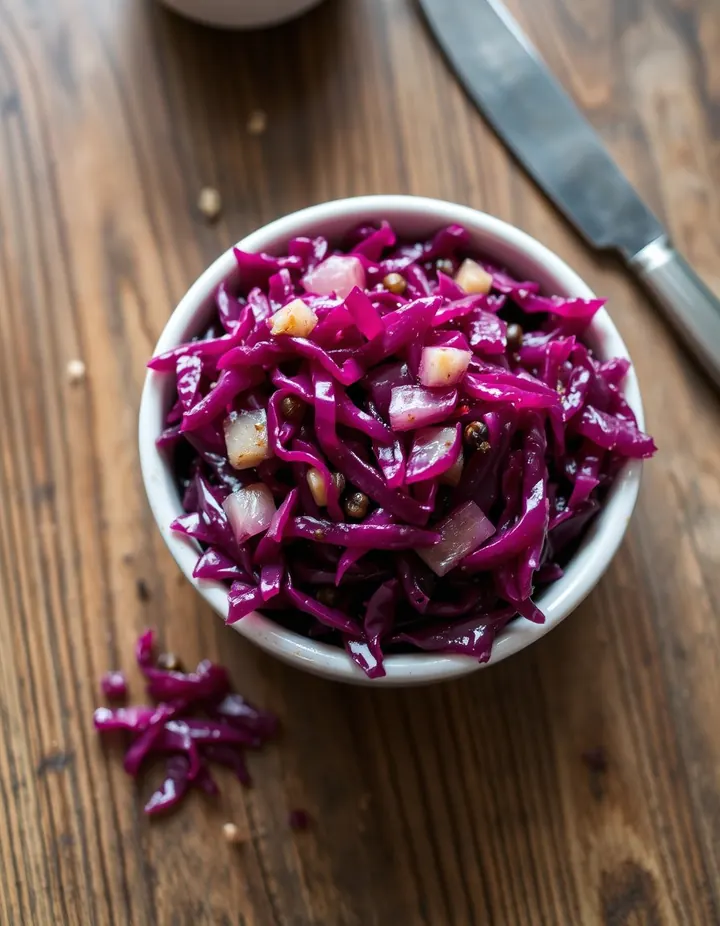
Shred the cabbage and place it in a stewpan.
Cook and finish
Chop the pickled onions, gherkin, and capers, then add them to the cabbage.
Pour in the vinegar, both from the pickles and plain, and cook for about 20 minutes.
Thicken the mixture with browned flour and boil for a few more minutes.
Add the butter, salt, and black pepper to taste, then serve immediately.
Transcribed from a scanned cookbook and modernised for today's kitchens. Where the book gave no heat or time, or said "a moderate oven", the temperatures and times here may be modern equivalents rather than the book's own figures.
Found this recipe through an AI assistant? CompKitchen also shows which ingredients go well together and why, from the aroma molecules they share and how often recipes combine them. Try the pairing tools.
Explore the science
The flavor team
The pairs that carry this dish. Each one is judged two ways: how much aroma chemistry they share, and how many recipes mention both.
-
Cabbage + vinegartop 6% of all pairsAroma overlapmoderateMentioned together2,924 recipes
Shared aroma: 4'-methylacetophenone (bitter almond).
-
Cabbage + peppertop 3% of all pairsAroma overlapstrongMentioned together4,080 recipes
Shared aroma: 2-isopropyl-3-methoxypyrazine (earthy, pea).
-
Cabbage + oniontop 4% of all pairsAroma overlapstrongMentioned together3,001 recipes
Shared aroma: 2-isopropyl-3-methoxypyrazine (earthy, pea).
-
Capers + flourtop 5% of all pairsAroma overlapstrongMentioned together1,014 recipes
Shared aroma: isobutyraldehyde (malty, green).
-
Butter + flourtop 6% of all pairsAroma overlaplowMentioned together122,858 recipes
Shared aroma: isobutyraldehyde (malty, green).
Butter and flour share little aroma chemistry, yet 122,858 recipes mention both: they likely work on texture and structure more than aroma.
Ranks compare each pair with 20,000 random ingredient pairs on CompKitchen. How we score pairs
What each ingredient does
- Cabbage
- Forms the bulk of the dish and softens as it cooks, giving it body.
- Vinegar
- Adds sharp acidity that balances the richness and gives the dish its tang.
- Browned flour
- Thickens the cooking liquid so the mixture clings to the cabbage.
- Butter
- Adds fat and a rounded, smooth richness to the finished dish.
- Pickled onions
- Contribute sharpness and savoury depth from their brine and flesh.
The step that matters
Thicken with browned flour. Flour must be fully mixed in and boiled for a few minutes so its starch swells and thickens the liquid. Added without stirring well, it clumps and leaves the sauce floury and uneven.
Flavor stand-ins for the capers
How well each one fits the dish's main ingredients (cabbage, onion, vinegar, butter, flour, pepper):
- Garlicbetter flavor fit
- Parsleybetter flavor fit
- Celerybetter flavor fit
- Capersthe original
Fit is the average pairing score against cabbage, onion, vinegar, butter, flour, pepper. Candidates are from the same food group and used in at least 100 recipes. This compares flavor only: it does not check the job the ingredient does in the dish (bulk, moisture, acidity, structure).
“What each ingredient does” and “The step that matters” were written by Claude, an AI, from this recipe’s own method. They are not checked recipe by recipe, so they can be wrong.
Make it your own
Stand-ins, a drink, and quick taste fixes for this dish, ranked by how well each fits its other ingredients: shared aroma molecules and how often recipes combine them.
You might also like
 Illustration
 Illustration
 Illustration
 Illustration
The Sunday pairing: one pairing, the chemistry behind it, and how to cook it. No spam, unsubscribe anytime.
Prefer an account? Create a free account for sign-in; Pro adds the full results and chemistry.