
Photo: Wesual Click
pumpkin bread pudding
12 ingredients
openrecipes
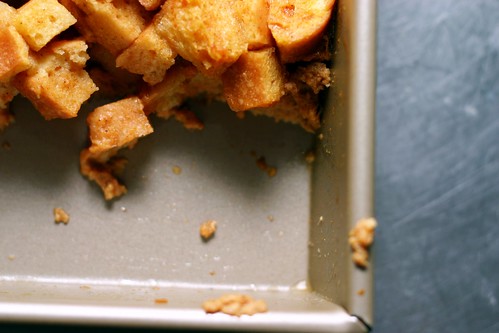
Here is a recipe that every single person should have in their arsenal, and I couldn’t be happier that it is now in mine. After a week of and , there are no words for the serenity brought on by a recipe with TWO steps. Heck, the entire set of instructions tops out around 50 words.
Estimated Nutrition (whole recipe, rough)
904
Calories
28g
Protein
32g
Fat
126g
Carbs
Counts 11 of 12 ingredients — the other 1 aren't in our nutrition table and contribute nothing above, so the real totals are higher.
What these numbers assume — 11 portions →
| Ingredient | Portion assumed | kcal |
|---|---|---|
| Flour | 1 cup (125g) all-purpose | 455 |
| Milk | 1 cup (244ml) whole | 149 |
| Butter | 1 tbsp (14g) | 102 |
| Egg | 1 large egg (50g) | 78 |
| Cream | 1 tbsp (15ml) heavy | 51 |
| Sugar | 1 tbsp (12.5g) granulated | 49 |
| Cloves | 1 tsp ground (2g) | 7 |
| Cinnamon | 1 tsp ground (2.6g) | 6 |
| Allspice | 1 tsp ground (1.9g) | 5 |
| Ginger | 1 tsp grated fresh (2g) | 2 |
| Salt | 1 tsp (6g) | 0 |
| Pumpkin | not in our table | 0 |
Totals for the whole recipe, adding one typical portion per ingredient — listed above. Quantities in the recipe are not counted, so this is a rough guide only — not suitable for medical or dietary planning.
Ingredients
- 1 1/2 cups whole milk (Or 1 cup heavy cream plus 1/2 cup whole milk)
- 3/4 cup canned solid-pack pumpkin
- 1/2 cup sugar
- 2 large eggs plus 1 yolk
- 1/2 teaspoon salt
- 1 teaspoon ground cinnamon
- 1/2 teaspoon ground ginger
- 1/8 teaspoon ground allspice
- Pinch of ground cloves
- 2 tablespoons bourbon (optional)
- 5 cups cubed (1-inch) day-old baguette or crusty bread
- 3/4 stick unsalted butter, melted* (can skip this step if using the second set of instructions)
Directions
Step-by-step directions aren't available for this recipe in our database.
View the full recipe at the original source →
By smittenkitchen ·
Recipe sourced from
openrecipes