Why it works: Quince and rhubarb share more aroma than cooks usually use. They rank in the top 6% of all ingredient pairs, and 18 recipes mention both. Both carry 2-methoxy-4-vinylphenol, which smells clove, smoky. The science ↓
The recipe
Ingredients
Directions
Choose fresh, slightly underripe acid fruit such as apples, quinces, crabapples, currants, grapes or blackberries. For fruit that does not jell easily, such as strawberries, raspberries or peaches, add one-third rhubarb juice. Cranberry juice may replace the rhubarb.
Wash the fruit, remove stems and imperfections, and cut large fruit into small pieces. Use no water for grapes and currants. For apples and quinces, use enough water to cover them.
Cook the fruit until the juice flows, crushing it with a spoon. Remove it from the heat and strain it through a pointed cheesecloth bag hung between two chairs, or any convenient way. Do not squeeze the bag.
Measure the juice. Put an equal quantity of sugar (a little less for sweet fruits) into the oven to heat.
Boil the juice with the warm sugar, without stirring, until the jelly thickens quickly when a drop from a spoon is dropped on a cold saucer.
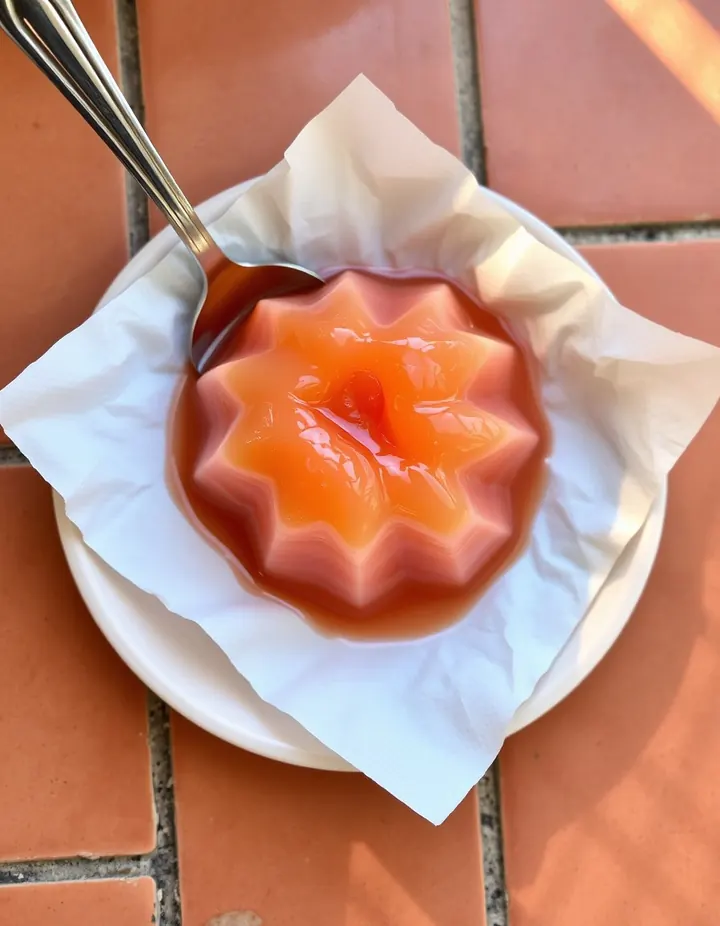
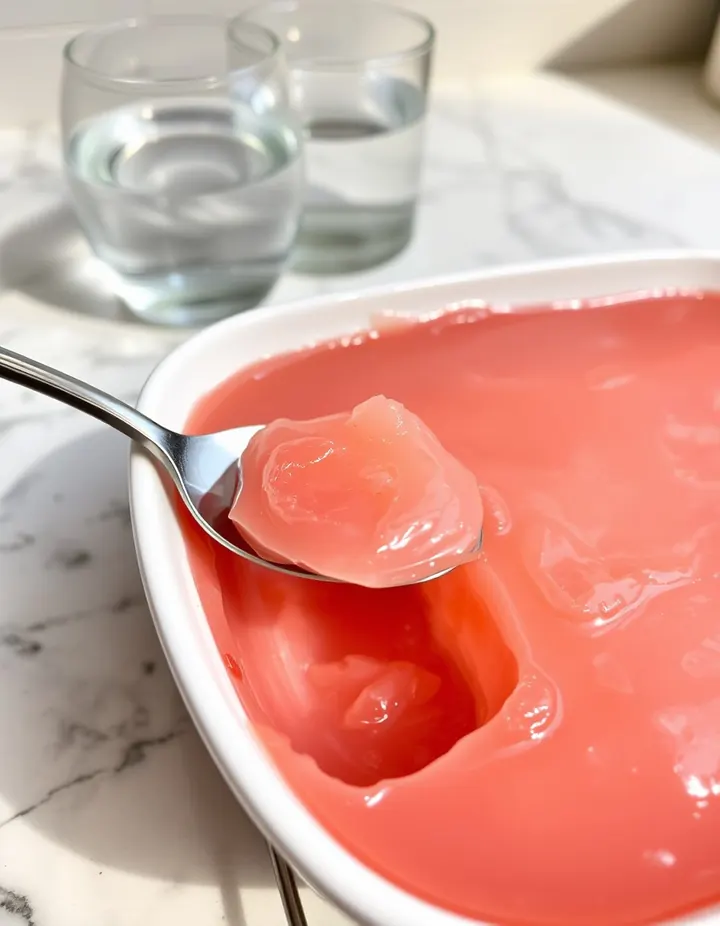
Pour the jelly into clean, sterilized jelly glasses and set aside to harden. Cover each glass with a tight lid in place of paraffin.
Refrigerate the jelly and use it within 3 weeks, or freeze it for longer storage. For shelf-stable jars, follow a tested recipe from the USDA or the National Center for Home Food Preservation.
Original text from the book (5 steps)
For reference only, not instructions. This text may include storage, bottling, preserving or cooking steps that don't meet current food-safety guidance. Use the method above.
Apples, quinces, crabapples, currants, grapes, and black- berries make the best jellies — all acid fruits. A combination which is delightful in flavor and color is two-thirds quince juice and one-third cranberry, and has the advantage of coming late in the season, when it is more comfortable to work over a hot stove.
All fruit should be fresh and a little under-ripe. Juicy fruits, sUch as currants and berries, should be gathered after a rain. Fruits such as strawberries, raspberries, peaches, which do not "jell" easily, make beautiful jelly if one-third rhubarb juice is added. The jelly will be clearer and more delicate in texture
Preserves. 289
if it is boiled hard and not stirred during the cooking. Medium- sized granite preserving kettles are best to use in making jelly; they are lighter to handle and easily cleaned. Do not make a quantity at a time. A quart of juice is quite enough, or even a pint.
Wash the fruit, remove stems and imperfections. Cut large fruit into small pieces. With watery fruit, such as grapes and currants, use no water. With apples and quinces use enough water to cover them. Cook the fruit until the juice flows, crush- ing it with a spoon. Remove it from the fire and strain it through a pointed cheesecloth bag hung between two chairs, or any convenient way. Do not squeeze the bag. Measure the juice and put an equal quantity of sugar (sometimes a little less for sweet fruits) into the oven to heat. Boil the juice with the sugar until the jelly thickens quickly when dropped from a spoon on a cold saucer. Pour into sterilized jelly glasses and set aside to harden. Jelly must be completely covered to keep it from mold. Paraffin is most convenient for this purpose. Pour your melted paraffin on to the depth of one-eighth inch.
From a scanned old cookbook. The method has been rewritten by AI to follow current food-safety guidance (safe cooking temperatures, refrigeration, no raw-egg shortcuts). It hasn't been kitchen-tested. The original text is under the method. See the original page.
Found this recipe through an AI assistant? CompKitchen also shows which ingredients go well together and why, from the aroma molecules they share and how often recipes combine them. Try the pairing tools.
Explore the science
The flavor team
The pairs that carry this dish. Each one is judged two ways: how much aroma chemistry they share, and how many recipes mention both.
-
Quince + rhubarbtop 6% of all pairsAroma overlapstrongMentioned together18 recipes
Shared aroma: 2-methoxy-4-vinylphenol (clove, smoky).
Ranks compare each pair with 20,000 random ingredient pairs on CompKitchen. How we score pairs
Make it your own
Stand-ins, a drink, and quick taste fixes for this dish, ranked by how well each fits its other ingredients: shared aroma molecules and how often recipes combine them.
You might also like
 Illustration
 Illustration
 Illustration
 Illustration
The Sunday pairing: one pairing, the chemistry behind it, and how to cook it. No spam, unsubscribe anytime.
Prefer an account? Create a free account for sign-in; Pro adds the full results and chemistry.