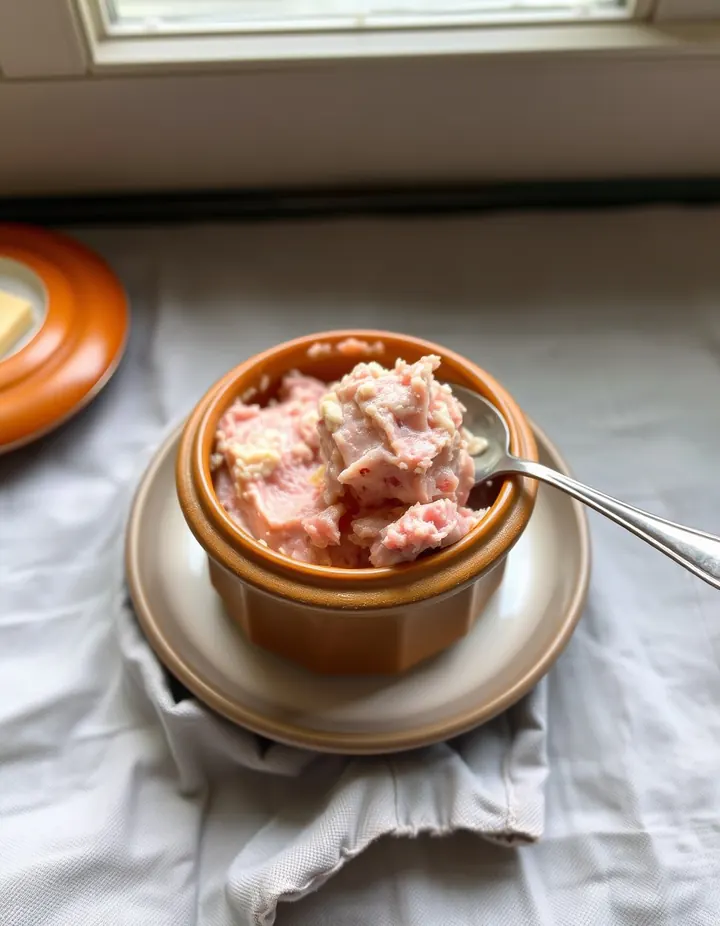
 Illustration
Why it works: Ham and pork match in chemistry and in kitchens. They rank in the top 5% of all ingredient pairs, and 2,638 recipes mention both. Both carry 2-acetyl-1-pyrroline, which smells popcorn, roasted. The science ↓
The recipe
Ingredients
Directions
Keep the ham and fat cold. Mince the lean ham and the fat together, using two parts ham to one part fat.
Pound the minced mixture well in a mortar, or mix thoroughly, seasoning with the powdered mace, grated nutmeg and cayenne pepper.
Press the mixture into a deep baking dish. Bake at 350°F (175°C) for 30 minutes, until hot in the centre and reaching 165°F (74°C) on an instant-read thermometer.
Let cool at room temperature for no more than 2 hours, then refrigerate.
Render the fat gently in a pan until clear, then let it cool slightly. Pour it over the chilled ham mixture to seal the top.
Cover tightly and refrigerate. Eat within 3 to 4 days, or freeze for longer storage.
Do not keep potted ham sealed at room temperature. Serve cold on sandwiches or as a spread.
Original text from the book (4 steps)
For reference only, not instructions. This text may include storage, bottling, preserving or cooking steps that don't meet current food-safety guidance. Use the method above.
To TWO pounds of lean ham allow one pound of fat, two teaspoonfuls of powdered mace, half a nutmeg, grated, rather more than half a teaspoonful of cayenne.
_Mode._--Mince the ham, fat and lean together, in the above proportion, and pound it well in a mortar, seasoning it with cayenne pepper, pounded mace and nutmeg; put the mixture into a deep baking-dish, and bake for half an hour; then press it well into a stone jar, fill up the jar with clarified lard, cover it closely, and paste over it a piece of thick paper. If well seasoned, it will keep a long time in winter, and will be found very convenient for sandwiches, etc.
BOLOGNA SAUSAGE. (Cooked.)
Two POUNDS of lean pork, two pounds of lean veal, two pounds of fresh lean beef, two pounds of fat salt pork, one pound of beef suet, ten tablespoonfuls of powdered sage, one ounce each of parsley, savory, marjoram and thyme mixed. Two teaspoonfuls of cayenne pepper, the same of black, one grated nutmeg, one teaspoonful of cloves, one minced onion, salt to taste. Chop or grind the meat and suet; season, and stuff into beef skins; tie these up, prick each in several places to allow the escape of steam; put into hot, not boiling, water, and heat gradually to the boiling point. Cook slowly for one hour; take out the skins and lay them to dry in the sun, upon clean sweet straw or hay. Rub the outside of the skins with oil or melted butter, and place in a cool, dry cellar. If you wish to keep them more than a week, rub ginger or pepper on the outside, then wash it off before using. This is eaten without further cooking. Cut in round slices and lay sliced lemons around the edge of the dish, as many like to squeeze a few drops upon the sausage before eating. These are very nice smoked like hams.
From a scanned old cookbook. The method has been rewritten by AI to follow current food-safety guidance (safe cooking temperatures, refrigeration, no raw-egg shortcuts). It hasn't been kitchen-tested. The original text is under the method. See the original page.
Found this recipe through an AI assistant? CompKitchen also shows which ingredients go well together and why, from the aroma molecules they share and how often recipes combine them. Try the pairing tools.
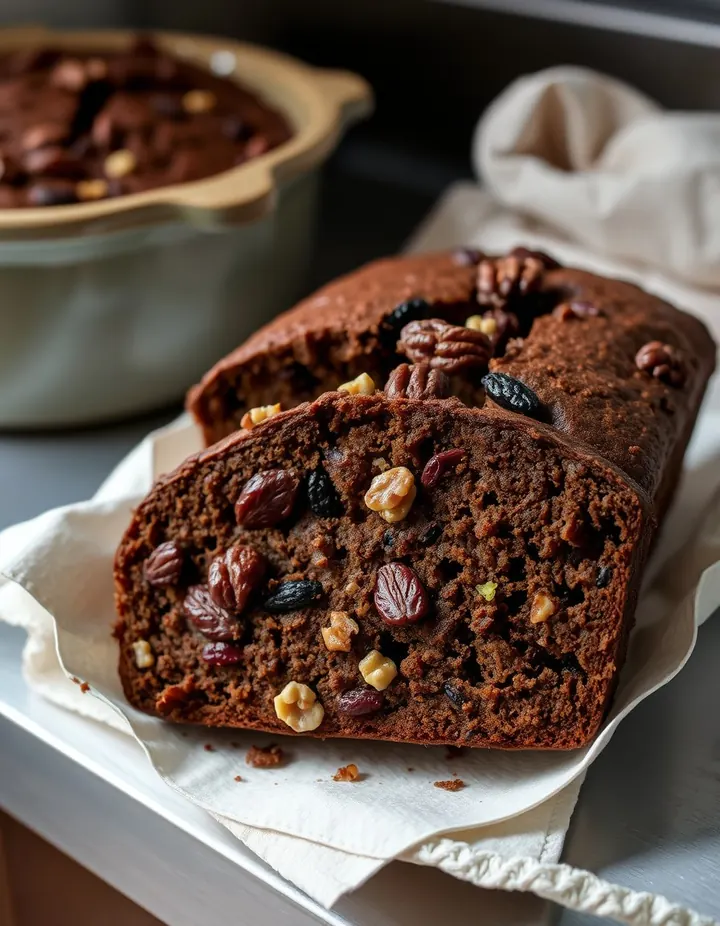
The picture is an illustration, not a photo of this recipe · Contact us to use it
Explore the science
The flavor team
The pairs that carry this dish. Each one is judged two ways: how much aroma chemistry they share, and how many recipes mention both.
-
Ham + porktop 5% of all pairsAroma overlapstrongMentioned together2,638 recipes
Shared aroma: 2-acetyl-1-pyrroline (popcorn, roasted).
-
Mace + nutmegtop 1% of all pairsAroma overlapstrongMentioned together6,557 recipes
Shared aroma: myristicin (spice, warm).
-
Pork + beeftop 1% of all pairsAroma overlapstrongMentioned together5,669 recipes
Shared aroma: 3-ethylphenol (must).
-
Parsley + peppertop 2% of all pairsAroma overlapstrongMentioned together34,118 recipes
Shared aroma: 4'-methylacetophenone (bitter almond).
-
Sage + peppertop 2% of all pairsAroma overlapstrongMentioned together5,388 recipes
Shared aroma: beta-phellandrene (minty, terpene).
Ranks compare each pair with 20,000 random ingredient pairs on CompKitchen. How we score pairs
Flavor stand-ins for the mace
How well each one fits the dish's main ingredients (ham, pork, veal, beef, sage, parsley, pepper):
- Marjorambetter flavor fit
- Thymebetter flavor fit
- Rosemarybetter flavor fit
- Macethe original
Fit is the average pairing score against ham, pork, veal, beef, sage, parsley, pepper. Candidates are from the same food group and used in at least 100 recipes. This compares flavor only: it does not check the job the ingredient does in the dish (bulk, moisture, acidity, structure).
Make it your own
Stand-ins, a drink, and quick taste fixes for this dish, ranked by how well each fits its other ingredients: shared aroma molecules and how often recipes combine them.
You might also like
 Illustration
 Illustration
 Illustration
 Illustration
The Sunday pairing: one pairing, the chemistry behind it, and how to cook it. No spam, unsubscribe anytime.
Prefer an account? Create a free account for sign-in; Pro adds the full results and chemistry.