Why it works: Beef and cabbage match in chemistry and in kitchens. They rank in the top 8% of all ingredient pairs, and 872 recipes mention both. Both carry 2-isopropyl-3-methoxypyrazine, which smells earthy, pea. The science ↓
The recipe
Ingredients
Directions
Prepare the beef
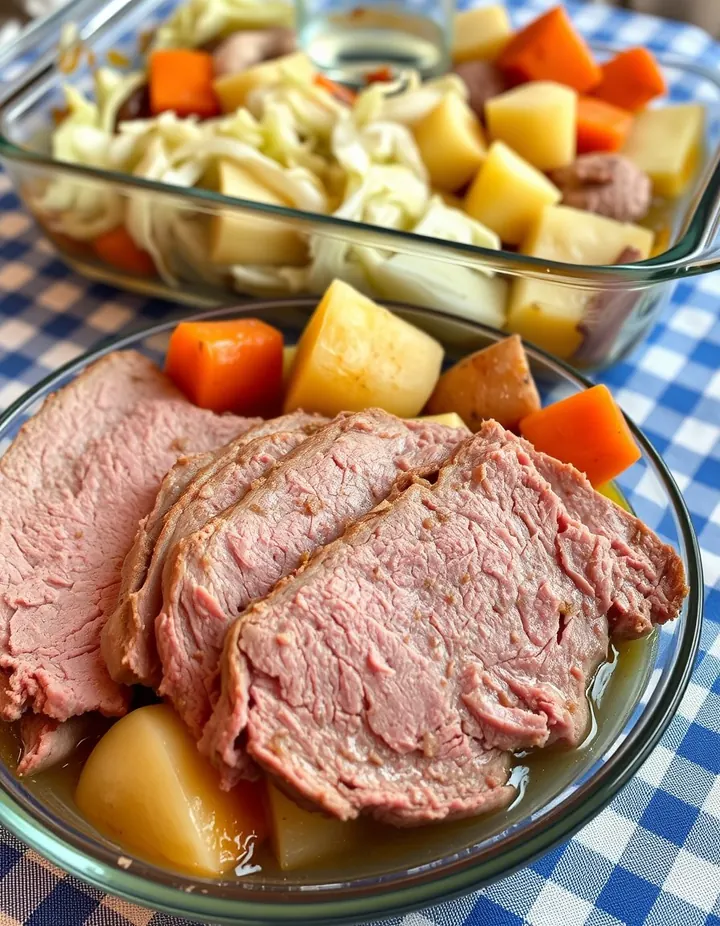
Wash a piece of corned beef weighing about five pounds.
Put the beef into one gallon of cold water.
Bring the water to a boil.
Simmer with vegetables
Skim carefully and boil slowly for three hours.
At the beginning of the last two hours, add a large head of cabbage cut in two.
An hour later, add carrots and turnips, nicely cleaned.
Lastly, add potatoes, allowing one-half hour for them to boil.
Cook the beets
Cook beets in a separate kettle.
Transcribed from a scanned cookbook and modernised for today's kitchens. Where the book gave no heat or time, or said "a moderate oven", the temperatures and times here may be modern equivalents rather than the book's own figures. See the original page.
Found this recipe through an AI assistant? CompKitchen also shows which ingredients go well together and why, from the aroma molecules they share and how often recipes combine them. Try the pairing tools.
Explore the science
The flavor team
The pairs that carry this dish. Each one is judged two ways: how much aroma chemistry they share, and how many recipes mention both.
-
Beef + cabbagetop 8% of all pairsAroma overlapstrongMentioned together872 recipes
Shared aroma: 2-isopropyl-3-methoxypyrazine (earthy, pea).
Ranks compare each pair with 20,000 random ingredient pairs on CompKitchen. How we score pairs
What each ingredient does
- Corned beef
- Long, gentle simmering breaks down connective tissue, making the meat tender and flavorful.
- Cabbage
- Softens as it cooks, adding moisture and a mild, sweet flavor to the pot.
- Potatoes (in the method)
- Release starch as they cook, giving a soft texture and slightly thickening the broth.
The step that matters
Skim carefully and keep the water at a slow boil. Foam that rises early carries impurities that cloud the broth if left in. A hard, rolling boil toughens meat fibers and churns the pot, so a gentle simmer keeps the beef tender and the liquid clear.
“What each ingredient does” and “The step that matters” were written by Claude, an AI, from this recipe’s own method. They are not checked recipe by recipe, so they can be wrong.
Make it your own
Stand-ins, a drink, and quick taste fixes for this dish, ranked by how well each fits its other ingredients: shared aroma molecules and how often recipes combine them.
You might also like
 Illustration
 Illustration
 Illustration
 Illustration
The Sunday pairing: one pairing, the chemistry behind it, and how to cook it. No spam, unsubscribe anytime.
Prefer an account? Create a free account for sign-in; Pro adds the full results and chemistry.