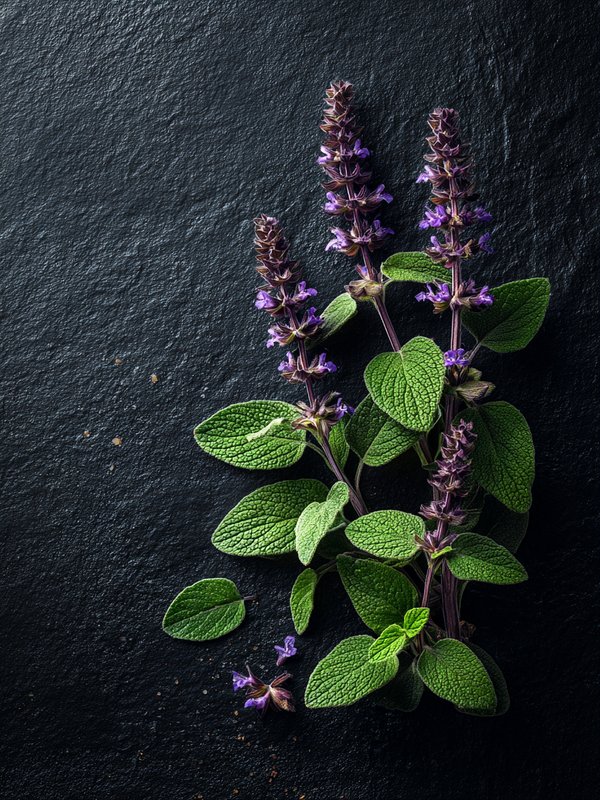
Clary Sage
Cooks often pair clary sage with
0 recipes in our collection
What goes with clary sage
No recipe in our pairing index combines clary sage with another ingredient often enough to list.
Clary Sage pairing chart
- PartnerAroma overlapRecipes together
- neroli oil0
- citrus fruits0
- mastic gum0
- citrus peel oil0
- apricot0
- white currant0
- mace0
- berry0
- currant0
- red currant0
- pear0
- goat cheese0
- bitter orange0
- blueberry0
- honey0
- tangerine0
- mentha oil0
- calamus0
- black currant0
- lima beans0
Dots compare these partners with each other by how many aroma molecules they share with clary sage. Each partner links to a side-by-side page. The full table, with ranks, is under “See the science”.
How cooks use clary sage
Does it go with what you have?
ButterUntested
No recipe in our pairing index uses both, moderate shared aroma, top 46% of pairs. They share linalool (floral, citrus). Compare →
LemonUntested
No recipe in our pairing index uses both, moderate shared aroma, top 36% of pairs. They share myrcene (balsamic, herbaceous). Compare →
GarlicUntested
No recipe in our pairing index uses both, low shared aroma, bottom 15% of pairs. Compare →
SugarUntested
No recipe in our pairing index uses both, low shared aroma, bottom 37% of pairs. Compare →
ChiliUntested
No recipe in our pairing index uses both, moderate shared aroma, top 46% of pairs. They share myrcene (balsamic, herbaceous). Compare →
GingerUntested
No recipe in our pairing index uses both, moderate shared aroma, top 40% of pairs. They share myrcene (balsamic, herbaceous). Compare →
Clary Sage pairing questions
What makes clary sage smell like clary sage?
Its leading aroma molecules are linalyl formate (citrus, coriander), beta-ionone (violet, floral) and isoborneol (must, camphor), out of the 38 aroma molecules on record for it.
What's a good substitute for clary sage?
Closest flavor match (not an allergy-safe swap): mace, mastic gum, citrus fruits. They share the highest fraction of clary sage's flavor compounds, so they can echo its flavor, but they are different foods and may carry their own allergy risk.
Is clary sage vegan, gluten-free, or kosher?
Clary Sage is vegan and is gluten-free, dairy-free, nut-free, kosher, halal.
See the sciencearoma molecules, the flavor globe, smell wheel and full tables
Clary Sage is an essential oil whose aroma is led by linalyl formate (citrus, coriander) and beta-ionone (violet, floral).
Clary Sage pairing chart, in full
Scroll sideways to see every column →
| Partner | Shared aroma | Shared molecules | Recipes together | Rank among all pairs |
|---|---|---|---|---|
| neroli oil | strong | 11 | 0 | top 23% |
| citrus fruits | strong | 15 | 0 | top 23% |
| mastic gum | strong | 13 | 0 | top 24% |
| citrus peel oil | strong | 14 | 0 | top 24% |
| apricot | moderate | 29 | 0 | top 24% |
| white currant | strong | 9 | 0 | top 25% |
| mace | strong | 14 | 0 | top 25% |
| berry | strong | 22 | 0 | top 25% |
| currant | strong | 9 | 0 | top 26% |
| red currant | strong | 21 | 0 | top 26% |
| pear | moderate | 23 | 0 | top 26% |
| goat cheese | strong | 19 | 0 | top 26% |
| bitter orange | strong | 12 | 0 | top 27% |
| blueberry | strong | 30 | 0 | top 27% |
| honey | moderate | 29 | 0 | top 27% |
| tangerine | strong | 10 | 0 | top 27% |
| mentha oil | strong | 10 | 0 | top 27% |
| calamus | strong | 13 | 0 | top 27% |
| black currant | strong | 33 | 0 | top 28% |
| lima beans | strong | 23 | 0 | top 28% |
Ordered by pairing score. Shared aroma: how much of their aroma chemistry overlaps (strong, moderate or low against all ingredient pairs). Rank: where the pair sits among random ingredient pairs on CompKitchen. Shared molecules counts every molecule the two have in common, not only aroma ones. Each partner links to a side-by-side comparison.
Clary Sage flavor profile
Clary Sage carries 47 flavor molecules in our data, 38 of them volatile enough to smell and 15 of them key food odorants, the molecules shown to drive food aroma. The aromas that lead its profile, strongest measured first: linalyl formate (citrus, coriander), beta-ionone (violet, floral), isoborneol (must, camphor) and hotrienol (hyacinth).
Why clary sage pairs the way it does
Clary Sage's pairing hooks are myrcene (balsamic, herbaceous), which 6 of its 10 best partners also carry but only 19% of all ingredients do; and alpha-terpineol (lilac, floral), which 5 of its 10 best partners also carry but only 17% of all ingredients do. Partners that share them, like citrus fruits, mastic gum and citrus peel oil, share more with clary sage than the background chemistry most foods carry.
Key aroma molecules in clary sage
Scroll sideways to see every column →
| Molecule | Smells like | Why it matters |
|---|---|---|
| linalyl formate | citrus, coriander | In 9 of 861 ingredients. Shared with apricot. |
| beta-ionone | violet, floral, raspberry | In 113 of 861 ingredients. Shared with apricot. |
| isoborneol | must, camphor | In 45 of 861 ingredients. Shared with mastic gum. |
| hotrienol | hyacinth | In 30 of 861 ingredients. |
| alpha-pinene | pine, turpentine | In 167 of 861 ingredients; a key food odorant. Shared with neroli oil, citrus fruits and mastic gum. |
| myrcene | balsamic, herbaceous, peppery | In 164 of 861 ingredients; a key food odorant. Shared with citrus fruits, mastic gum and citrus peel oil. |
| nerol | sweet, rose, citrus | In 120 of 861 ingredients. Shared with neroli oil, citrus fruits and mastic gum. |
| pentanal | almond, malt, pungent | In 162 of 861 ingredients. Shared with citrus fruits, apricot and mace. |
Ordered by measured strength in clary sage (concentration against odour threshold) where studies report it, then by how rare the molecule is across foods. Smell words are each molecule's own published description. Key food odorants are the molecules shown to drive food aroma (Dunkel et al. 2014).
Scientific name: Salvia sclarea. Wikidata Q157872 (CC0)
All 47 molecules on record
16 of 47 are distinctive to clary sage (in under 10% of foods). Ordered by measured impact in clary sage, then by how distinctive the molecule is.
135 research papers on clary sage
- Linking chemical-composition to antimicrobial efficacy: development of an essential oil-based topical gel prototype. · 2025
- Chemical Profiling and Hepatoprotective Potential of Chloroform-Methanolic Extract of Salvia sclarea L.: GC-MS Analysis and In Vivo Studies. · 2025
- Differential effects of clary sage (Salvia sclarea L.) oil and linalyl acetate on depression levels in diabetic foot ulcer patients with T2DM: a randomized blinded controlled trial. · 2025
- Mechanistic insights into clary sage oils role in wound healing: targeting oxidative stress and inflammatory pathways. · 2025
- Safety and efficacy of a feed additive consisting of an essential oil derived from the flowering stems of Salvia sclarea L. (clary sage oil) for use in all animal species (FEFANA asbl). · 2024
Explore more: pair it · find flavor matches · discover novel pairings · get this data via the API · how we score pairs