Atlantic Salmon
Cooks often pair atlantic salmon with
2 recipes in our collection
What goes with atlantic salmon
The classics
Worth trying
- Nutritional drinkHidden gem
A hidden gem is a lead to test, not a proven pairing: strong shared chemistry, but cooks have barely tried it. Why each one pairs is under “See the science”.
Atlantic Salmon pairing chart
- PartnerAroma overlapRecipes together
- atlantic halibut0
- beluga whale0
- bearded seal0
- pink salmon0
- cichlidae0
- sheefish0
- chinook salmon0
- sockeye salmon0
- turbot0
- channel catfish0
- pacific rockfish0
- painted comber0
- smelt0
- pacific sardine0
- snapper0
- orange roughy0
- nutritional drink0
- coho salmon0
- atlantic croaker0
- american shad0
Dots compare these partners with each other by how many aroma molecules they share with atlantic salmon. Each partner links to a side-by-side page. The full table, with ranks, is under “See the science”.
How cooks use atlantic salmon
Does it go with what you have?
ButterSometimes
Mentioned together in 1 recipe, low shared aroma, top 43% of pairs. Compare →
LemonSometimes
Mentioned together in 1 recipe, low shared aroma, top 38% of pairs. Compare →
GarlicSometimes
Mentioned together in 1 recipe, low shared aroma, top 39% of pairs. Compare →
SugarUntested
No recipe in our pairing index uses both, low shared aroma, bottom 36% of pairs. Compare →
ChiliSometimes
Mentioned together in 1 recipe, low shared aroma, top 47% of pairs. Compare →
GingerUntested
No recipe in our pairing index uses both, low shared aroma, bottom 26% of pairs. Compare →
Atlantic Salmon pairing questions
What makes atlantic salmon smell like atlantic salmon?
Its leading aroma molecules are trimethylamine (ammoniacal), acetic acid (sour, vinegar) and acetoin (butter, cream), out of the 10 aroma molecules on record for it.
Is atlantic salmon vegan, gluten-free, or kosher?
Atlantic Salmon is not suitable for vegetarians and is gluten-free, dairy-free, nut-free, kosher, halal. Allergen tags: fish.
See the sciencearoma molecules, the flavor globe, smell wheel and full tables
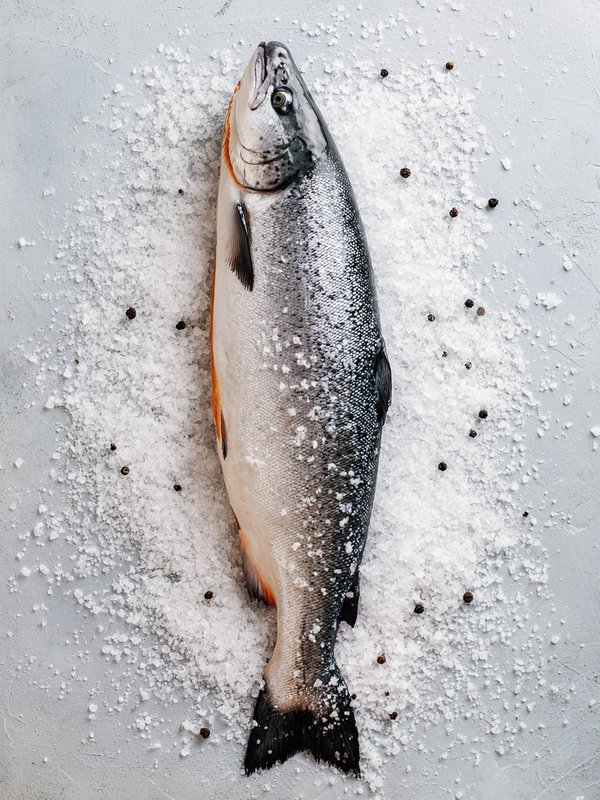
Atlantic Salmon is a fish whose aroma is led by acetic acid (sour, vinegar) and acetoin (butter, cream). Cooks pair it most with basil, butter and capsicum. By shared aroma its closest partners are flour, garlic and mustard.
Why each partner works
The classics
- Basil: mentioned together in 1 recipe, though they share little aroma: this one is a cooking habit more than a chemical match.
- Butter: mentioned together in 1 recipe, though they share little aroma: this one is a cooking habit more than a chemical match.
- Capsicum: mentioned together in 1 recipe, though they share little aroma: this one is a cooking habit more than a chemical match.
- Carrot: mentioned together in 1 recipe, though they share little aroma: this one is a cooking habit more than a chemical match.
- Flour: mentioned together in 1 recipe, with moderate shared aroma, including ethanol (alcoholic, ethereal).
Worth trying
- Nutritional drink Hidden gem: strong shared aroma (27 molecules), yet no recipe in our collection combines them.
A hidden gem is a lead to test, not a proven pairing: strong shared chemistry, but cooks have barely tried it.
Atlantic Salmon pairing chart, in full
Scroll sideways to see every column →
| Partner | Shared aroma | Shared molecules | Recipes together | Rank among all pairs |
|---|---|---|---|---|
| atlantic halibut | strong | 25 | 0 | top 18% |
| beluga whale | strong | 27 | 0 | top 18% |
| bearded seal | strong | 27 | 0 | top 18% |
| pink salmon | strong | 27 | 0 | top 18% |
| cichlidae | strong | 27 | 0 | top 19% |
| sheefish | strong | 27 | 0 | top 19% |
| chinook salmon | strong | 27 | 0 | top 19% |
| sockeye salmon | strong | 27 | 0 | top 19% |
| turbot | strong | 26 | 0 | top 19% |
| channel catfish | strong | 26 | 0 | top 19% |
| pacific rockfish | strong | 26 | 0 | top 19% |
| painted comber | strong | 26 | 0 | top 19% |
| smelt | strong | 24 | 0 | top 19% |
| pacific sardine | strong | 25 | 0 | top 20% |
| snapper | strong | 24 | 0 | top 20% |
| orange roughy | strong | 25 | 0 | top 20% |
| nutritional drink | strong | 27 | 0 | top 20% |
| coho salmon | strong | 26 | 0 | top 20% |
| atlantic croaker | strong | 24 | 0 | top 20% |
| american shad | strong | 24 | 0 | top 20% |
Ordered by pairing score. Shared aroma: how much of their aroma chemistry overlaps (strong, moderate or low against all ingredient pairs). Rank: where the pair sits among random ingredient pairs on CompKitchen. Shared molecules counts every molecule the two have in common, not only aroma ones. Each partner links to a side-by-side comparison.
Atlantic Salmon flavor profile
Atlantic Salmon carries 32 flavor molecules in our data, 10 of them volatile enough to smell and 6 of them key food odorants, the molecules shown to drive food aroma. The aromas that lead its profile, strongest measured first: trimethylamine (ammoniacal), acetic acid (sour, vinegar), acetoin (butter, cream) and 3-methyl-1-butanol (whiskey, malt).
Only 1 of 32 molecules on record are specific to atlantic salmon; the rest are carried by most foods.
Key aroma molecules in atlantic salmon
Scroll sideways to see every column →
| Molecule | Smells like | Why it matters |
|---|---|---|
| trimethylamine | fishy, ammoniacal | In 69 of 861 ingredients. Shared with turbot. |
| acetic acid | sour, vinegar, pungent | In 143 of 861 ingredients; a key food odorant. |
| acetoin | butter, cream, sweet | In 120 of 861 ingredients; a key food odorant. |
| 3-methyl-1-butanol | whiskey, malt, burnt | In 489 of 861 ingredients; a key food odorant. |
| pentadecanoic acid | waxy | In 343 of 861 ingredients. Shared with atlantic halibut, beluga whale and bearded seal. |
| heptanoic acid | rancid, cheesy, sour | In 439 of 861 ingredients. Shared with atlantic halibut, beluga whale and bearded seal. |
| ethanol | alcoholic, ethereal, sweet | In 613 of 861 ingredients; a key food odorant. Shared with atlantic halibut, beluga whale and bearded seal. |
| decanoic acid | soapy, waxy, rancid | In 636 of 861 ingredients; a key food odorant. Shared with atlantic halibut, beluga whale and bearded seal. |
Ordered by measured strength in atlantic salmon (concentration against odour threshold) where studies report it, then by how rare the molecule is across foods. Smell words are each molecule's own published description. Key food odorants are the molecules shown to drive food aroma (Dunkel et al. 2014).
Scientific name: Salmo salar. Wikidata Q188879 (CC0)
All 32 molecules on record
1 of 32 are distinctive to atlantic salmon (in under 10% of foods). Ordered by measured impact in atlantic salmon, then by how distinctive the molecule is.
218 research papers on atlantic salmon
- Revealing the changes in lipids, volatile flavors, sensory effects and their correlations in cold fresh rainbow trout meat under different electron beam irradiation doses using lipidomics and flavoromics. · 2026
- Comparison of Volatile and Non-Volatile Compounds of Ice-Stored Large Yellow Croaker (Larimichthys crocea) Affected by Different Post-Harvest Handling Methods. · 2025
- Exploration of Key Flavor Compounds in Five Grilled Salmonid Species by Integrating Volatile Profiling and Sensory Evaluation. · 2025
- Effect of Rearing, Physiological, and Processing Conditions on the Volatile Profile of Atlantic Salmon (Salmo salar) Using SIFT-MS. · 2025
- Toxicological impact of dietary exposure to polypropylene microplastics in Atlantic salmon (Salmo salar). · 2025
Explore more: pair it · find flavor matches · discover novel pairings · get this data via the API · how we score pairs