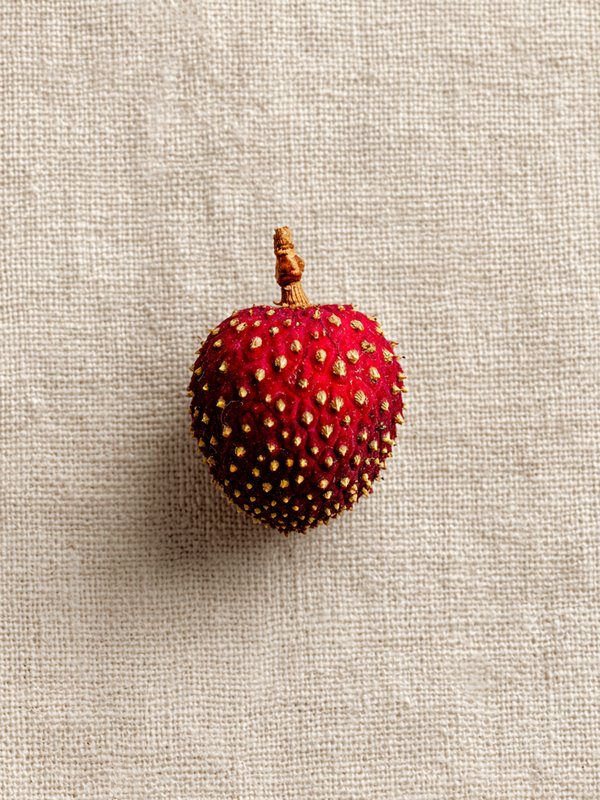
Litchi
Cooks often pair litchi with
50 recipes in our collection
What goes with litchi
The classics
Savory and unexpected
Worth trying
A hidden gem is a lead to test, not a proven pairing: strong shared chemistry, but cooks have barely tried it. Why each one pairs is under “See the science”.
Litchi pairing chart
- PartnerAroma overlapRecipes together
- raspberry5
- lime11
- mint7
- kiwifruit3
- passion fruit4
- coconut9
- strawberry5
- mango4
- ginger9
- melon5
- pineapple7
- vanilla3
- dragon fruit2
- grape8
- blueberry3
- cranberry4
- peppermint7
- apple7
- syrup16
- guava2
Dots compare these partners with each other by how many aroma molecules they share with litchi. Each partner links to a side-by-side page. The full table, with ranks, is under “See the science”.
How cooks use litchi
Does it go with what you have?
ButterSometimes
Mentioned together in 2 recipes, moderate shared aroma, top 33% of pairs. They share 2,6-nonadienal (cucumber, green). Compare →
LemonSometimes
Mentioned together in 6 recipes, strong shared aroma, top 14% of pairs. They share myrcene (balsamic, herbaceous). Compare →
GarlicSometimes
Mentioned together in 3 recipes, moderate shared aroma, top 30% of pairs. They share furaneol (caramel, strawberry). Compare →
SugarClassic
Mentioned together in 17 recipes, moderate shared aroma, top 14% of pairs. They share beta-damascenone (apple, rose). Compare →
ChiliSometimes
Mentioned together in 1 recipe, moderate shared aroma, top 17% of pairs. They share ethyl butyrate (apple, fruity). Compare →
GingerClassic
Mentioned together in 9 recipes, moderate shared aroma, top 7% of pairs. They share isoamyl acetate (banana, pear). Compare →
Litchi pairing questions
What makes litchi smell like litchi?
Its leading aroma molecules are 6-nonenal (green, melon), lilac aldehyde b (sweet, fresh) and 2,6-nonadienal (cucumber, green), out of the 102 aroma molecules on record for it.
What's a good substitute for litchi?
Closest flavor match (not an allergy-safe swap): black currant, pummelo, pomegranate. They share the highest fraction of litchi's flavor compounds, so they can echo its flavor, but they are different foods and may carry their own allergy risk.
Is litchi vegan, gluten-free, or kosher?
Litchi is vegan and is gluten-free, dairy-free, nut-free, kosher, halal.
See the sciencearoma molecules, the flavor globe, smell wheel and full tables
Litchi is a fruit whose aroma is led by 6-nonenal (green, melon) and lilac aldehyde b (sweet, fresh). Cooks pair it most with sugar, syrup and vodka. By shared aroma its closest partners are mango, thyme and blueberry.
Why each partner works
The classics
- Sugar: mentioned together in 17 recipes, with moderate shared aroma, including beta-damascenone (apple, rose).
- Syrup: mentioned together in 16 recipes, though they share little aroma: this one is a cooking habit more than a chemical match.
- Vodka: mentioned together in 12 recipes, though they share little aroma: this one is a cooking habit more than a chemical match.
- Lime: mentioned together in 11 recipes, with strong shared aroma, including myrcene (balsamic, herbaceous).
- Coconut: mentioned together in 9 recipes, with moderate shared aroma, including ethyl caproate (fruity, apple peel).
Savory and unexpected
- Mint: Strong shared aroma, including myrcene (balsamic, herbaceous); 7 recipes combine them.
- Ginger: Moderate shared aroma, including isoamyl acetate (banana, pear); 9 recipes combine them.
Worth trying
- Raspberry: a top 4% pair that only 5 recipes in our collection use.
- Kiwifruit: a top 5% pair that only 3 recipes in our collection use.
- Passion fruit: a top 5% pair that only 4 recipes in our collection use.
- Strawberry: a top 6% pair that only 5 recipes in our collection use.
A hidden gem is a lead to test, not a proven pairing: strong shared chemistry, but cooks have barely tried it.
Litchi pairing chart, in full
Scroll sideways to see every column →
| Partner | Shared aroma | Shared molecules | Recipes together | Rank among all pairs |
|---|---|---|---|---|
| raspberry | strong | 97 | 5 | top 4% |
| lime | strong | 102 | 11 | top 4% |
| mint | strong | 97 | 7 | top 5% |
| kiwifruit | strong | 104 | 3 | top 5% |
| passion fruit | moderate | 18 | 4 | top 5% |
| coconut | moderate | 95 | 9 | top 5% |
| strawberry | moderate | 108 | 5 | top 6% |
| mango | strong | 115 | 4 | top 6% |
| ginger | moderate | 109 | 9 | top 7% |
| melon | moderate | 105 | 5 | top 7% |
| pineapple | strong | 104 | 7 | top 8% |
| vanilla | moderate | 95 | 3 | top 8% |
| dragon fruit | strong | 11 | 2 | top 8% |
| grape | moderate | 114 | 8 | top 8% |
| blueberry | strong | 104 | 3 | top 8% |
| cranberry | moderate | 100 | 4 | top 8% |
| peppermint | strong | 101 | 7 | top 9% |
| apple | moderate | 108 | 7 | top 10% |
| syrup | low | 5 | 16 | top 10% |
| guava | strong | 114 | 2 | top 11% |
Ordered by pairing score. Shared aroma: how much of their aroma chemistry overlaps (strong, moderate or low against all ingredient pairs). Rank: where the pair sits among random ingredient pairs on CompKitchen. Shared molecules counts every molecule the two have in common, not only aroma ones. Each partner links to a side-by-side comparison.
Litchi flavor profile
Litchi carries 141 flavor molecules in our data, 102 of them volatile enough to smell and 48 of them key food odorants, the molecules shown to drive food aroma. The aromas that lead its profile, strongest measured first: 6-nonenal (green, melon), lilac aldehyde b (sweet, fresh), 2,6-nonadienal (cucumber, green) and trans-beta-ionone (floral).
Why litchi pairs the way it does
Litchi's pairing hooks are alpha-terpineol (lilac, floral), which 8 of its 10 best partners also carry but only 17% of all ingredients do; and myrcene (balsamic, herbaceous), which 7 of its 10 best partners also carry but only 19% of all ingredients do. Partners that share them, like raspberry, lime and mint, share more with litchi than the background chemistry most foods carry. Partners that share little aroma, like syrup and vodka, pair through cooking habit instead: 16 and 12 recipes respectively.
Key aroma molecules in litchi
Scroll sideways to see every column →
| Molecule | Smells like | Why it matters |
|---|---|---|
| 6-nonenal | green, melon, watermelon | In 4 of 861 ingredients. Shared with melon. |
| lilac aldehyde b | sweet, fresh | In 2 of 861 ingredients. |
| 2,6-nonadienal | cucumber, green, melon | In 43 of 861 ingredients; a key food odorant. Shared with kiwifruit, mango and melon. |
| trans-beta-ionone | floral | In 7 of 861 ingredients; a key food odorant. Shared with raspberry. |
| beta-damascenone | apple, rose, honey | In 54 of 861 ingredients; a key food odorant. Shared with kiwifruit, passion fruit and mango. |
| cis-rose oxide | green, flower | In 10 of 861 ingredients; a key food odorant. |
| furaneol | caramel, strawberry, sweet | In 53 of 861 ingredients; a key food odorant. Shared with strawberry and mango. |
| p-cymene | solvent, gasoline, citrus | In 91 of 861 ingredients. Shared with lime, mint and strawberry. |
Ordered by measured strength in litchi (concentration against odour threshold) where studies report it, then by how rare the molecule is across foods. Smell words are each molecule's own published description. Key food odorants are the molecules shown to drive food aroma (Dunkel et al. 2014).
Scientific name: Litchi chinensis. Wikidata Q13182 (CC0)
All 141 molecules on record
32 of 141 are distinctive to litchi (in under 10% of foods). Ordered by measured impact in litchi, then by how distinctive the molecule is.
355 research papers on litchi
- LcCDF3-LcTPS39 Regulatory Module Positively Regulates Caryophyllene Biosynthesis to Shape the Floral-Fruity Aroma of Litchi Aril. · 2026
- Liposome/chitosan coating film bioplastic packaging for Litchi fruit preservation. Food chemistry · 2025
- Moisture Microenvironment-Regulating Electro spun Membranes for Extending Litchi Shelf Life. Journal of food science · 2025
- Variations in fruit quality properties and phytochemical substances of 'Feizixiao' litchi grown in different geographical origins of China. · 2025
- Evaluation of Litchi Honey Quality in Southern China. · 2025
Explore more: pair it · find flavor matches · discover novel pairings · get this data via the API · how we score pairs