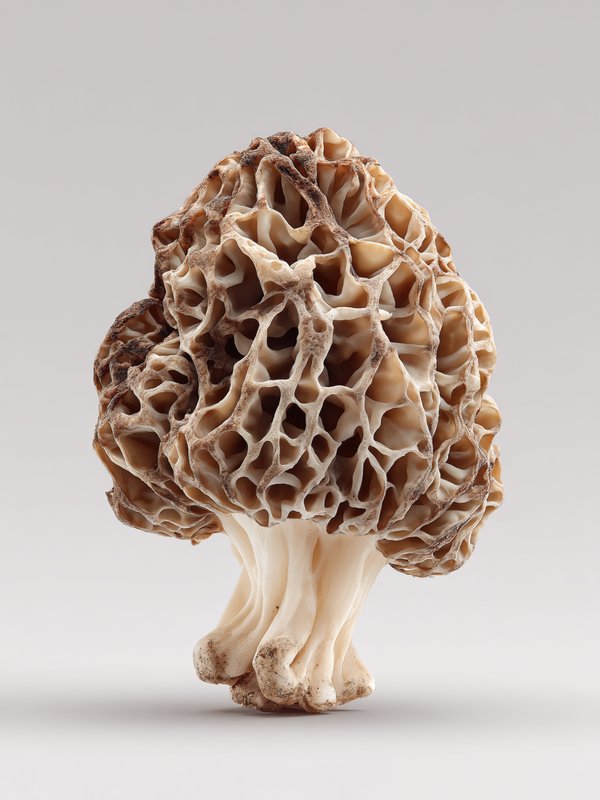
Morchella
Cooks often pair morchella with
0 recipes in our collection
What goes with morchella
Worth trying
A hidden gem is a lead to test, not a proven pairing: strong shared chemistry, but cooks have barely tried it. Why each one pairs is under “See the science”.
Morchella pairing chart
- PartnerAroma overlapRecipes together
- semolina0
- pasta0
- chanterelle0
- shallot0
- quinoa0
- soy milk0
- bulgur0
- maitake0
- piki bread0
- potato bread0
- oat bread0
- pita bread0
- abalone0
- enokitake0
- raisin bread0
- heart of palm0
- shiitake0
- jew's ear0
- hyacinth bean0
- cloud ear fungus0
Dots compare these partners with each other by how many aroma molecules they share with morchella. Each partner links to a side-by-side page. The full table, with ranks, is under “See the science”.
How cooks use morchella
Does it go with what you have?
ButterUntested
No recipe in our pairing index uses both, moderate shared aroma, top 40% of pairs. They share nonanal (fat, citrus). Compare →
LemonUntested
No recipe in our pairing index uses both, moderate shared aroma, top 48% of pairs. They share nonanal (fat, citrus). Compare →
GarlicUntested
No recipe in our pairing index uses both, moderate shared aroma, top 42% of pairs. They share acetic acid (sour, vinegar). Compare →
SugarUntested
No recipe in our pairing index uses both, moderate shared aroma, bottom 24% of pairs. They share phenylacetaldehyde (hawthorne, honey). Compare →
ChiliUntested
No recipe in our pairing index uses both, low shared aroma, bottom 46% of pairs. Compare →
GingerUntested
No recipe in our pairing index uses both, low shared aroma, top 48% of pairs. Compare →
Morchella pairing questions
What makes morchella smell like morchella?
Its leading aroma molecules are ethyl pentanoate (yeast, fruit), decanal (orange peel, tallow) and ethyl isovalerate (fruity, apple), out of the 63 aroma molecules on record for it.
Is morchella vegan, gluten-free, or kosher?
Morchella is vegan and is gluten-free, dairy-free, nut-free, kosher, halal.
See the sciencearoma molecules, the flavor globe, smell wheel and full tables
Morchella is a fungus whose aroma is led by ethyl pentanoate (yeast, fruit) and ethyl isovalerate (fruity, apple).
Why each partner works
Worth trying
- Semolina Hidden gem: strong shared aroma (111 molecules), yet no recipe in our collection combines them.
- Soy milk Hidden gem: strong shared aroma (115 molecules), yet no recipe in our collection combines them.
A hidden gem is a lead to test, not a proven pairing: strong shared chemistry, but cooks have barely tried it.
Morchella pairing chart, in full
Scroll sideways to see every column →
| Partner | Shared aroma | Shared molecules | Recipes together | Rank among all pairs |
|---|---|---|---|---|
| semolina | strong | 111 | 0 | top 14% |
| pasta | strong | 114 | 0 | top 15% |
| chanterelle | strong | 112 | 0 | top 15% |
| shallot | strong | 107 | 0 | top 15% |
| quinoa | strong | 111 | 0 | top 16% |
| soy milk | strong | 115 | 0 | top 16% |
| bulgur | strong | 103 | 0 | top 18% |
| maitake | strong | 110 | 0 | top 18% |
| piki bread | strong | 107 | 0 | top 18% |
| potato bread | strong | 104 | 0 | top 19% |
| oat bread | strong | 102 | 0 | top 19% |
| pita bread | strong | 102 | 0 | top 19% |
| abalone | strong | 84 | 0 | top 19% |
| enokitake | strong | 109 | 0 | top 19% |
| raisin bread | strong | 102 | 0 | top 20% |
| heart of palm | strong | 102 | 0 | top 20% |
| shiitake | strong | 115 | 0 | top 20% |
| jew's ear | strong | 104 | 0 | top 20% |
| hyacinth bean | strong | 106 | 0 | top 20% |
| cloud ear fungus | strong | 104 | 0 | top 21% |
Ordered by pairing score. Shared aroma: how much of their aroma chemistry overlaps (strong, moderate or low against all ingredient pairs). Rank: where the pair sits among random ingredient pairs on CompKitchen. Shared molecules counts every molecule the two have in common, not only aroma ones. Each partner links to a side-by-side comparison.
Morchella flavor profile
Morchella carries 124 flavor molecules in our data, 63 of them volatile enough to smell and 19 of them key food odorants, the molecules shown to drive food aroma. The aromas that lead its profile, strongest measured first: ethyl pentanoate (yeast, fruit), decanal (orange peel, tallow), ethyl isovalerate (fruity, apple) and 3-octanol (mushroom, earthy).
Key aroma molecules in morchella
Scroll sideways to see every column →
| Molecule | Smells like | Why it matters |
|---|---|---|
| ethyl pentanoate | yeast, fruit | In 71 of 861 ingredients; a key food odorant. |
| decanal | soap, orange peel, tallow | In 131 of 861 ingredients; a key food odorant. Shared with quinoa and soy milk. |
| ethyl isovalerate | fruity, apple, berry | In 91 of 861 ingredients. |
| 3-octanol | mushroom, earthy, musty | In 78 of 861 ingredients. Shared with soy milk. |
| pentanal | almond, malt, pungent | In 162 of 861 ingredients. Shared with semolina, soy milk and bulgur. |
| 1-octen-3-ol | mushroom, earthy | In 222 of 861 ingredients; a key food odorant. Shared with semolina, chanterelle and shallot. |
| 3-octanone | mushroom, herbal, earthy | In 100 of 861 ingredients. Shared with quinoa, soy milk and maitake. |
| nonanal | fat, citrus, green | In 255 of 861 ingredients; a key food odorant. Shared with pasta and shallot. |
Ordered by measured strength in morchella (concentration against odour threshold) where studies report it, then by how rare the molecule is across foods. Smell words are each molecule's own published description. Key food odorants are the molecules shown to drive food aroma (Dunkel et al. 2014).
Scientific name: Morchella. Wikidata Q371101 (CC0)
All 124 molecules on record
3 of 124 are distinctive to morchella (in under 10% of foods). Ordered by measured impact in morchella, then by how distinctive the molecule is.
715 research papers on morchella
- UPLC-MS/MS and HS-SPME-GC-MS reveal the flavor profiles of two geographical indications woody vegetables: Staphylea bumalda and Staphylea holocarpa. · 2024
- Food and Antioxidant Supplements with Therapeutic Properties of Morchella esculenta (Ascomycetes): A Review. International journal of medicinal mushrooms · 2023
- Characteristic fingerprints and comparison of volatile flavor compounds in Morchella sextelata under different drying methods. Food research international (Ottawa, Ont.) · 2023
- Degradative Ability of Mushrooms Cultivated on Corn Silage Digestate. Molecules (Basel, Switzerland) · 2020
- Medicinal, Nutritional, and Cosmetic Values of Macrofungi Distributed in Mazandaran Province of Northern Iran (Review). International journal of medicinal mushrooms · 2019
Explore more: pair it · find flavor matches · discover novel pairings · get this data via the API · how we score pairs