fruit fruity green & herbal Vegan Gluten-free Dairy-free Nut-free Kosher Halal

Pineapple

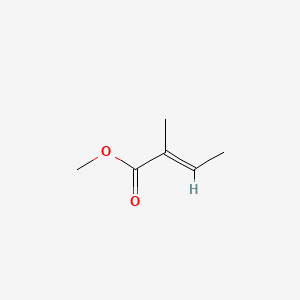
Pineapple is a fruit with 382 known flavor compounds. The most distinctive molecule is methyl tiglate. It pairs most strongly with orange, sharing 270 flavor compounds. Pineapple appears in 7,368 recipes, most commonly in creole cuisine.

Allyl hexanoate is major component. Caramelic pineapple ketone and fruity esters. Contains rum and coconut notes.

fruit
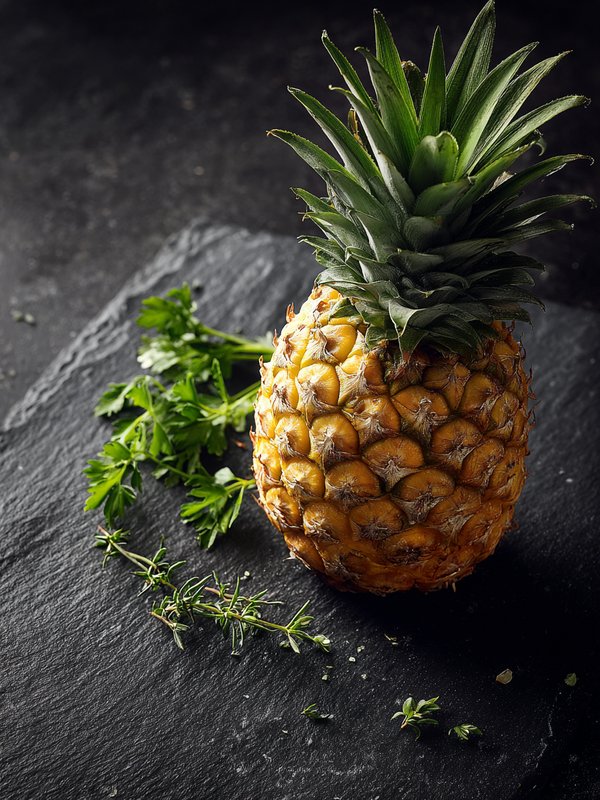
Pineapple — ingredient reference image
382
Flavor Compounds
8
Top Pairings of 856 scored

Flavor Science

Flavor Profile Breakdown

382 compounds

How Pineapple's 382 known compounds break down by aroma category. Percentages are of compounds with a known label.

fruity 85 · 22.3%
sour 52 · 13.6%
floral 42 · 11.0%
other 41 · 10.7%
green 26 · 6.8%
herbal 19 · 5.0%
roasted 16 · 4.2%
spicy 13 · 3.4%
dairy 11 · 2.9%
sulfurous 11 · 2.9%

Most Used In

Flavor Compounds

117 of 382 are distinctive to pineapple — they appear in under 10% of foods. The remainder are the background most foods share.

Ordered by measured impact in pineapple — concentration against odour threshold where both are published, then by how distinctive the molecule is across the graph. Molecules measured here but not established as odorants sit below those that are.

Molecules volatile enough to reach the nose.
geraniol methyl hexanoate methyl valerate 3-(methylthio)propanoic acid ethyl ester trans-ocimene cis-ocimene 3-(methylthio)propanoic acid methyl ester 3-methyl-2-butenol methyl 3-(methylthio)propanoate delta-dodecalactone 1-hexanal mesifurane 2,5-dimethyl-4-hydroxy-3(2h)-furanone ethyl isobutyrate acrylic acid methyl isobutyrate delta-undecalactone 3-methylbutan-1-ol methyl 2-methylbutanoate 2-nonenal methyl propionate ethyl 2-methylbutyrate alpha-copaene furaneol methyl heptanoate methyl isovalerate ethyl crotonate methyl cinnamate ethyl pentanoate damascenone +215 more citric acid catechin stearic acid procyanidin b2 procyanidin b1 (-)-epigallocatechin gallocatechin (-)-epicatechin nervonic acid lutein isorhamnetin isoliquiritigenin thiamine hydrochloride taxifolin daidzein squalene genistein quercetin luteolin myricetin phloretin zeaxanthin aconitic acid stigmasterol naringenin inosine guanosine apigenin adenosine l-isoleucine 2-furan carboxaldehyde, 5-(hydroxymethyl) 2-methyl ethylbutyrate 2-methyl methylbutyrate 3-heptanol (d) 3-heptanol (m) methyl-3-(methylthiol)-propanoate ethyl (e)-3-hexenoate methyl 3-(methylthio)propionate 2,3-dihydro-3,5-dihydroxy-6-methyl-4h-pyran-4-one methyl 3-hydroxyhexanoate 3-oxobutan-2-yl acetate ethyl 3-hydroxybutyrate 2-methyltetrahydrofuran-3-one caffeine α-tocopherol retinol ethyl acrylate acetoxyacetone ethyl 3-(methylthio)propionate 2-methyl-2-butenedioic acid 4-octenoic acid, methyl ester dihydro-4-methyl-2(3h)-furanone methyl 2-hydroxyhexanoate methyl 4-(methylthio)butyrate 2-ethylbutyric acid methyl 4-methylvalerate methyl (z)-3-hexenoate methyl (z)-oct-4-enoate methyl 3-hydroxyoctanoate ethyl cis-4-octenoate

Most Abundant Molecules

3 of 382 quantified

Ranked by median concentration across published studies. Only 3 of Pineapple's 382 compounds have a measured concentration in the literature — the rest are confirmed present but not yet quantified. Bars are log-scaled.

1 methyl hexanoate 10 µg/kg
2 methyl valerate 10 µg/kg
3 geraniol 1 µg/kg

Best Pairings for Pineapple

Ranked by how often cooks actually use them together, across 453,403 recipes — the familiar answer first. Each pairing still carries its molecular score and shared-compound count; only the ORDER differs. Counts cover every characterised molecule the two ingredients have in common, not only the aroma-active ones, so they can exceed an ingredient’s aroma-compound count. For the chemistry-first view — where the surprising pairings live — see the molecular network below, the side-by-side comparison, or the Pairing Tool.

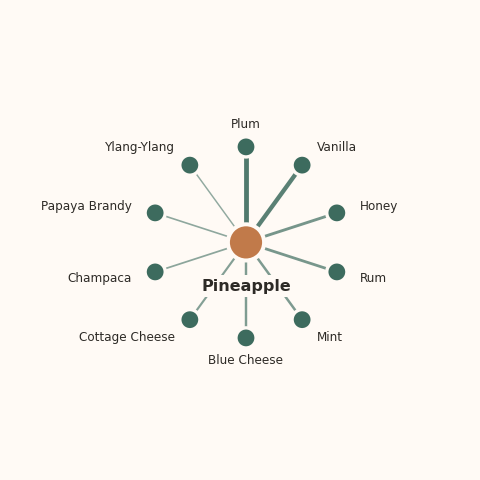
Molecular Neighborhood

Pineapple and its 10 closest compound-sharing relatives. Spoke thickness = shared compounds; circle size = that ingredient's own compound count. Drag to rearrange, scroll to zoom, click to open.

Molecular neighborhood diagram of pineapple — top 10 ingredients ranked by shared volatile compounds

Recipes with Pineapple

View all →
Research basis

Pineapple is supported by 1,647 peer-reviewed papers

Drawn from PubMed + Europe PMC + food-science journals. Click any title to read the full abstract on the original source.